Top 12 ERP Solutions for Aerospace and Defense Companies
The aerospace and defense industry operates under some of the world’s most demanding manufacturing, security, and regulatory requirements. From ITAR and DCAA cost accounting to CMMC 2.0 cybersecurity standards and AS9100 quality management, organizations need ERP systems that do far more than manage inventory and production.
The wrong platform can create compliance gaps, delay programs, increase costs, and even jeopardize eligibility for government contracts.
The market itself is growing. According to The Business Research Company, the global aerospace and defense market is projected to grow from $846.94 billion in 2025 to $1.1 trillion by 2029. At the same time, Apps Run The World estimates the aerospace and defense software market reached $8.5 billion in 2024, growing 10% year over year as manufacturers and defense contractors continue investing in digital transformation.
This kind of growth makes your decision harder.
Luckily, you’re on the right page. This guide compares the top aerospace and defense ERP solutions for manufacturers, government contractors, tier suppliers, and MRO organizations.
We’ll look at each platform’s strengths, ideal use cases, and industry-specific capabilities to help you choose the ERP system that best fits your operational, compliance, and long-term business goals.
Which Aerospace ERP Fits Your Company Size?
| Company profile | Best-fit systems | Why |
|---|---|---|
| Small suppliers and machine shops (under $50M revenue) | SYSPRO, Acumatica | AS9100 and traceability support without enterprise cost or complexity |
| Mid-market manufacturers and Tier 1/2 suppliers ($50M–$250M revenue) | Epicor Kinetic, Rootstock, WinMan, Sage X3 | Manufacturing depth, engineer-to-order support, and room to scale without a full enterprise rollout |
| Government contractors of any size working cost-plus contracts | Deltek Costpoint | DCAA compliance, EVMS, and CMMC-ready infrastructure built in natively rather than configured after the fact |
| Enterprise manufacturers and prime contractors ($250M+ revenue) | SAP S/4HANA Cloud, Infor CloudSuite Aerospace & Defense, IFS Cloud | Enterprise-scale supply chain visibility and support for decades-long, multi-site programs |
| MRO organizations | IFS Cloud | Native asset lifecycle management and long-lifecycle service tracking beyond the factory floor |
12 ERP Software Options for Aerospace and Defense Companies
The best aerospace and defense ERP software depends on how your organization builds, tracks, services, and reports on complex products. Some platforms are stronger for mid-sized manufacturers that need traceability and quality control, while others are better suited to global defense contractors managing long program lifecycles, MRO operations, or enterprise-wide digital transformation.
Use the comparison below as a starting point to narrow your options based on company size, deployment preferences, compliance needs, manufacturing complexity, and implementation flexibility.
1. WinMan ERP
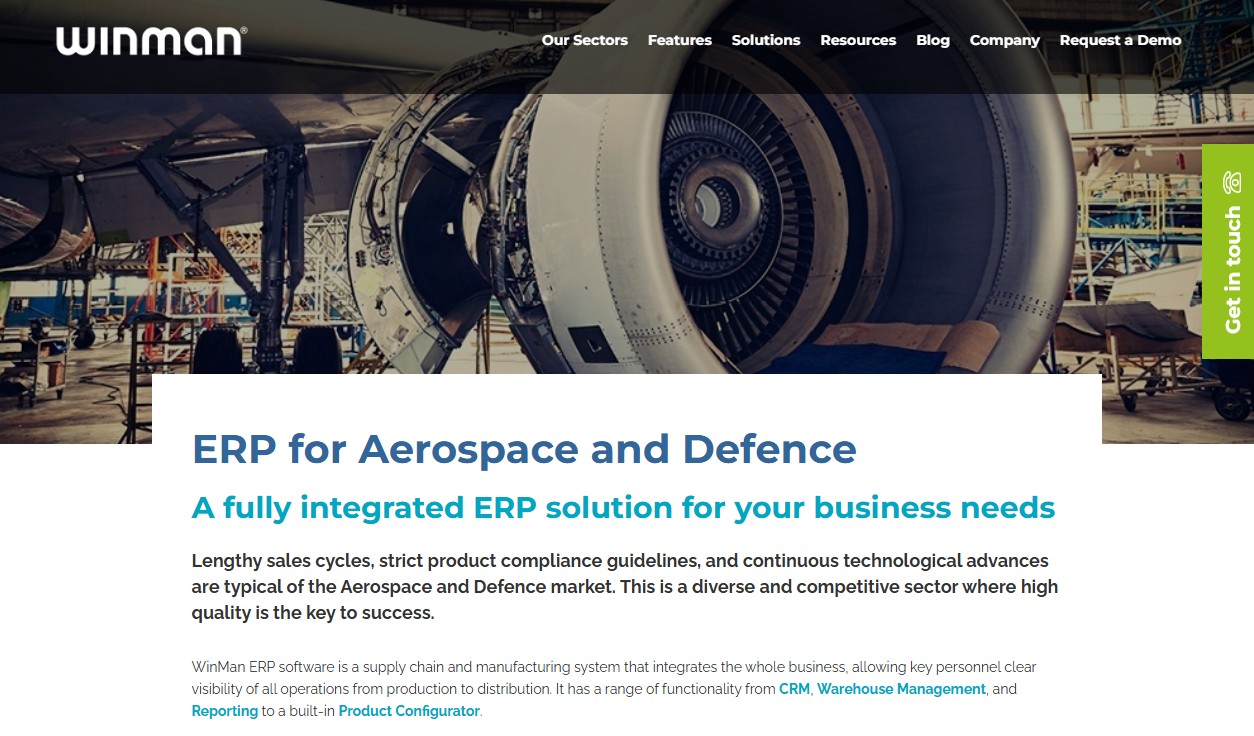
WinMan develops ERP software specifically for manufacturers, with dedicated functionality for aerospace and defense companies that work in highly regulated environments. Alongside core manufacturing processes, it includes built-in serial and batch traceability, quality management, document control, and engineer-to-order workflows that help companies meet industry compliance requirements.
The company has been developing ERP software for more than 30 years and reports supporting over 300 manufacturers worldwide, so you know it’s a mature platform with a proven implementation history rather than a newer industry-focused solution.
Key Features:
- Engineer-to-order manufacturing
- Product lifecycle management
- Quality management
- Document control
- Warehouse management
- Integrated CRM and finance
Why choose WinMan ERP?
Choose WinMan if traceability and compliance are your biggest priorities. Its strongest differentiator is that aerospace-specific manufacturing controls are built into the ERP platform rather than added through third-party modules.
2. Rootstock ERP
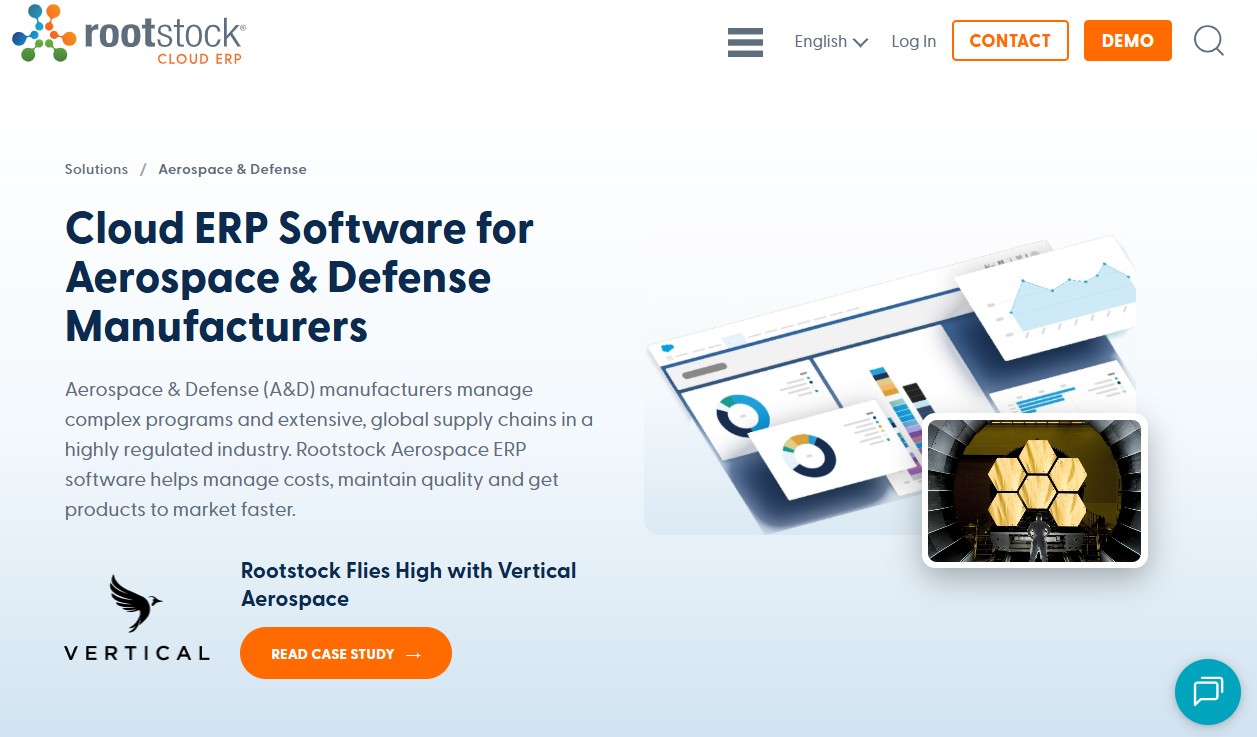
Rootstock is a cloud ERP platform built natively on Salesforce, which makes it a strong fit for aerospace and defense manufacturers that need to connect customer, engineering, production, and financial data on a single platform. Its aerospace solution supports project-based manufacturing, cradle-to-grave traceability, engineering change management, and configuration control for companies managing complex, highly regulated programs.
One example is electric aircraft manufacturer Vertical Aerospace, which evaluated 30 ERP systems before selecting Rootstock. The company cited the platform’s cloud architecture, end-to-end traceability, and phased implementation approach as key reasons for its decision, allowing it to deploy purchasing, inventory, and finance first before expanding the system as its operations grew.
Key Features:
- Salesforce-native cloud ERP
- Project lifecycle management
- Engineering change management
- Lot and serial traceability
- Project costing and control
- Quality management
Why choose Rootstock ERP?
Choose Rootstock if you’re already invested in Salesforce or want to implement ERP in stages. Its combination of a shared Salesforce data model and modular rollout approach makes it easier to modernize complex manufacturing operations without replacing every process at once.
3. DELMIAWorks ERP
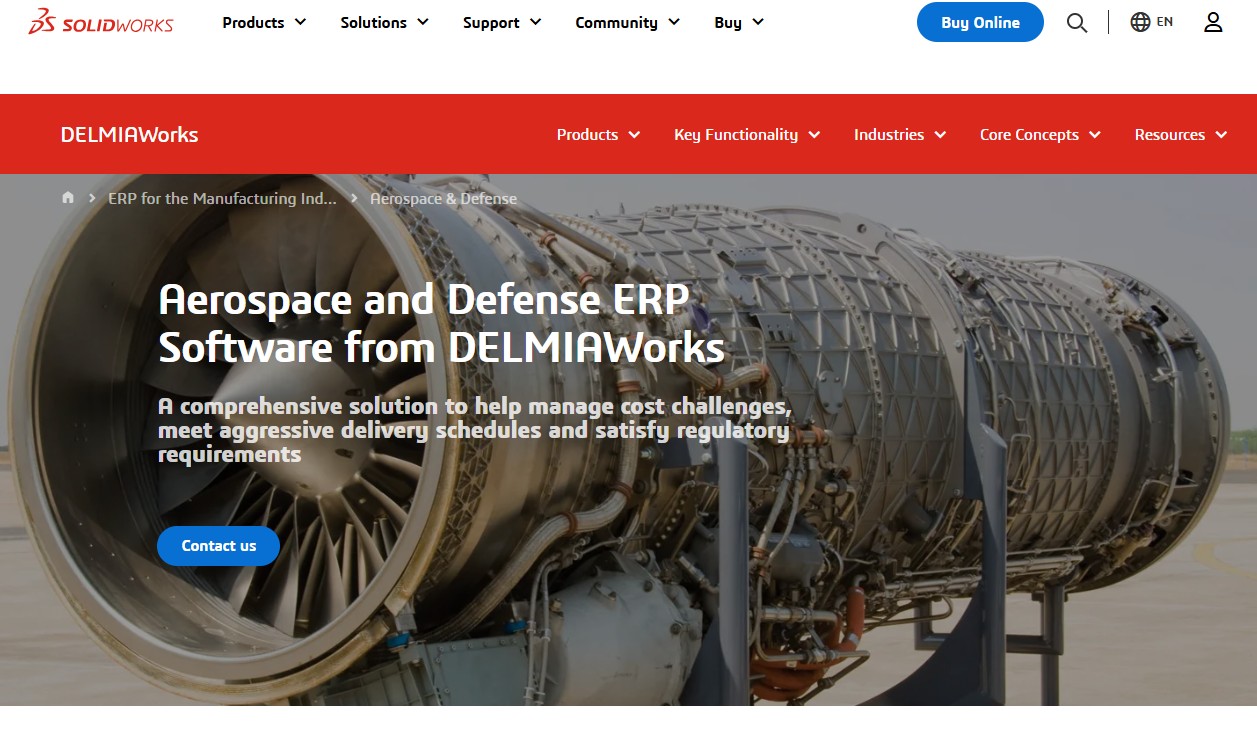
DELMIAWorks is designed for companies that produce complex, highly regulated components where traceability and engineering changes need to flow seamlessly from design through to manufacturing.
Its strongest differentiator is its connection to the wider Dassault Systèmes ecosystem. DELMIAWorks forms part of the 3DEXPERIENCE platform, which allows manufacturers to link CAD, product lifecycle management (PLM), ERP, and manufacturing execution into a continuous digital thread. This reduces manual data transfers and improves visibility across the product lifecycle.
Key Features:
- Integrated ERP and Manufacturing Execution System (MES)
- CAD and PLM integration through 3DEXPERIENCE
- End-to-end product traceability
- Quality and compliance management
- Shop floor data collection
- Production planning and scheduling
Why choose DELMIAWorks ERP?
Choose DELMIAWorks if your business already uses SOLIDWORKS or other Dassault Systèmes engineering tools.
4. SYSPRO ERP
SYSPRO is an ERP platform designed specifically for manufacturers and distributors, with dedicated functionality for aerospace and defence companies managing complex production, quality requirements, and supply chains. Unlike broad enterprise ERP suites, SYSPRO focuses on the operational needs of mid-sized manufacturers.
One of SYSPRO’s strongest proof points is its long track record in manufacturing. The company has more than 40 years of ERP experience and supports manufacturers in over 60 countries, so you know that the platform has evolved around real-world production environments rather than being adapted from a general business ERP.
Key Features:
- Lot and serial traceability
- Engineering change management
- Quality management
- Production scheduling
- Supply chain management
- Inventory optimization
Why choose SYSPRO ERP?
Choose SYSPRO if you’re a mid-sized aerospace manufacturer that needs manufacturing depth without the cost and complexity of an enterprise ERP.
5. Microsoft Dynamics 365
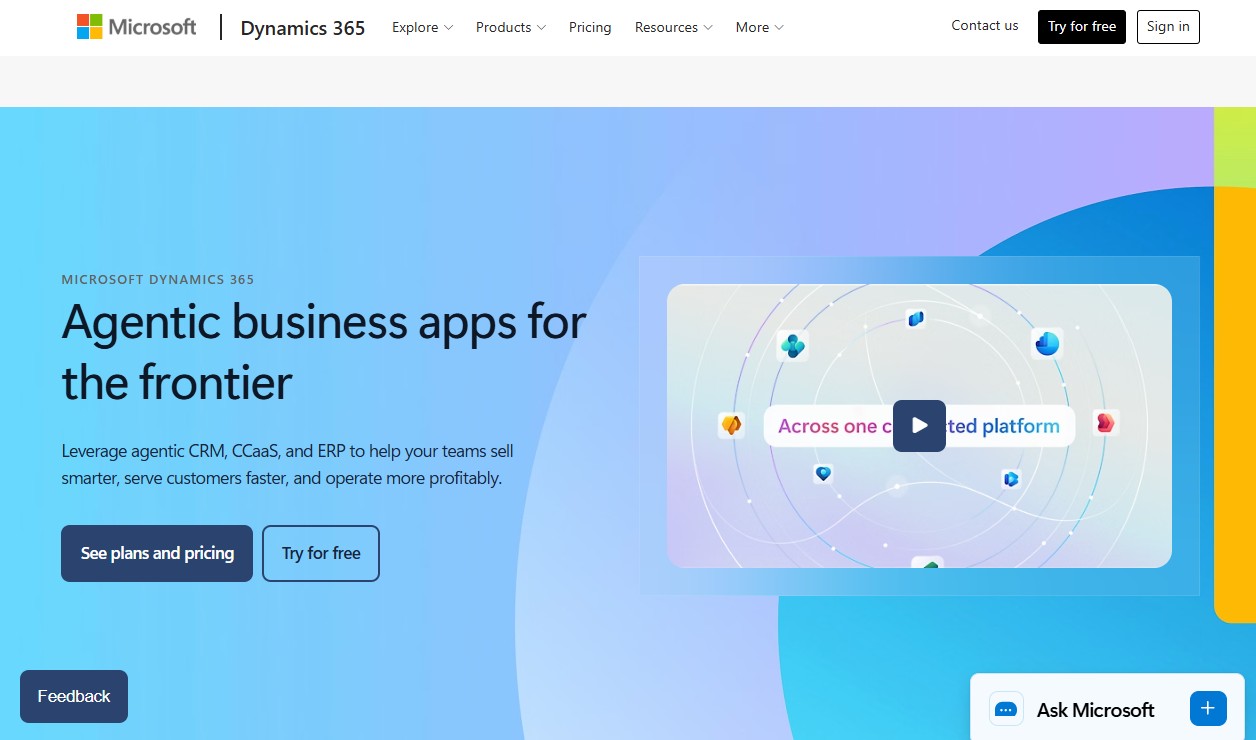
Rather than providing a dedicated aerospace ERP, Dynamics 365 acts as a flexible enterprise platform that can be tailored to regulated manufacturing through Microsoft’s extensive partner ecosystem.
One of Microsoft’s biggest strengths is the breadth of specialist implementation partners available. Firms including Adeaca have developed aerospace-specific extensions for Dynamics 365 Finance that add project-centric manufacturing capabilities for aerospace and defense companies.
Larger partners such as HSO also provide manufacturing-specific accelerators on top of Dynamics 365, giving buyers greater flexibility when selecting an implementation partner.
Key Features:
- Supply chain management
- Manufacturing management
- Project operations
- AI-powered Copilot
- Power BI analytics
- Microsoft 365 and Azure integration
Why choose Microsoft Dynamics 365?
Choose Dynamics 365 if implementation flexibility is as important as the software itself.
6. Sage X3
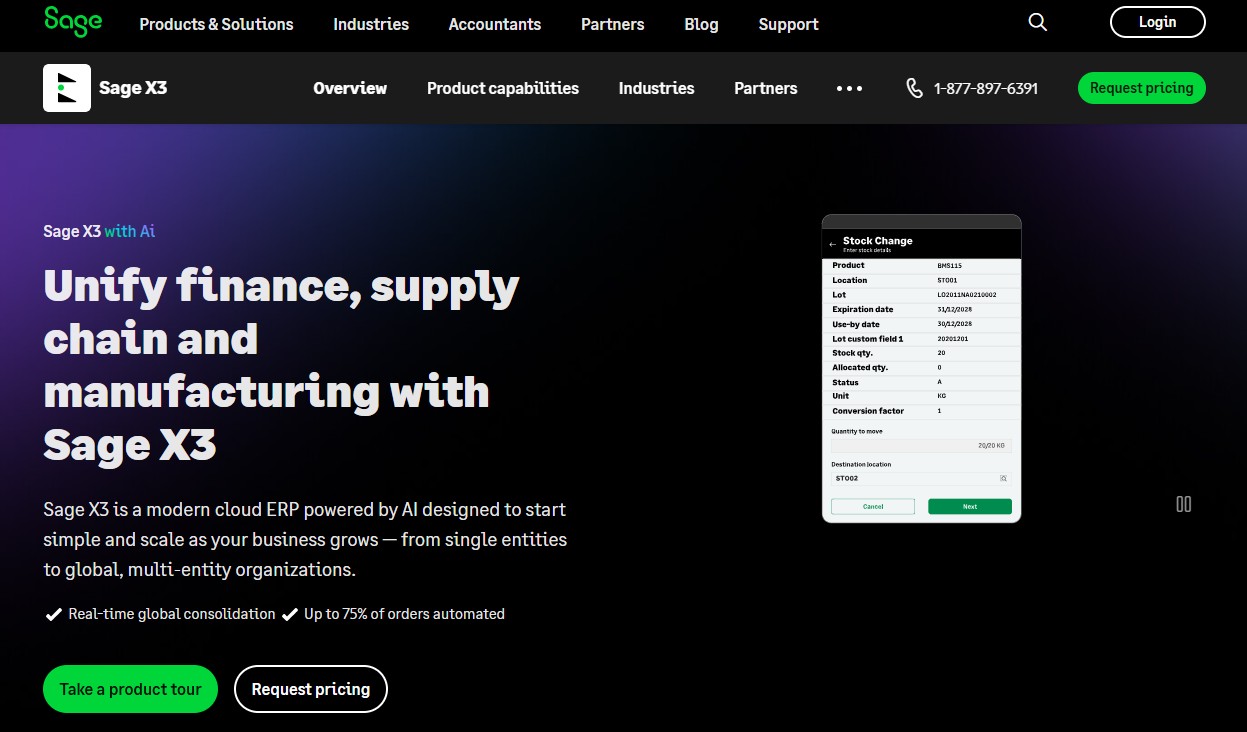
While Sage X3 supports aerospace and defense manufacturers, its true strength lies in providing a flexible ERP that can adapt to mixed-mode and discrete manufacturing without the challenges of larger enterprise platforms.
One of Sage X3’s strongest proof points is its adoption by aerospace manufacturers managing complex, multi-company operations. Aero Services Global Group (ASG Group), a precision engineering business supplying the aerospace and defense sectors, selected Sage X3 to replace disconnected ERP systems as it expanded across Europe.
The move gave the group consolidated reporting, multi-company visibility, and multi-currency management.
Key Features:
- Mixed-mode manufacturing
- Lot and serial traceability
- Quality management
- Production planning
- Supply chain management
- Financial management
Why choose Sage X3?
Choose Sage X3 if you’re a growing manufacturer that needs a flexible ERP without moving to a tier-one enterprise platform. Its network of specialist implementation partners makes it easier to adapt the system for aerospace manufacturing and compliance requirements.
7. Acumatica Cloud ERP
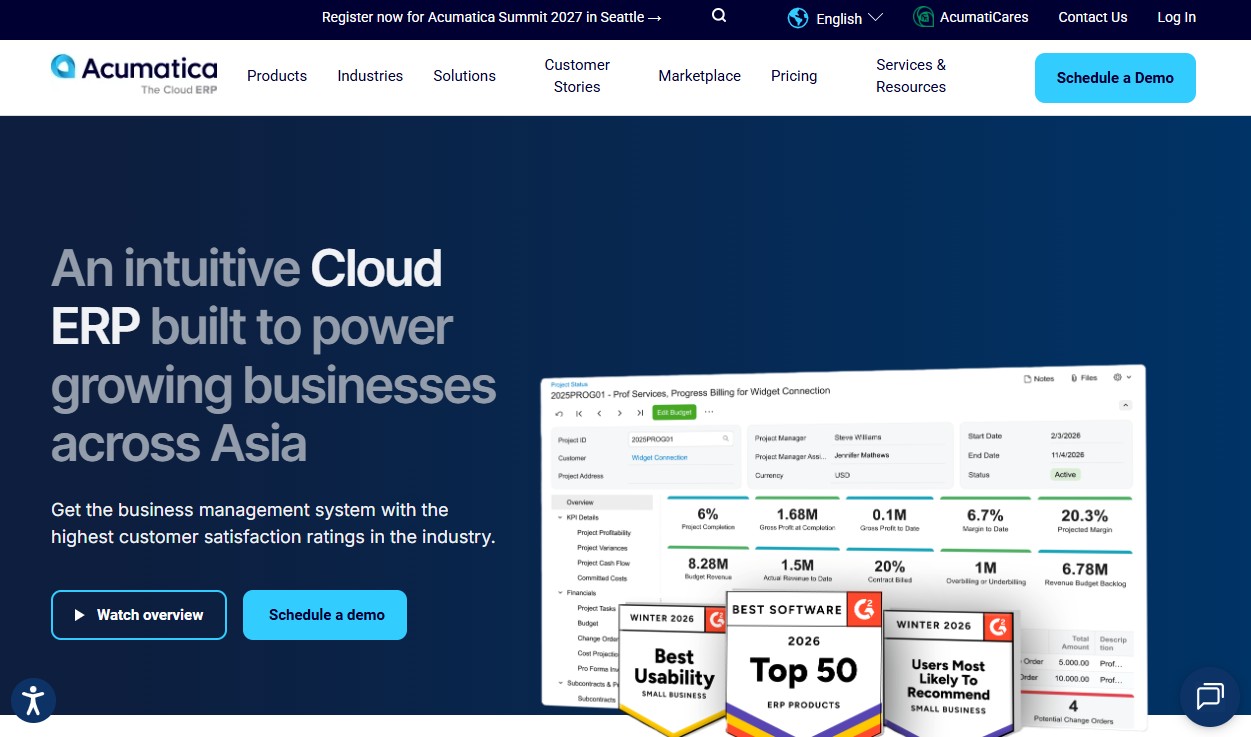
Acumatica isn’t built exclusively for aerospace and defense, but its support for engineer-to-order, make-to-order, and project-based manufacturing makes it a good fit for smaller aerospace suppliers and precision engineering businesses.
Rather than competing as a specialist aerospace ERP, Acumatica differentiates itself through its cloud-first approach and strong independent market recognition. The company was named a Leader in the 2024 IDC MarketScape: Worldwide SaaS and Cloud-Enabled Small and Midmarket Business ERP Applications and was recognized as a Strong Performer in the 2024 Gartner Peer Insights™ Voice of the Customer for Cloud ERP, where it received an overall 4.5/5 rating and 96% of reviewers said they would recommend the platform.
Key Features:
- Engineer-to-order manufacturing
- Project accounting
- Production management
- Inventory and warehouse management
- Embedded business intelligence
- Cloud-native architecture
Why choose Acumatica Cloud ERP?
Acumatica’s combination of manufacturing functionality and consistently strong analyst and customer recognition makes it a great option for mid-market businesses.
8. Infor CloudSuite Aerospace & Defense
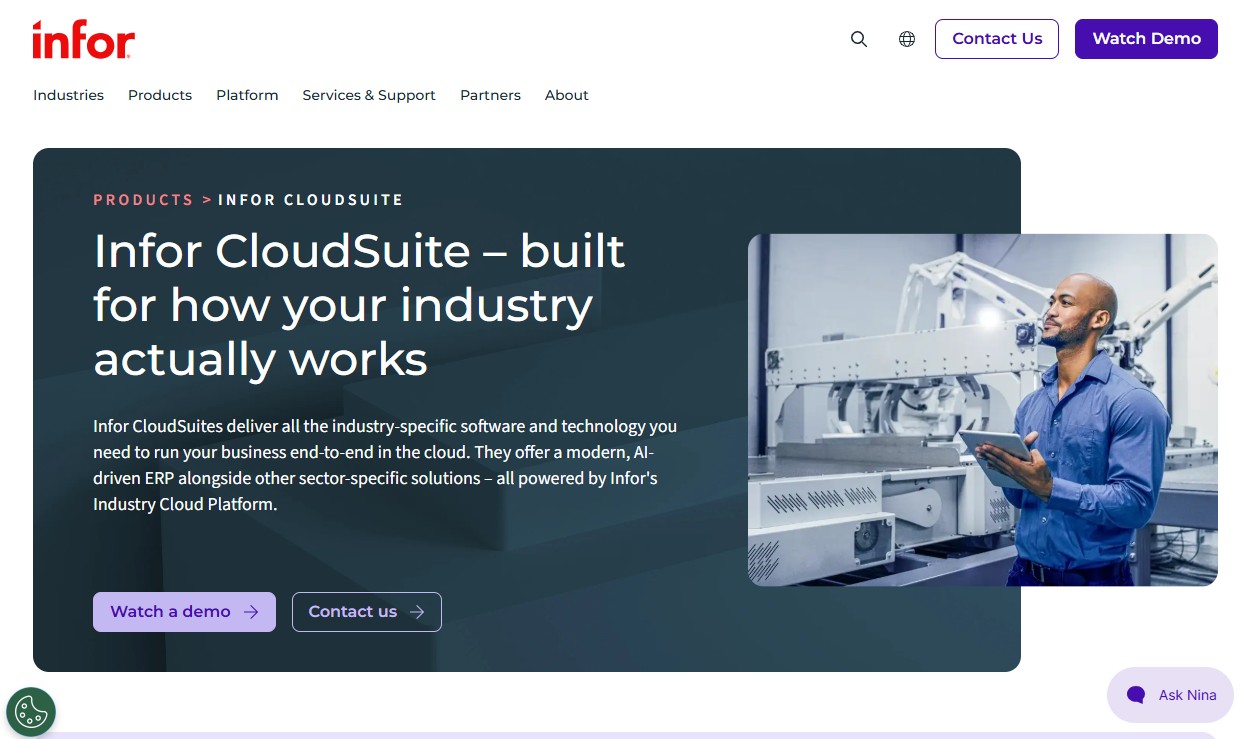
Infor CloudSuite Aerospace & Defense is an industry-specific cloud ERP that includes preconfigured workflows for aerospace manufacturing, supply chain management, quality, compliance, and aftermarket operations.
One of Infor’s strongest proof points is its industry focus. A good example is Safran Aerosystems, part of the Safran Group, which selected Infor CloudSuite to standardize ERP across its operations as part of a wider cloud transformation. By replacing multiple legacy systems with a single cloud platform, the company improved visibility and created a stronger foundation for future growth. This shows how Infor can support enterprise-wide standardization rather than simply digitizing individual processes.
Key Features:
- Industry-specific aerospace ERP
- Quality and compliance management
- Supply chain planning
- Manufacturing execution
- Asset and maintenance management
- Aftermarket service management
Why choose Infor CloudSuite Aerospace & Defense?
Choose Infor if you want an ERP built specifically for aerospace and defense rather than a configurable enterprise platform.
9. IFS Cloud
IFS Cloud is an enterprise platform that combines ERP, Enterprise Asset Management (EAM), and Field Service Management (FSM) for aerospace and defense manufacturers, MRO providers, and defense organisations.
A strong example is Marshall Aerospace, which chose IFS Cloud to replace legacy systems with a single platform supporting finance, supply chain, manufacturing, maintenance, and service management. For aerospace organizations managing both manufacturing and in-service assets, IFS can support the full lifecycle rather than just the factory floor.
Key Features:
- Enterprise Asset Management (EAM)
- Field Service Management (FSM)
- Manufacturing and supply chain management
- MRO management
- AI-powered planning and analytics
- Defence program management
Why choose IFS Cloud?
Choose IFS if your business needs to manage aircraft or defense assets through the full lifecyle, long after they leave the production line. If maintenance is your core business, our comparison of aviation MRO ERP software covers platforms built specifically for that work.
10. SAP S/4HANA Cloud
SAP S/4HANA Cloud’s aerospace and defence solution is designed for organizations managing complex engineering programs, long product lifecycles, and highly regulated operations.
SAP’s biggest differentiator is its focus on the digital thread. The platform helps aerospace organizations maintain visibility from product design through production and in-service support.
For manufacturers coordinating global supplier networks and decades-long asset lifecycles, this reduces data silos and creates a consistent source of operational data across the business.
Key Features:
- Digital thread across engineering and operations
- Manufacturing and supply chain management
- Asset management
- Procurement and sourcing
- AI-powered business processes
- Sustainability and compliance reporting
Why choose SAP S/4HANA Cloud?
Choose SAP is particularly well suited to large organizations replacing fragmented legacy systems.
11. Epicor Kinetic
Epicor Kinetic is a cloud-native manufacturing ERP with dedicated aerospace and defense functionality, including AS9100-compliant quality management, ITAR-aligned access controls, and an integrated earned value management module built to meet DCAA reporting standards. It handles the mix of make-to-order, engineer-to-order, and mixed-mode production common across aerospace supply chains.
Epicor’s strongest differentiator for aerospace buyers is its cloud multisite architecture, which is built for companies that grow by acquisition. New entities can be brought onto a shared instance quickly instead of running each acquired company on its own disconnected system.
Key Features:
- AS9100-compliant quality management
- Project-based cost tracking and earned value management
- Serial and lot traceability
- Cloud multisite deployment
- Integrated MRO and aftermarket service management
- Manufacturing execution and advanced planning and scheduling
Why choose Epicor Kinetic?
Choose Epicor Kinetic if your company grows through acquisition and needs a system that can bring new entities online fast, or if you need strong shop floor and manufacturing depth without an enterprise-scale price tag.
12. Deltek Costpoint
Deltek Costpoint is an ERP built specifically for government contractors, with DCAA and DFARS compliance, earned value management, and CMMC-ready cloud infrastructure built into the core product rather than added through configuration. It covers project accounting, contract management, procurement, and manufacturing for organizations working under cost-plus and other government contract types.
Costpoint’s biggest differentiator is depth in government contract accounting specifically. Its GovCon Cloud Moderate offering has completed FedRAMP Moderate Equivalency and supports CMMC Level 2 and Level 3 certification, and its TIPQA quality module is one of only six QMS solutions worldwide to hold FAA Safety Element Approval.
Key Features:
- DCAA and DFARS-compliant cost accounting
- Earned value management and EVMS support
- CMMC Level 2/3-ready cloud infrastructure
- FAR/CAS-aligned indirect cost allocation
- TIPQA quality management with FAA Safety Element Approval
- Contract and subcontract management
Why choose Deltek Costpoint?
Choose Deltek Costpoint if your business runs on government contracts and DCAA audit readiness is a daily operational requirement, not just a periodic compliance exercise. For a wider comparison beyond aerospace, see our guide to ERP for government contractors.
How Much Does Aerospace and Defense ERP Cost?
ERP pricing for aerospace and defense manufacturers varies by company size, deployment model, and how much compliance configuration the system needs out of the box.
Cloud ERP subscriptions across the vendors covered in this guide typically start in the $80 to $175 per user, per month range for mid-market platforms, with more specialized systems running higher once aerospace-specific modules like project-based earned value management or MRO functionality are added.
Total implementation cost tends to fall into three bands:
- Small suppliers and machine shops (under $50 million in revenue):roughly $25,000 to $400,000
- Mid-market manufacturers and Tier 1/Tier 2 suppliers ($50 million to $250 million in revenue): roughly $150,000 to $750,000
- Enterprise organizations and prime contractors ($250 million and up): often $1 million or more, with multi-year, multi-site rollouts
According to Panorama Consulting’s 2024 ERP Report, the median ERP implementation cost across industries was $450,000.
Aerospace and defense projects tend to land at the higher end of whatever band they fall into, since DCAA-compliant cost accounting, ITAR access segregation, and AS9100 quality workflows all add configuration time beyond a standard manufacturing rollout. Data migration and system integrations are the two most commonly underestimated line items in any ERP budget, and that holds true here as well.
Why Are ERP Solutions for Aerospace and Defense Important?
Here are the key reasons aerospace and defense companies invest in industry-specific ERP solutions.
Meeting strict regulatory and compliance requirements
Unlike most manufacturers, aerospace and defense companies operate within a complex regulatory environment that includes ITAR, DCAA, AS9100, FAR/DFARS, and increasingly, CMMC 2.0 cybersecurity requirements.
ERP platforms built for the industry help centralize documentation, automate audit trails, maintain quality records, and improve reporting for regulatory reviews.
Reducing the risk of costly ERP implementation failures
Choosing the wrong ERP platform can lead to years of delays, budget overruns, and operational disruption. According to industry statistics,73% of discrete manufacturing ERP implementations fail to achieve their intended business benefits, which shows the importance of selecting software that aligns with both operational and compliance requirements.
These risks are especially high in the complex and high-stakes world of aerospace and defense.
Managing increasingly complex supply chains
Modern aerospace programs depend on thousands of components sourced from suppliers across multiple countries. ERP systems help organizations manage procurement, supplier quality, production planning, serialized inventory, engineering changes, and aftermarket service from a single platform.
Supporting long-term digital transformation
Modern ERP systems serve as the foundation for AI, advanced analytics, IoT, predictive maintenance, and connected manufacturing initiatives.
Gartner forecasts that by 2027, 62% of ERP application spending will be on solutions with embedded AI capabilities, up from 14% in 2024, so it’s never been more important to choose a platform that can evolve alongside future business and regulatory requirements.
Best Practices for Choosing the Right Aerospace and Defense ERP Solution
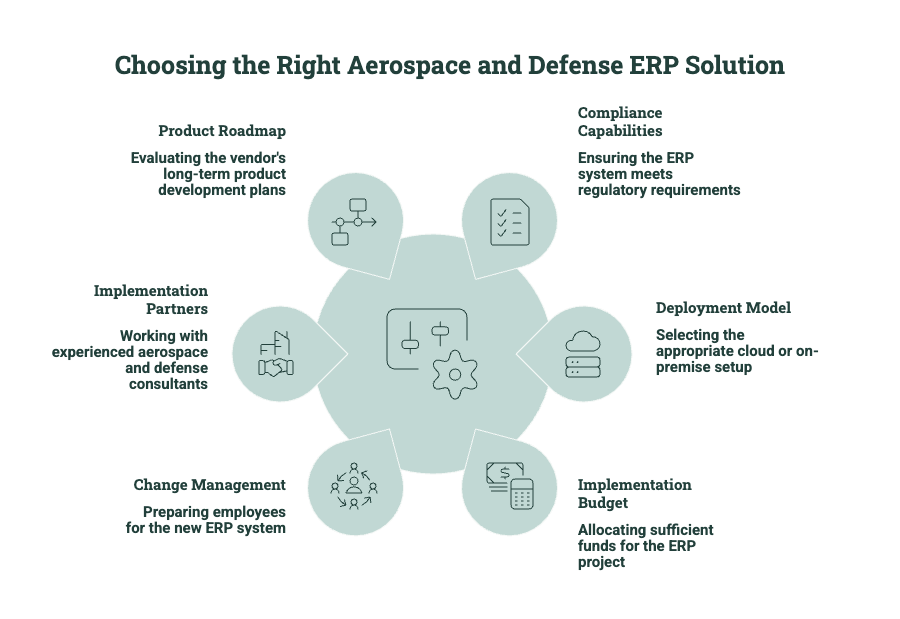
Selecting an ERP system for an aerospace and defense business requires more than comparing features or pricing. The right platform must support your compliance requirements, fit your manufacturing processes, and scale as your business grows. Here are six best practices to guide your evaluation.
1. Verify compliance capabilities before evaluating anything else
Compliance should be your first filter. Confirm whether the ERP system natively supports requirements such as ITAR, DCAA, AS9100, FAR/DFARS, and CMMC 2.0, or whether those capabilities require third-party software or custom development. A platform built for regulated manufacturing can reduce implementation complexity and simplify future audits.
2. Choose the right deployment model for your business
Cloud ERP isn’t the right fit for every organization. If you’re handling Controlled Unclassified Information (CUI) or sensitive government data you may require FedRAMP-authorized environments or AWS GovCloud instead of standard public cloud infrastructure. Review each vendor’s security architecture, compliance certifications, and deployment options before making a decision.
3. Budget for implementation
Licensing is only one part of the investment. According to Panorama Consulting, the average ERP implementation costs approximately $450,000, with expenses driven by data migration, integrations, customization, training, and change management. Building a realistic budget upfront reduces the risk of delays and unexpected costs later in the project.
4. Prioritize change management alongside technology
Even the best ERP system will fail if employees don’t adopt it. Make sure you set aside resources for training, documentation, and process redesign throughout the implementation. Successful aerospace ERP projects invest just as much in preparing their workforce as they do in configuring the software.
5. Work with implementation partners that understand aerospace and defense
Look beyond general ERP certifications and ask for aerospace-specific experience. Evaluate implementation partners based on their track record with aerospace manufacturers, government contractors, ITAR compliance, DCAA audits, and AS9100 quality systems. Ask for reference customers with similar operational and regulatory requirements whenever possible.
6. Evaluate the vendor’s long-term product roadmap
An ERP system is a long-term investment that should support your business for years. Look for vendors that continue investing in AI, automation, analytics, cybersecurity, and regulatory updates.
Signs Your Aerospace or Defense Company Has Outgrown Its Current ERP
Not every aerospace or defense manufacturer needs to replace its ERP right now. These are the patterns that typically mean it’s time to start evaluating:
- Multiple people maintain separate spreadsheets to track bill of materials revisions, effectivity dates, or engineering changes because the current system can’t manage them
- ITAR-controlled technical data isn’t cleanly segregated by user citizenship status, and access control is handled through manual processes or physical separation instead of the system itself
- A recent DCAA audit flagged the accounting system as inadequate, or preparing for incurred cost submissions requires significant manual reconciliation
- Earned value reporting for a government contract is built in spreadsheets outside the ERP because the system has no native EVMS capability
- Quality documentation for AS9100 or NADCAP certification lives in separate tools rather than being tied to production records inside the ERP
- A recent acquisition or new facility can’t be brought onto the existing system without a lengthy, disconnected implementation
- The company has outgrown QuickBooks or a generic small-business accounting platform but hasn’t yet moved to a system built for regulated manufacturing
If two or more of these apply, the cost of continuing to work around the current system is likely already higher than the cost of evaluating a replacement.
Make Your ERP Decision with Confidence with Alpha Apex Group
Alpha Apex Group helps organizations reduce the risk of ERP selection and implementation through independent, vendor-neutral consulting. Our ERP consultants work with your team to assess business requirements, evaluate vendors, develop RFPs, and create implementation roadmaps that match technology to your operational and strategic goals.
We also provide expert guidance on system integration, custom ERP implementations, and ongoing optimization to help you maximize the long-term value of your ERP investment.
Ready to choose an ERP that supports your business today and scales with you tomorrow? Connect with Alpha Apex Group today to discuss your goals and build an ERP strategy that delivers measurable results from selection through implementation and beyond.
FAQs: Aerospace and Defense ERP Solutions
What makes aerospace ERP software different from a standard manufacturing ERP?
Aerospace ERP software is built for highly regulated manufacturers that must manage complex bills of material, government contracts, engineering changes, and compliance requirements. It also provides better visibility into supply chain manufacturing, quality management, and traceability than a general-purpose ERP.
How does an ERP provider help aerospace and defense companies maintain ITAR compliance and protect intellectual property?
A qualified ERP provider helps organizations safeguard intellectual property by controlling access to sensitive technical data, maintaining audit trails, and securing engineering documentation. Many leading platforms also support cybersecurity certifications and compliance frameworks required for government contracting.
What should I look for in an ERP provider if my company works on defense contracts?
Beyond core ERP functionality, look for an ERP provider with experience supporting DCAA accounting, ITAR, CMMC 2.0, earned value management, and government reporting requirements. Strong Global Partners and implementation specialists with aerospace expertise can also reduce deployment risk.
How can an ERP system improve supply chain resilience for aerospace manufacturers?
Modern ERP systems centralize supply chain data, giving manufacturers real-time insights into inventory, suppliers, production schedules, and procurement. This improves supply chain resilience by helping organizations respond more quickly to disruptions, changing customer demand, and supplier issues.
How does Alpha Apex Group help companies choose the right aerospace ERP software?
Alpha Apex Group provides independent ERP consulting to help organizations evaluate aerospace ERP software, define business requirements, compare vendors, develop RFPs, and create implementation roadmaps. The goal is to select the platform that best supports your operations, compliance requirements, and long-term business objectives.
Can Alpha Apex Group help us prepare for AI and future technology investments?
Yes. Alpha Apex Group helps organizations evaluate ERP platforms with capabilities such as machine learning, automation, advanced analytics, and AI-powered reporting. This means your ERP investment remains flexible as technology and business requirements continue to evolve.
How do changing defense budgets affect ERP selection?
Changes in defense budgets can influence production forecasts, contract opportunities, and customer demand across the aerospace and defense industry. Choosing a scalable ERP platform gives organizations greater flexibility to adapt operations and make better decisions using real-time insights.
Source Appendix: Top Aerospace and Defense ERP Solutions
- The Business Research Company — Aerospace and Defense Global Market Report
- Apps Run The World — Top 10 A&D Software Vendors, Market Size and Forecast 2024–2029
- U.S. Department of State — DDTC (ITAR)
- Defense Contract Audit Agency (DCAA)
- AS9100 Store — What is AS9100?
- Panorama Consulting Group — The 2024 ERP Report
- Acquisition.gov — DFARS
- DoD CIO — CMMC
- Godlan — ERP Implementation Failure Statistics
- Gartner — Embedded AI in Cloud ERP Applications and Faster Financial Close
- WinMan — ERP Software for Aerospace and Defence
- WinMan — August Newsletter 2024
- Rootstock — Vertical Aerospace Case Study
- Dassault Systèmes — 3DEXPERIENCE Platform
- PR Newswire — SYSPRO Celebrates 40 Years of Innovation
- Microsoft Dynamics 365
- Adeaca — Microsoft Dynamics 365 for Aerospace and Defense
- HSO — MFG360 Manufacturing Accelerator
- Sage X3
- Datel — A View of the Aero Services Global Group
- Acumatica
- Acumatica — 2024 IDC MarketScape SMB ERP
- Acumatica — 2024 IDC MarketScape Mid ERP
- Infor — CloudSuite Aerospace & Defense
- Infor — Safran Aerosystems Case Study
- IFS Cloud — Aerospace and Defense
- Aircraft IT — IFS Helps Marshall Aerospace
- SAP — Aerospace and Defense
- SAP Community — Enabling the Digital Thread
- DualEntry — ERP Implementation Cost Calculator
.webp)
.jpg)
.jpg)