AI Engineer vs. Software Engineer: When to Hire Each
Since 2023, AI has been reshaping how engineering teams design, code, and deliver. Routine coding and testing tasks are now partly automated, which reshapes how you plan hires and structure teams.
Today, all tech corporations face a big challenge:
Knowing when to invest in an AI engineer versus strengthening your software development bench.
We'll help you make that call.
In this article, you'll learn to identify where each role delivers measurable returns and how your stage of growth affects the right choice. You’ll compare hiring signals, project fit, and ROI trade-offs.
First, let’s look at what traditional software engineers actually do.
What Traditional Software Engineers Do
Traditional software engineers build deterministic systems that produce the same result every time for a given input. Their focus is on reliability, system architecture, and long-term maintainability.
In practice, that means designing, testing, debugging, and integrating software systems across web, mobile, and enterprise products. They use established programming languages such as Java, C++, JavaScript, SQL, React, and Node.js to bring predictable logic to complex operations.
Also, check out this TikTok video for a quick look at what software engineers actually do.
@sajjaadkhader what do software engineers ACTUALLY do ⁉️ #softwareengineer #swe #sweintern #software #coding #fyp ♬ original sound - Sajjaad Khader
Market data proves how valuable this role is.
According to Mordor Intelligence, the software development market is projected to reach $1.04 trillion by 2030. This growth shows that these engineers remain important for scalable, dependable delivery.
You still see their work in every product you use daily, from a retail platform’s checkout flow to an internal analytics dashboard.
Next, let’s look at how AI engineers approach this work differently.
What AI Engineers Do
AI engineers build probabilistic systems that learn from data to make predictions, adapt over time, and automate decisions. Their work revolves around model development, training, validation, deployment, and retraining cycles that keep performance aligned with real-world conditions.
These engineers rely on AI algorithms such as Python, TensorFlow, PyTorch, scikit-learn, AWS SageMaker, Azure ML, and Hugging Face. They use these to build and manage intelligent systems that scale. If you're also weighing data-focused roles, our comparison of AI engineer vs. ML engineer explains how the two differ.
And they’re also becoming critical to modern tech teams. The Future of Jobs Report 2025 notes that the “AI and Machine Learning Specialist” job category is projected to grow by around 80% by 2030.
This growth reflects how fast organizations are adding intelligence into daily operations through chatbots, fraud detection tools, and recommendation engines. For more insights, you can watch this YouTube video:
Moving on, let’s look at how hiring trends reflect this shift.
How the Engineering Job Market Is Shifting
The engineering job market has changed faster than most teams expected. Automation, AI tools, and new skill demands are rewriting hiring priorities across all disciplines.
So, here are the biggest shifts shaping how you think about future roles.
Decline of Entry-Level Traditional Roles in Software Engineering
Early-career roles are shrinking, especially in software development and support functions. A working paper from Stanford University’s Digital Economy Lab found a 13% employment decline for workers aged 22-25 in roles most exposed to AI, such as software engineering and customer service. This matters because automation now handles the repetitive, lower-risk work that used to train juniors.
The impact doesn’t stop there. According to the SignalFire State of Tech Talent Report, Big Tech reduced new graduate hiring by 25% in 2024, and entry-level developers now make up just 7% of total new hires.
Because of this, the “broken rung” problem has deepened. This means fewer simple debugging or documentation tasks are available, and you see fewer clear paths for developing foundational skills.
AI Engineering Roles Are Soaring
While traditional entry points are narrowing, demand for AI engineering and data engineering has surged. PwC reports a 38% increase in all AI-related roles since 2019, which shows how fast teams are investing in AI development infrastructure.
The pace is even faster for specialized roles. Autodesk’s 2025 AI Jobs Report notes a 143% rise in AI engineer listings since mid-2024.
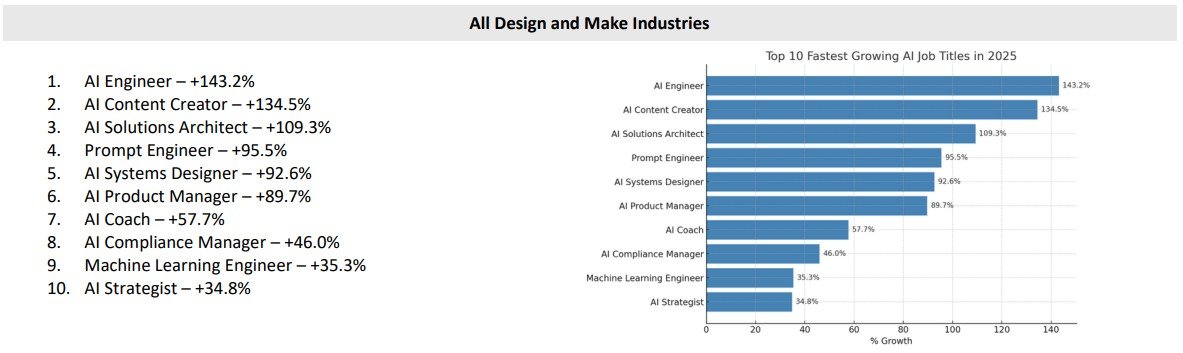
Companies that once hired generalists are now focusing on machine learning models, cloud computing, and predictive modeling.
And you can see this shift clearly.
Hiring has moved away from full-stack and frontend engineers and toward data-centric and backend specialists who can operationalize AI applications instead of just maintaining static systems.
Traditional Developers vs AI Engineers: The Bifurcation of Skills
Engineering talent is splitting into two clear lanes. Traditional developers still anchor reliability, system design, and scalability. AI engineers, on the other hand, work at the intersection of data science and automation.
This means optimizing AI models and building systems that adapt to new information without constant human input. Normally, this divergence creates hybrid teams that rely on both stability and innovation.
Now, let’s look at how these technical differences appear in practice.
AI Engineer vs. Software Engineer: Skills and Technical Focus
Hiring for engineering today means matching technical foundations to business outcomes. Each role contributes differently to how you build, scale, and maintain systems that serve real users. So, let's see where their skills diverge most clearly.
AI Engineer vs. Software Engineer: Technical Foundation
This comparison helps you see how each role approaches engineering from a different core logic. One based on data learning, the other on deterministic control.
| Area | AI Engineer | Traditional Software Engineer |
|---|---|---|
| System type | Probabilistic (learning-based) | Deterministic (rule-based) |
| Focus | Data models, inference, retraining | Architecture, debugging, testing |
| Tools | PyTorch, TensorFlow, Hugging Face | Java, React, SQL, C++ |
| Evaluation metrics | Accuracy, recall, bias control | Code efficiency, uptime, scalability |
These differences define how teams deliver value.
- AI engineers build adaptable solutions that learn from changing data.
- Software developers prioritize stability and performance across predictable workflows.
Both are important because one drives intelligent adaptation, the other safeguards system reliability.
AI Engineer vs. Software Engineer: Problem-Solving Approach
Traditional engineers work with explicit logic, which means writing precise rules that define outcomes under specific conditions. Their approach suits transactional systems, where every user action or request must behave consistently.
AI engineers, on the other hand, operate in an environment of uncertainty. They use statistical inference to train ML models that improve through iteration and feedback.
For example:
- A traditional fraud detection system blocks a transaction if it meets a predefined threshold.
- An AI-driven one predicts suspicious behavior based on neural networks and continuous model accuracy improvements. The result is a system that evolves alongside the data it interprets.
This distinction changes how you plan projects. A rules-based approach accelerates speed and control, while a learning-based one introduces flexibility and predictive insight.
Pro tip: Looking to scale your dev team fast? Check out our guide on the top software engineer staffing agencies next.
AI Engineer vs. Software Engineers: Collaboration and Workflow
The workflows behind both roles are converging:
- Traditional teams now embed application program interfaces powered by artificial intelligence.
- AI engineers rely on DevOps practices to deploy and monitor production ML models.
The biggest difference lies in collaboration.
- Traditional engineers typically work closely with software architects and QA teams to stabilize delivery pipelines.
- AI engineers spend more time with data engineers, product analysts, and infrastructure teams managing cloud platforms.
Together, these cross-functional groups create hybrid workflows that blend automation with sound engineering discipline. And that’s where your next focus should go. On understanding how productivity tools and automation reshape both roles in practice.
Productivity, Tools, and Automation for AI Engineers and Software Engineers
AI isn’t replacing developers, but it is changing how work gets done. The gap between traditional and AI-driven teams now comes down to how fast engineers can deliver, validate, and scale output using automation.
These are the trends shaping that shift.
AI-Augmented Development
AI-assisted tools are now part of daily workflows for many teams. For instance, code generation tools like GitHub Copilot and Amazon CodeWhisperer have made task completion dramatically faster.
AWS reports that developers using CodeWhisperer completed tasks 57% faster than those without it. Similarly, a review of GitHub Copilot found that engineers finished work 55% faster, which shows how automation can raise overall delivery velocity.
But here’s the nuance:
- Senior developers use these tools for augmentation.
- Early-career engineers may face displacement as automation replaces repetitive coding.
The productivity boost is real, but so is the need to redefine training and quality assurance roles around oversight rather than execution.
The Rise of “Super Engineers”
A new hybrid role is forming. These “super engineers” blend traditional coding with generative AI orchestration. They shape prompts, refine model output, and maintain reliability at scale.
These engineers are super based on their ability to do things quicker.
A McKinsey & Company lab study found that developers completed documentation and code-writing tasks in about half the time with AI assistance. That speed frees senior staff to focus on architecture, scalability, and high-impact work instead of boilerplate coding.
Because of this, organizations now value engineers who can:
- Reason across software development methodologies.
- Coordinate AI outputs with broader product lifecycle goals.
Remember: The shift isn’t about who writes more code, but who can design and supervise more efficient systems.
Human-AI Collaboration in Practice
AI collaboration looks different in each workflow.
- Traditional teams use AI for documentation, ticket resolution, and testing.
- AI engineers, on the other hand, co-develop and validate code generated by large language models like GPT-4 or Claude. The work has evolved from “writing code” to “validating AI output.”
This transition changes what productivity means: less manual repetition and more strategic control.
Now, let’s see how these shifts connect to hiring budgets, ROI, and real cost efficiency.
Pro tip: Dreaming of a remote tech team that actually delivers? Don’t guess your way through hiring. Check out our guide on the best IT recruiters for fast growth.
AI Engineer vs. Software Engineer: Cost, ROI, and Hiring Considerations
The financial side of hiring decisions has never been more complex. As AI-driven workflows reshape project scopes and delivery timelines, the true cost of talent depends on how quickly each role converts technical work into business value.
Cost Comparison between AI Engineers and Software Engineers
AI specialists demand higher pay because their skills directly affect automation capacity, predictive performance, and scalability. But the thing is that the market supports it.
According to Lightcast, job postings that require AI expertise offer about 28% higher salaries on average. This gap reflects how valuable top-tier AI expertise has become in the IT industry.
Of course, this is especially true when aligning systems with complex user requirements or deploying deep learning solutions.
| Factor | AI Engineer | Traditional Engineer |
|---|---|---|
| Avg. salary | $184,757 per year | $128,705 per year |
| Hiring difficulty | High (limited global supply) | Moderate (large talent pool) |
| Development speed | Slower start, higher long-term ROI | Faster delivery for defined tasks |
ROI and Business Impact of AI Engineers and Software Engineers
AI roles tend to pay off in automation and scalability.
- An AI engineer adds measurable value when you’re optimizing recommendation systems. After all, they’re introducing predictive analytics or integrating adaptive algorithms into products.
- Traditional engineers sustain stability through reliable releases, efficient code quality assessment, and scalable architecture.
Each role affects ROI differently. AI engineering aligns better with future-focused innovation, while traditional software developers maintain core systems that keep operations running.
The challenge is finding balance: automation delivers speed, while people shape vision and culture.
So now, let’s discuss how each of these roles becomes the right hire depending on your project scope and growth stage.
When to Hire a Traditional Software Engineer
You should hire a traditional software engineer when the project requires structured systems, predictable outputs, and reliable long-term maintenance. These engineers thrive in environments where the rules are clear and success depends on precision, scalability, and clean architecture.
The situations where traditional roles excel are:
- Product or platform development (e.g., web apps, internal tools).
- Projects with clear, deterministic requirements and minimal data modeling.
- When time-to-market matters more than experimental innovation.
In practice, this includes front-end engineers, back-end engineers, and DevOps engineers who specialize in maintaining system performance, integrating APIs, or managing deployments across cloud environments.
These roles are important when you’re building user-facing systems or internal tools that must work consistently under high load.
Think about a logistics management platform or an e-commerce dashboard. Both rely heavily on clean data structures, dependable web application frameworks, and well-documented workflows across the software development lifecycle.
So, you need engineers who can balance code efficiency with maintainability. This is the kind of predictability that drives uptime and reduces post-release risk. Also, if your business depends on reliability, compliance, or speed of delivery, traditional engineers will provide the structure and consistency you need.
When to Hire an AI Engineer
You should hire an AI engineer when your product’s value depends on automation, prediction, or intelligent decision-making. These engineers help you turn data into scalable insight and efficiency. This is especially true when the business impact depends on accuracy, personalization, or operational foresight.
The ideal scenarios when to hire an AI engineer are when automation, prediction, or intelligence drives value. That includes:
- Predictive analytics or recommendation engines.
- Fraud detection, anomaly tracking, or smart assistants.
- Vision or NLP applications.
This role becomes essential once your infrastructure supports advanced data operations. It requires a mature data stack, solid pipelines, and reliable cloud architecture.
AI engineers thrive in environments where systems continuously learn and adapt rather than where they only execute pre-written logic. That’s why this function fits best for mid-to-large enterprises or scaling startups that already rely on strong data collection and processing frameworks.
Also, hiring too early can waste resources, but hiring too late can slow automation opportunities that directly improve ROI. So timing depends less on hype and more on how ready your organization is to support sustained AI workflows. When you're ready, our complete guide to hiring AI engineers walks through the process step by step.
AI Engineers and Software Engineers in Hybrid Hiring Models
In many cases, the best strategy is to combine both worlds. AI engineers handle model logic and predictive layers, while software engineers focus on deployment, testing, and maintenance. Together, they form a closed feedback loop between experimentation and production stability.
Cross-training also helps future-proof your team.
Upskilling traditional engineers in machine learning and data pipelines bridges knowledge gaps and reduces dependency on scarce AI talent. This balance keeps innovation running without disrupting delivery speed or product reliability.
The Future of Engineering Teams
The next stage of hiring in tech is about how AI and traditional engineers evolve together. As automation reshapes workflows, the best teams will be defined less by job titles and more by how fast they learn, adapt, and apply new tools to business goals.
Here are the emerging traits and strategies shaping your next wave of technical hires:
The Rise of AI-Augmented Generalists
A new generation of hybrid engineers is bridging AI orchestration with classic software depth. They understand how to design and validate systems that learn, while still writing the backbone code that keeps them stable.
The boundary between AI and traditional roles is fading fast as both start using each other’s tools. AI engineers rely on DevOps pipelines, and software engineers embed machine learning APIs directly into production code.
Hiring for “Learning Velocity” and Judgment
Technical skill matters, but adaptability now decides long-term value. The best engineers learn fast, test faster, and make sound trade-offs without waiting for perfect data.
They balance explicit, documented knowledge with the tacit experience that comes only from building and breaking real systems. This mindset lets your team evolve with new frameworks instead of being disrupted by them.
Strategic Advice for CTOs and Hiring Managers
Hiring priorities should match your company’s growth stage. Early-stage startups gain more from generalist software engineers who can deliver quick MVPs. Scaling or data-driven organizations benefit from AI engineers who build predictive and automated systems.
Enterprise innovation labs perform best with hybrid teams. They can combine both skill sets while investing in retraining and cross-disciplinary collaboration.
Remember, the strongest engineering teams aren’t defined by titles, but by their ability to grow with the technology they build.
How We Connect AI Innovation with Traditional Engineering Strength
At Alpha Apex Group, we can help you build high-performing technology teams by connecting you with proven software engineers and next-generation AI talent. As a global executive search and recruitment firm, we specialize in both emerging AI disciplines and established software development roles.
We recruit AI engineers skilled in machine learning, automation, and data science, as well as traditional developers with deep experience in full-stack, backend, and system architecture. This balance helps your organization scale innovation without sacrificing operational reliability.
Our process goes beyond basic talent sourcing.
We apply in-depth technical screening, AI competency analysis, and strategic talent mapping to align every candidate with your company’s technical priorities and culture.
We’ve completed more than 2,000 successful placements, deliver qualified candidates within 72 hours, and achieve hiring speeds 60% faster than the national average.
But our work doesn’t stop once a placement is made.
We stay engaged through onboarding, post-hire consultation, and retention support to maintain long-term performance.
That’s how we help you make smarter hiring decisions. With us, you can identify when to bring in AI engineers to drive innovation and when to strengthen your traditional teams for stability and delivery speed.
Build the Right Mix of Talent with Alpha Apex Group
The question isn’t whether to hire AI or traditional engineers, but how to integrate both for lasting growth. As AI reshapes development workflows, software engineers who adapt to new tools become important. At the same time, AI engineers who understand system design lead the next phase of transformation.
The smartest move is to balance experimentation with operational stability and hire for adaptability rather than just technical skill. Because innovation scales only when the right people build it.
Ready to build a team that can take you there?
Contact us at Alpha Apex Group to find the talent that helps you do exactly that.
FAQs
Which is better, software engineering or AI engineering?
Neither role is inherently better because it depends on your business goals. Traditional software engineers build and maintain systems, while AI engineers create models that drive automation and prediction.
Can a software engineer be an AI engineer?
Yes, but it requires retraining. A strong foundation in coding and systems gives you an advantage, but you’ll need to learn data modeling, algorithms, and machine learning tools.
Are AI engineers paid more than software engineers?
In most cases, yes. Roles requiring AI expertise command higher pay because of the smaller talent pool and the complexity of model-driven work.
Can AI beat software engineers?
AI can accelerate development, but can’t replace human logic or design judgment. The most productive teams combine both because engineers who guide AI tools deliver the best outcomes.