AI Engineer vs. ML Engineer: Who Should You Hire?
Hiring the wrong engineering role can slow down your delivery and drain your budget before you see any real progress. That's serious, and these two titles may look similar, yet the work each engineer drives inside your product leads to very different results.
So, you want to hire the right person, whether you’re planning features that rely on AI engineering or data-driven decisions built through model development.
You’re on the right page.
The points in this guide help you compare both roles through:
Real responsibilities
Cost impact
Execution speed
And more
You’ll see who delivers what, and how each hire shapes your next few months.
But first, let’s look at what AI engineers and ML engineers actually do.
P.S. Some organizations need help assessing whether they should invest in product-facing AI or data-driven ML systems. Alpha Apex Group helps companies scope the right role before hiring, so businesses avoid mis-hires that result in overpaid generalists and slow delivery.
What AI Engineers Actually Do
AI Engineers turn models into working product features that users rely on. Their focus sits on building AI-driven components such as chatbots, copilots, and other tools that support real decisions inside your product.
These engineers take existing models or custom ones and connect them to the workflows your team already maintains.
As a result, you get features that handle tasks through conversational AI, natural language processing, or computer vision, depending on your needs.
But the main value comes from how they shape the user flow, manage cost and response time, and integrate these systems into your broader stack.
This role has become very important today and it doesn't seem like it's going to slow down in the future. According to KSI, the market for AI engineering is projected to grow from $14.780 billion in 2025 to $67.730 billion by 2030. This shows how fast product-facing AI is expanding.
This role matters most when your goal is to ship working automation inside your product. So, here's a quick video explaining what AI engineering is if you want to learn more:
AI Engineer Skills You Should Look For
An AI engineer needs strong engineering fundamentals and the ability to connect models to real product flows. The right hire also shows practical judgment.
The key skills of this role include:
Solid software engineering with experience integrating pre-trained models into real applications.
Familiarity with deep learning, image processing, and language-based features.
Practical use of OpenAI, Anthropic, and other AI tools.
Clear thinking around API development, latency, and cost tradeoffs.
Skill in shaping user flow and testing how the feature behaves under real usage patterns.
Cloud fluency is also essential. Model inference, data pipelines, vector databases, and distributed processing all sit on cloud infrastructure. An AI engineer should know how to design and optimize these workloads across AWS, Azure, or GCP to keep latency low and costs predictable.
What AI Engineers Will Own
You rely on AI engineers to own the full lifecycle of AI-driven work inside your product. They take charge of how:
Data flows into the model.
Outputs return to users.
These pieces stay stable as your product grows.
These people set the guardrails for accuracy, quality, and behavior across every AI-powered action. They also decide how experiments move into production and how new model updates roll out without disrupting active users.
With that in place, the next step is understanding what ML-focused roles handle, so let’s look at that now.
What ML Engineers Actually Do
ML engineers build and train predictive models that learn from your data and support decisions inside your product. Their work centers on:
Data pipelines
Feature engineering
The ongoing model training needed to keep performance stable over time
This role matters because production-grade models depend on clean inputs and clear metrics.
And according to Statista, the global ML engineering market is projected to reach $475 billion by 2031, which signals how quickly these skills shape modern systems.
You can check out this YouTube video to learn more about the daily tasks of an ML engineer:
ML Engineer Skills You Should Look For
An ML engineer brings technical depth to the parts of your system that depend on data quality, stable training cycles, and measurable performance. Their value shows up in how well they manage the steps that turn raw inputs into reliable outputs.
Here's what these people bring to the table:
Strong command of data analysis and data processing.
Experience building and maintaining data pipelines.
Practical skill in model deployment with tools like TensorFlow, PyTorch, Scikit-Learn, or Spark.
Clear understanding of metrics, monitoring, and lifecycle retraining.
Ability to choose features, test assumptions, and correct drift.
Knowledge of patterns that support long-term stability.
Because demand follows this shift in focus, research shows that “Machine Learning Engineer” became thefastest-growing title in 2025 due to investments in generative models and enterprise infrastructure. This growth reflects how critical data-driven systems have become to product delivery.
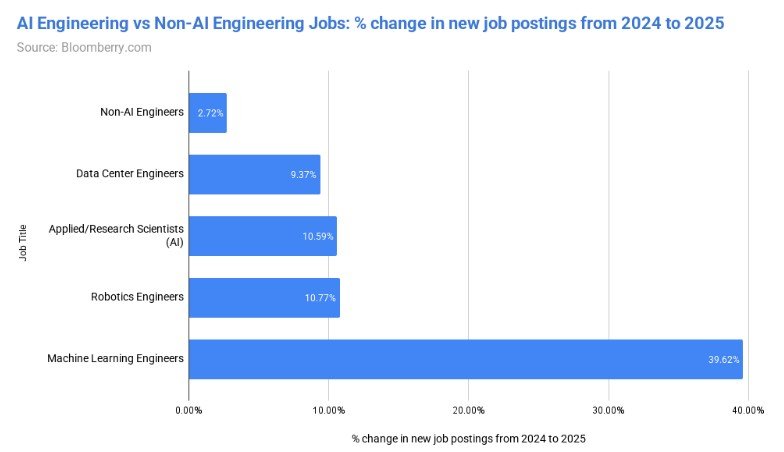
Source: Bloomberry.com
What ML Engineers Will Own
You depend on ML engineers to own the parts of your system where model behavior connects directly to business impact. They take charge of how:
Results move through your product.
Signals stay consistent as data patterns shift.
Updates roll out without breaking active workflows.
Their responsibility sits on keeping model outputs tied to the metrics your team actually watches. These professionals also guide how your data teams feed the model so the full loop stays steady and predictable across real usage.
This combination of essential responsibilities shows whyopen roles in this space passed 207,000 in 2025, according to LinkedIn data. In other words, the demand for these skills grows fast.
This context sets us up for the next part...
Who Should You Hire Based on Your Goal?
Hiring the right role starts with clarity about what you want to ship in the next few months. The work you prioritize determines whether an AI engineer or an ML engineer moves your roadmap forward. With that in mind, here are the scenarios that matter most for fast, low-risk delivery.
Pro tip: If you want to speed up your search, Alpha Apex Group gives you vetted AI and ML candidates in as little as 72 hours. With 2,000+ successful placements and a hiring process that’s 60% faster than the national average, you cut the wait from months to about 43 days.
If You Want Product Features Powered by AI
Choose an AI engineer when your priority is building user-facing features that rely on existing models or APIs. This includes:
An AI assistant inside your app
Customer support automation
AI-driven search
Or personalization that shapes real user experiences
These engineers work with cloud platforms and model APIs to move ideas into functioning product workflows without long research cycles. And this trend shows up clearly in adoption data.
Tidio research found that about 60% of B2B companies and 42% of B2C companies already use chatbot software, with usage expected to grow by more than 30% by 2025.
This demand reflects how frequently teams choose AI engineers for fast, product-ready features.
If You Want Prediction or Personalization from Your Own Data
Choose an ML engineer when you need systems that learn from your data and produce accurate outputs at scale. These use cases include:
Risk scoring
Demand forecasting
Recommendation engines
And predictive modeling tied to your product logic
This path requires strong data maturity, stable pipelines, and clear metrics that stay reliable as inputs shift. And here, the business impact is measurable.
McKinsey reports that European banks using machine learning for decisions saw up to 10% higher sales of new products and 20% declines in churn. This connects directly to the work ML engineers own, which is turning your data into outcomes that matter.
Use Cases by Industry
Different industries follow predictable patterns. To make this easier, here are the examples that show where each role fits best:
| Industry | Use Case | Recommended Role |
|---|---|---|
| SaaS | Copilot | AI engineer |
| Churn model | ML engineer | |
| E-commerce | Personalization | ML engineer |
| AI search/chat | AI engineer | |
| Fintech/Banking | Fraud detection | ML engineer |
| Document AI | AI engineer | |
| Healthcare | Diagnostics automation | ML engineer |
| Patient chat triage | AI engineer |
Now, let’s break down how to hire each tech talent effectively.
Step-by-Step: How to Hire the Right AI or ML Engineer
Once you know whether you need product features or data-driven predictions, the next risk is hiring someone who looks great on paper but never ships. This is where a simple, structured process helps you discern signal from noise.
Here are the steps that keep your hiring grounded in delivery.
Step 1: Review Their Portfolio (Not Their Buzzwords)
In this first step, you should focus on proof of work. Titles and tech stacks matter far less than what the engineer has actually shipped and how it performed under real usage.
For an AI engineer, look for evidence that they have shipped product features using AI inside real applications. Then check whether they have working demos or GitHub projects that show chatbots, copilots, or generative AI features in action.
From there, see if they’ve handled real constraints such as latency, cost, or UX flow issues in production, because those signals tell you how they think when tradeoffs are unavoidable. You want to see how they:
Integrated APIs
Managed system design decisions
Handled tradeoffs between speed, quality, and reliability
Formachine learning engineers, your lens should shift toward data and lifecycle work. So start by checking if they’ve built projects on real internal or industry datasets rather than only public toy data.
Then, look for clear metrics such as AUC, F1, precision, recall, or error rates tied directly to business outcomes because those signals show how they measure impact. Finally, confirm that they have trained, moved models into production, and monitored them over time. At the same time, document how they handled data drift when it appeared.
Red Flags to Watch Out For
These signs show whether they can support ongoing predictive analytics rather than just one-off experiments. Also, red flags for both roles look similar. The things to watch out for include:
Only notebooks and Kaggle challenges with no production proof
Research-only work when you need production impact
Fancy titles with no measurable outcomes attached
Credible portfolios carry more weight than self-reported skills, and data supports it.
In fact, Profy reports that 65% of hiring managers would definitely review a portfolio site for an inexperienced candidate, and 93% say they are likely to do so.
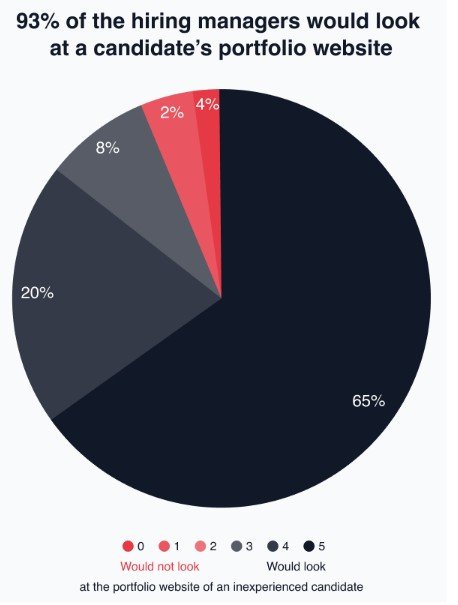
Source: Profy
Step 2: Test Their Practical Thinking (Small Assignment)
Next, you should test how they think using a small, time-boxed assignment. The goal is to see how they structure decisions and not to get free work. So, a one- to two-hour task is enough.
You can ask an AI engineer to design an AI feature inside your product.
For example, you can describe a support assistant, search copilot, or content helper and ask:
Which API or model would they choose and why?
How would they manage cost and latency at scale?
How would users interact with the feature, step by step?
What would success look like in terms of metrics and adoption?
Here, you look for tradeoffs, awareness of cloud computing constraints, and how they think about failure modes. A strong answer shows they can connect human capabilities and model behavior in a way that fits your product.
When it comes to ML engineers, you can give them a real business problem framed around data.
It could be churn prediction, recommendation algorithms, or a risk-scoring model. Then ask:
Which model family would they pick and why?
How would they handle bad data, leakage, and unstable metrics?
What pipeline steps would they deploy and in what order?
How would the model improve over time as more data arrives?
The key is how they reason about data quality, iteration, and long-term stability. And you should definitely test their knowledge and skills.
After all, companies that use structured take-home coding tests see 41% fewer early-stage departures than those relying on interviews alone, according to McKinsey’s Technology Talent Report (2023). That link between small assignments and retention shows why it is worth investing in this step.
Step 3: Conduct a Value-Focused Interview (Not a Quiz)
Once you have seen their work, you can move to an interview that tests how they think about value. This is not the time for trivia about libraries or AI theory. Instead, you want to know how they behave when tradeoffs are real.
For an AI engineer, you might ask:
“How would you balance accuracy versus response time in a chat feature for customer service?”
“How do you reduce hallucinations or bad answers from an LLM-based assistant?”
“What is your approach to testing AI features with users before a wider release?”
Good answers show how they design feedback loops, guardrails, and rollout plans that fit your existing production systems.
For an ML engineer, you can focus on metrics and lifecycle by asking:
“How do you pick the right metric for a given business goal?”
“How do you monitor a model once it is live?”
“What causes models to degrade over time, and how do you address that?”
Strong candidates can connect these answers to monitoring dashboards, alerting, and retraining strategies. And research backs this structure.
Studies on structured behavioral interviews show corrected validity coefficients around 0.56 for predicting job performance, compared to 0.34 for unstructured interviews.
It also shows an even higher (around 0.63) when situational questions are used for technical roles. That gap shows why it pays to anchor your interview on real scenarios instead of open-ended chat.
Step 4: Evaluate How They Communicate Decisions
Even a strong engineer can slow your roadmap if they cannot explain decisions clearly. So this step checks how well the candidate moves between technical depth and executive-level clarity.
You want to see whether they can:
Explain technical choices in plain language without hand-waving.
Connect performance and reliability to revenue, risk, or business process management.
Avoid jumping to complex architectures when simpler solutions would work.
That pattern will tell you how they make decisions under pressure.
In practice, this might look like asking them to describe a past project to a non-technical stakeholder. Then you track whether they stay accurate while removing jargon, and whether they proactively mention tradeoffs that matter to your leadership team.
Remember: Communication is not just a soft add-on. In fact, it directly affects delivery. Gartner’s 2023 report found that 67% of project failures involve communication breakdowns between technical and business teams. As such, good communication skills are a practical filter to see who will help your AI roadmap move forward rather than stall in misunderstanding.
Step 5: Clarify Ownership Before Making the Offer
Finally, before you extend an offer, you need clarity about what this person will own in the first 90 days. Without that, even a strong hire can end up with vague work that drifts away from your goals.
For an AI engineer, you might define ownership as:
A shipped feature integrated into your product.
A clear rollout plan, including monitoring and user feedback loops.
Alignment with your cloud stack, such as Amazon Web Services or Google Cloud.
For an ML engineer, you might define ownership as:
A production model backed by stable data pipelines and monitoring.
Documented metrics and thresholds tied to outcomes such as churn, conversion, or predictive analytics goals.
A roadmap for improvement over the next few quarters.
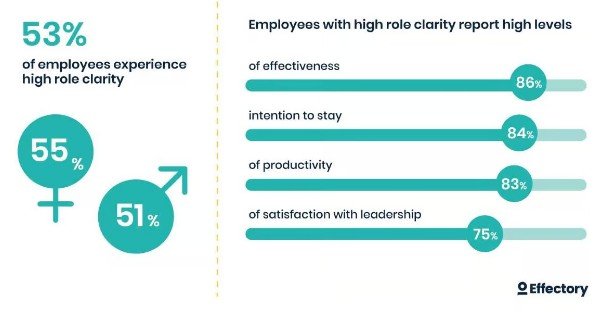
The point is that both roles get a concrete, testable outcome instead of just a vague mandate to “improve AI.” And the truth is that statistics on retention support this clarity.
Research on job descriptions shows that employees are 84% more likely to stay when their role and expectations are clearly defined from the beginning. That is exactly the effect you want when you invest in high-skill AI or ML talent.
Source: Effectory
Once you have this five-step process in place, you can approach offers with far more confidence. Now, all of this leads us to salary ranges.
Salary, Cost & Hiring Difficulty Between AI Engineers and ML Engineers
Compensation varies widely across AI and ML roles, and the gap usually reflects how close the work is to product delivery. AI engineers tend to earn slightly more, especially when their experience includes LLM integration, API orchestration, or work with complex neural networks.
This difference shows up in market data.
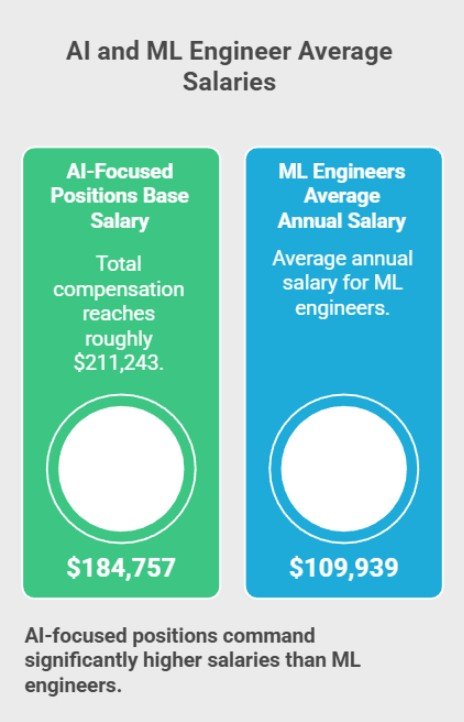
And on Built In, the average base salary for AI-focused positions sits at about $184,757 per year, with total compensation reaching roughly $211,243. These numbers line up with what you see when the work directly shapes product features and revenue.
ML roles follow a different pattern. ML engineers with strong MLOps and lifecycle experience are harder to find. This is particularly true when the work requires monitoring, model retraining, and alignment with business metrics.
Salary.com reports an average annual salary of about $109,939 for ML engineers.
This reflects how the role spans data work, metrics, and long-term stability rather than high-touch product features.
Another factor to consider is skill scarcity.
Skills-based hiring continues to rise across AI jobs. So, recent research shows that specialized skills command a wage premium of roughly 23%, which is even higher than the premium tied to advanced degrees.
Need Help Choosing or Hiring the Right AI or ML Role?
Hiring the wrong AI or ML profile can slow your roadmap, produce unusable research work, or waste data investments that never translate into product value. And on top of that, many teams overspend on talent that can’t ship real features or models because job definitions weren’t scoped clearly.
Alpha Apex Group helps companies like yours make the correct AI or ML hiring choice before we start interviewing.
We identify whether your current goals require a product-centric AI engineer, a data-focused ML engineer, or a hybrid profile with practical production experience.
Our team evaluates candidates on their ability to ship real systems that impact business metrics. Alpha Apex Group matches your goals with the right engineering role so you cut hiring risk, move faster, and strengthen the long-term ROI of your AI work.
If you want help making that call or filling the role fast, reach out to Alpha Apex Group and get guided support from proven hiring specialists.