How to Change Company Culture Without Breaking Your Business
Culture acts as a strategic advantage when it aligns people with clear company goals and daily decisions.
Strong company culture connects what leaders say with what employees experience, and that consistency shows up in customer service and execution.
Culture shapes employee performance and employee retention in a very direct way. A report from SHRM found that 83% of people who describe their culture as good or excellent say they are motivated to deliver high-quality work compared with 45% in poor cultures.
When people trust how decisions get made, they engage more fully with their roles.
In this article, we will explore the cost of poor culture and how to build the right culture for your business.
P.S. Struggling to fix culture without wasting months on trial and error? This list of the Top 11 Company Culture Consulting Firms gives you proven partners who can diagnose issues fast and guide real change without disrupting your business.
Why Company Culture Matters
Toxic or stagnant culture has a real price. When employees disengage, results suffer quickly.
In unhealthy cultures, high performers often feel trapped between conflicting priorities and unclear expectations, so they either mentally check out or look elsewhere.
A survey of tech workers found that45% plan to quit because of a toxic environment, and that kind of churn creates knowledge gaps and rising hiring costs.
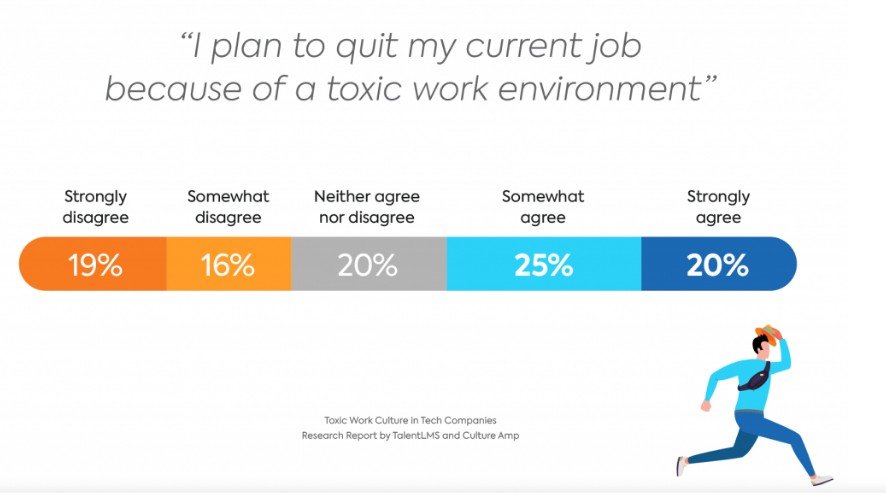
Image source: talentms
Burnout is another warning sign. One HR trends survey reported that65% of employees feel burned out, and many say it directly affects their performance. If leaders ignore these signals, customer centricity and service quality decline, and even loyal clients start to feel that something is off.
Over time, poor culture slows decision-making, weakens business processes, and damages the brand that attracted talent and customers in the first place. The longer a company tolerates this drift, the more expensive any company culture change becomes.
Why Culture Change Efforts Fail
Culture change efforts often fail and can damage the business when treated as a side project rather than a disciplined shift in how work gets done.
Leaders sometimes announce new values or reset the organizational chart without adjusting the underlying governance model, decision rights, and business processes. So employees see mixed signals and quickly revert to old habits.
Another weak spot is leadership capability.
A review of change management statistics found that only 27% of employees agree their leaders are trained to guide teams through change.
When managers are unsure how to coach people, run employee surveys, or use performance management software to reinforce new expectations, culture efforts stall.
To avoid this trap, leaders need a simple culture transformation plan that starts with clear outcomes, connects them to the organizational structure, and builds in honest feedback loops. Done this way, culture work supports performance instead of creating confusion or change fatigue.
Diagnose the Company Culture You Actually Have
Company culture is the shared way people think, act, and decide at work. You see organizational culture in who speaks up, who stays quiet, and which ideas win. It shapes how managers treat their teams and how teams respond when something goes wrong.
If people feel safe raising concerns and testing new ideas, you are likely building a learning culture. If employees avoid risk and defer to hierarchy, the culture may be more cautious and rule-bound.
Culture also appears in moments that affect employee satisfaction and customer centricity. For example, do leaders praise only heroic individual efforts, or do they also recognize cross-functional collaboration?
Do frontline employees feel empowered to fix small customer issues on the spot, or do they escalate every decision?
These patterns tell you whether the real culture supports your company goals or quietly fights them.
How to Assess Your Current Company Culture
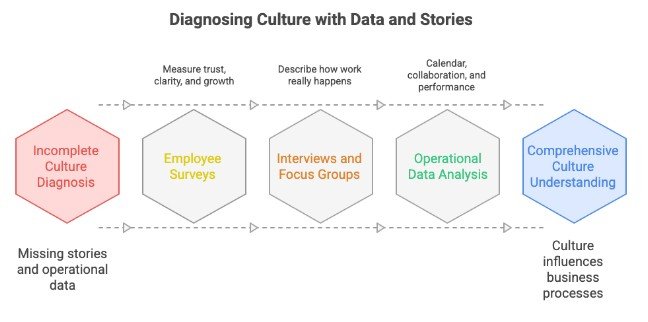
To diagnose culture with rigor, you need both data and stories. Employee engagement surveys and other employee surveys can show how people feel about trust, clarity, and growth.
Many organizations run engagement surveys, yet only 58% of HR leaders reported using culture surveys to measure engagement and value alignment.
You can deepen the picture with interviews and focus groups that let employees describe how work really happens. Ask about decision speed, conflicts between teams, and what it takes to get a good idea approved. Compare these stories with hard data like attrition rates, promotion patterns, internal mobility, and customer satisfaction scores.
One trends report found that 92% of large organizations conduct some kind of employee engagement survey, yet less than half of employees believe leaders act on the results. This gap shows why culture transformation efforts must convert insights into visible changes.
Operational data adds another angle. Calendar and collaboration tool patterns show whether teams work together or sit in silos. Performance and productivity metrics show where high employee performance sits in the organization and whether it connects to healthy behaviors or burnout.
Identifying Disconnects Between Values and Reality
Once you understand how people experience work, compare that reality with the values on the wall.
Stated values often emphasize respect, inclusion, and accountability, yet daily decisions may tell a different story. If leaders claim that work-life balance matters, yet reward those who respond to messages at all hours, employees will follow the behavior that gets praise.
Employee comments and exit interviews help you spot these disconnects. If you hear that promotions go to the loudest voices rather than those who deliver results, you have a fairness problem, even if your values mention equity.
If you say that Customer Service is a top priority, yet frontline teams lack authority or tools to solve issues quickly, customers will feel the gap. Mapping these patterns to organizational structure and governance model choices shows where culture and design reinforce each other and where they clash.
Finding Shadow Culture and Toxic Patterns
Every company has a shadow culture, the unwritten rules people follow to survive. You can spot it in hallway comments, jokes, and the stories people tell new hires. If employees warn newcomers about certain leaders or teams, that is a clue that official messaging hides real risks. Listen for repeated phrases that point to fear, blame, or cynicism.
Anonymous pulse checks and short listening sessions can surface patterns that formal channels miss.
For example:
Repeated reports of unproductive meetings, unclear priorities, or passive-aggressive feedback often signal deeper issues with trust. In some organizations, a significant share of employees report bullying or exclusion in internal surveys, even when formal complaints remain low.
When you identify these toxic pockets early, you can address them before they undermine company culture change efforts or damage employee retention. Over time, this kind of honest diagnosis supports a stronger employee value proposition and more sustainable employee engagement.
Define the Culture You Want With a Clear Vision
With a solid diagnosis in hand, you can define a culture vision that actually supports your strategy rather than just sitting on a poster. Start by naming where the business is headed and how you plan to win.
If your company's goals focus on innovation and rapid growth, organizational culture needs to reward thoughtful risk, learning from mistakes, and cross-functional problem solving.
If your strategy leans toward operational excellence, the culture should emphasize clarity, discipline, and continuous improvement in core business processes.
Workforce expectations also need a clear place in that vision. Recent research shows that 60% of employees prefer a hybrid arrangement rather than fully remote or fully on-site work. If your culture signals that flexibility is a perk only for a few employees, you will struggle with employee retention and recruitment for critical roles.
The culture vision should connect these workforce needs to your business models and customer-centricity goals. For example, a service company might define a future state in which teams have clear autonomy to solve customer problems, with guardrails on quality and risk that align with the growth plan.
A useful test is simple. If someone reads your strategy and then reads your culture vision, they should be able to see how employee behavior will need to change to support that strategy. When that link feels vague, the culture transformation work will confuse people rather than guide daily choices.
Creating or Refreshing Core Values and Leadership Principles
Once the high-level direction is clear, translate it into specific values and leadership principles. Vague words like integrity or excellence do not help much on their own. They need clear definitions that explain what they look like in decisions, tradeoffs, and routines.
Many organizations now treat values as part of their employee value proposition, since people often choose employers based on how work will feel, instead of just pay. One review of employee statistics noted that 63% of companies say retaining employees is harder than hiring them, which increases the pressure to make values real and credible. Here are some more interesting employee retention stats:
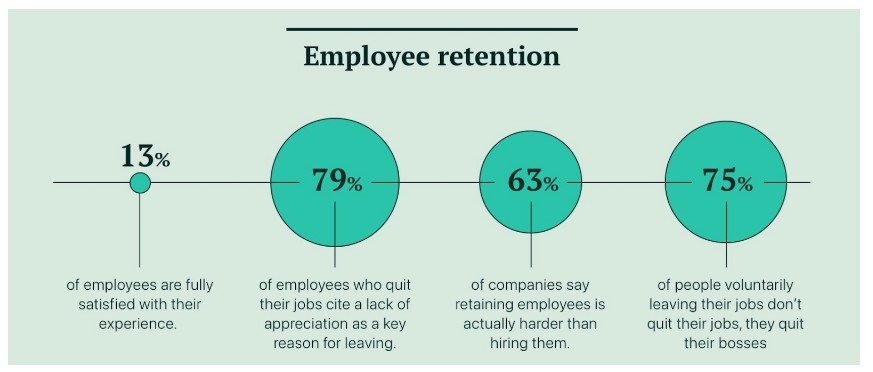
Image Source: happeo
It helps to turn values into leadership principles that guide how managers run teams.
For example:
If you say you value transparency, leaders might commit to sharing decision criteria and explaining tradeoffs in plain language. If you emphasize learning, leaders might commit to regular project retros that highlight what worked and what did not.
These principles also give you a way to connect employee performance expectations with culture, as you can incorporate them into goal-setting and review conversations.
At this stage, companies often update their performance management software, promotion criteria, and leadership programs to reinforce the new direction.
When leaders know exactly how they’re expected to show up, consistency becomes easier to maintain. This clarity keeps engagement surveys aligned with reality instead of collecting feedback on a culture that only exists in presentations.
Designing the Ideal Employee Experience
With values clarified, you can design the employee experience that will bring them to life. Think through the full journey, from hiring to onboarding, growth, and exit. Each step should reinforce what you want the culture to stand for.
For instance, if collaboration matters, interviews should include cross-functional conversations, and onboarding should introduce new hires to peers in Customer Service, operations, and product, not just their direct manager.
Employee experience also shows up in day-to-day signals that shape employee satisfaction. Studies summarized in one review found that companies with positive employee experiences tend to see lower turnover, higher productivity, and improved customer satisfaction. This pattern reflects a simple reality. When people feel respected, resourced, and informed, they give more discretionary effort and care more about outcomes.
Building a Company Culture Ready for Future Challenges
Finally, your culture vision has to hold up under future change, especially hybrid work and AI adoption.
AI is already reshaping how people work. And a recent analysis reports that 92% of companies plan to increase AI investments over the next three years. This level of investment will affect job design, employee performance expectations, and how teams deliver customer centricity at scale.
A future-ready culture treats AI and automation as tools that extend human judgment rather than threats that replace people. This mindset shows up in reskilling programs, open communication about role changes, and clear expectations for ethical use of data. It also shapes how you adjust organizational structure to support new workflows, or how you use performance management software to track new types of goals.
Hybrid work fits into this future view as well. When culture is clear, people know what outcomes matter, how quickly they should respond, and how to collaborate across distance. This clarity lets you offer flexibility without losing accountability.
In practice, this kind of culture makes company culture change less risky. Employees know that every shift comes with honest explanation, real support, and a clear path to keep doing meaningful work.
Get Leaders Aligned Before You Roll Anything Out
Culture change starts at the top when leaders send clear and consistent signals. Employees pay close attention to what executives do, not just what they say. When leaders model the desired behaviors, people see that the new direction is real.
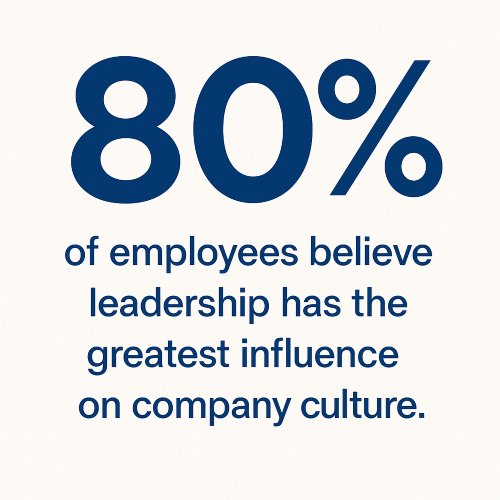
When leaders act in different ways or ignore the new expectations, employees lose trust and treat culture work as a passing trend. One review of workplace culture statistics reported that80% of employees believe leadership has the greatest influence on company culture. This influence can accelerate company culture change or quietly block it.
Before you roll out major changes, you should bring the senior team together and agree on what success looks like. Leaders need to align on how culture supports company goals and which behaviors must become nonnegotiable.
They also need to be honest about what they will personally change, such as how they make decisions or how they spend time with teams. These conversations work best in candid small group settings where executives ask direct questions and resolve concerns. Once leaders share one clear story about why the culture shift matters, it creates a steady foundation for the rest of the organization.
Training and Coaching Leaders to Model Desired Behaviors
Even experienced leaders may not know how to shift habits without support. Training and coaching give managers practical tools to show the new culture in daily work.
A recent global leadership development study found that 70% of respondents say it is important for leaders to master a wider range of effective leadership behaviors to meet current and future business needs. This expectation turns skill-building into a core part of culture transformation, not a side project.
Start with a small set of visible behaviors that connect to your culture goals. If you want more transparency, train leaders to explain decisions in plain language and share the tradeoffs that shaped those choices. If you want better collaboration, help managers run cross-functional problem-solving sessions and recognize shared wins across departments.
Coaching can reinforce these skills through regular check-ins and simple practice assignments. You can also use performance management software to capture leadership commitments and track feedback from teams so leadership development links directly to employee performance and employee engagement.
How to Roll Out Company Culture Change Without Disrupting the Business
A thoughtful rollout plan keeps culture work from colliding with daily operations. Start with a practical phased roadmap that breaks the effort into clear stages such as vision setting, pilots, and scaling.
Define what each stage will achieve and how it connects to company goals and core business processes. Recent findings show that 78% of businesses expect more change in the coming 3 years, which means you need a repeatable approach rather than a one-time push.
Map culture milestones onto existing business rhythms. For example, you might link early diagnostic work to annual planning, then align new behaviors with upcoming product launches or peak Customer Service seasons.
Set a few concrete success signals for each phase, such as improved employee engagement scores in a pilot group or more cross-functional projects in a specific unit. A phased approach lowers risk, since you can test ideas, adjust, and scale what works without disrupting customer experience or productivity.
Involve Employees Through Co-creation and Engagement
Culture change sticks when employees help shape it. Instead of designing everything in the boardroom, bring people from different levels and functions into workshops and focus groups. Ask what gets in the way of collaboration, what great days at work look like, and how the organization could better support them.
To show how modern organizations strengthen culture by elevating employee voice, the following video offers a clear, practical breakdown of what high-performing teams do differently.
Employees at people-centric organizations are 12X more likely to say their experiences with change were well-managed and 11X more likely to say they were positive. This type of involvement improves employee engagement and reduces resistance.

Use these sessions to co-design rituals, meetings, and simple practices that express the new values.
For example:
A sales and operations group might design a joint weekly review that aligns forecasts and delivery commitments. Invite feedback on early drafts of policies so people see their fingerprints on the final version.
When leaders highlight specific contributions in town halls or newsletters, employees see that their input shapes the future. Over time, this approach strengthens employee retention because people feel respected and heard.
Update Systems and Processes to Support New Behaviors
Even the best culture story will fail if systems send the opposite message. Review hiring, onboarding, and promotion processes so they support the new culture rather than old habits.
Update job descriptions to reflect core values and collaboration expectations. Adjust interview questions so they probe for alignment with the employee value proposition, not only technical skill.
Look closely at how performance management works in practice. If you want more innovation, add goals that reward thoughtful experiments and cross-team problem-solving. Configure performance management software to track both results and behaviors, then use that data in calibration discussions.
Check that your governance model and organizational structure support the culture you want. For instance, if quick decisions matter, clarify decision rights and remove unnecessary approval layers. When business processes, structures, and tools all point in the same direction, culture change feels natural instead of forced.
Train Employees to Build New Mindsets and Skills
Culture change often asks people to think and act in new ways, which means training is not optional. Offer targeted programs that build the skills your vision requires, such as customer centricity, inclusive leadership, or problem solving across functions.
One review of training data found that companies with strong training programs see 218% higher income per employee than organizations without formal training. That lift shows how learning connects directly to performance and growth.
Design different paths for different groups. Frontline staff might focus on Customer Service skills and tools, while managers build coaching and change leadership capabilities.
Use real scenarios from your business so people can practice new behaviors in a safe setting. Also, reinforce learning through short refreshers, peer groups, and links to performance reviews.
When training aligns with the culture story and business strategy, employees see it as an investment in their success.
Use Pilots and Feedback Loops
Pilots and feedback loops help you improve the plan before it touches the whole company. Start with a few teams that represent different functions or regions. Test new rituals, policies, and tools, then collect both quantitative data and stories from those groups. Look at employee engagement indicators, customer feedback, and basic productivity measures to see how changes affect outcomes.
Use what you learn to refine playbooks before broader rollout. If a new workflow confuses customers, adjust scripts or handoffs. If new meetings feel like extra work, simplify them so they solve real problems.
Keep critical business processes stable while pilots run, for example, by limiting experiments to a portion of the portfolio or to a single shift. This approach lets you learn fast without creating chaos for customers or internal partners.
Measure, Adapt, and Sustain the Company Culture Over Time
To keep company culture real, build measurement into everyday management. Define a small set of cultural KPIs that connect directly to company goals and business processes.
Useful examples include eNPS, engagement index, employee retention rate, internal promotion rate, and indicators that show whether values show up in decisions. If innovation matters, track the number of ideas that move into pilots or product changes. If customer centricity is a priority, watch repeat purchase rates or Customer Service scores alongside employee engagement.
Use quarterly pulse checks and more detailed annual employee surveys, then pair those results with analytics from your performance management software. Look for patterns by team, location, or role, and share a simple scorecard with leaders so they can see how culture affects employee performance and outcomes.
Maintain Feedback Loops without Fatigue
Feedback loops keep culture work alive. The goal here is steady listening. Combine short pulse polls with periodic deep dives to help employees avoid feeling overwhelmed. You might run a three-question check after major changes, then a fuller survey twice a year.
Supplement formal tools with human conversations. Ask managers to include one culture question in regular one-to-ones, for example, how recent changes affect workload or clarity. Use skip-level meetings and small roundtables so people can speak with senior leaders.
Also open channels in collaboration tools where employees can flag friction and share ideas. The key is visible response. When people see that a suggestion led to a change in a process or policy, they learn that feedback matters and that organizational culture can evolve in response to real experience.
Evaluate the Impact on Engagement, Retention, and Performance
Once data flows in, connect it to outcomes that matter. Compare engagement scores, retention, and productivity before and after key culture initiatives.
One review of turnover costs noted that replacing an employee can cost about 33% of annual salary, which shows the financial value of stronger employee retention. If culture work reduces attrition even slightly, the savings add up quickly.
Look at links between culture scores and hard results. Teams with higher engagement often show better quality, fewer safety incidents, and more consistent delivery.
Studies of engagement and customers found that highly engaged teams outperform competitors by about 20% in key measures such as profitability and customer loyalty.
Track customer metrics next to employee satisfaction, then highlight examples where teams improved both. Stories backed by data strengthen the case for continued investment in employee engagement and culture.
Adjust Culture Practices as Business Conditions Change
Culture is not a one-time project. Market shifts, strategy changes, and new technology all put pressure on how people work. Review your culture commitments at least once a year. Ask whether values, rituals, and decision norms still support the current business model.
Use data to focus adjustments. If survey trends show rising stress or lower trust in a particular function, dig into root causes. You might need clearer decision rights, simpler business processes, or different support for hybrid work.
In periods of rapid change, share a short culture “guardrails” statement so people know which behaviors must remain constant, even as structures and tools evolve. That clarity helps employees stay grounded while the organization adapts.
Celebrate Wins and Reinforce Momentum
Measurement only works when you use it to reinforce progress. Call out teams and individuals who embody the culture you want. Link recognition to specific behaviors, such as cross-team problem-solving or thoughtful support of colleagues.
Include culture examples in town halls, internal stories, and performance conversations so people can see concrete models, not just slogans.
Tie celebrations back to results.
For instance, you might share that a business unit with rising engagement scores also improved on-time delivery and customer satisfaction. Encourage peer recognition tools that let employees thank each other in real time.
Over time, these habits turn cultural behaviors into everyday expectations, which keeps the new culture alive long after the initial company culture change program ends.
Build a Stronger Culture With Alpha Apex Group’s Strategic Guidance
Culture change doesn’t happen through slogans, quick fixes, or one-time workshops.
It takes honest diagnosis, aligned leadership, thoughtful design, and steady reinforcement across daily routines, systems, and decisions.
When you treat culture as a strategic asset rather than an HR side project, you unlock stronger execution, healthier teams, and better long-term performance.
If you’re ready to change your culture but want an expert partner to help you cut through the noise, avoid common pitfalls, and build a plan that actually sticks, connect with Alpha Apex Group. We’ll help you design the right culture, implement it with confidence, and ensure the transformation strengthens your business.
Reach out today to get started!
Frequently Asked Questions
What are the 5 C's of culture change?
The 5 C’s typically refer to Clarity, Consistency, Communication, Commitment, and Collaboration. These elements help leaders define the culture they want, signal it through daily behavior, and reinforce it through systems and processes. When all five are present, culture change is far more likely to stick.
How long does it take to change organizational culture?
Most organizations see meaningful culture shifts within 12–24 months, depending on size, leadership alignment, and the depth of changes required. Lasting change takes time because people need repeated exposure to new behaviors, expectations, and systems before they become the norm.
Why is company culture hard to change?
Culture is difficult to change because it’s shaped by long-standing habits, unwritten rules, and the behavior people see rewarded. Even when leaders introduce new values, employees often revert to old patterns if systems, incentives, and decision-making don’t change alongside them. Real culture change requires aligned leadership and consistent reinforcement over time.
What are the 5 R's of culture change?
The 5 R’s often include Review, Realign, Reinforce, Recognize, and Refresh. This framework guides leaders through assessing the current culture, adjusting structures and behaviors, reinforcing expectations, celebrating progress, and revisiting culture regularly to keep it aligned with strategy.
What makes Alpha Apex Group different from other culture consulting firms?
Alpha Apex Group blends leadership strategy, behavior design, and people analytics to create culture plans that actually stick. We focus on practical routines, not slogans, so teams feel the change in their day-to-day work.
Does Alpha Apex Group work with both small teams and large organizations?
Yes. We support startups building culture from scratch and established companies rethinking outdated systems. Our frameworks scale based on team size, complexity, and leadership structure.
Can Alpha Apex Group help if our culture issues are unclear or sensitive?
Absolutely. We specialize in uncovering hidden misalignments through interviews, surveys, and behavioral analysis. AAG handles sensitive culture challenges discreetly and ensures leadership gets an honest, actionable view.
.jpg)
.jpg)