Why Is Company Culture Important + Insider Tips to Build & Improve It
Company culture shapes how people actually work day to day. It shows up in how teams make decisions, handle pressure, and treat customers when no one is checking a playbook. Long before KPIs or incentives kick in, culture is already influencing performance.
This matters even more today. Remote work is common, employee expectations are higher, and keeping good people has become harder than ever.
ResearchGate study backs this up. The results show that organizations with high employee engagement see 21% higher profitability and 17% higher productivity compared to disengaged teams.
Culture plays a direct role in these outcomes because it guides behavior when no one is watching.
In this guide, we break down why company culture matters, how it affects real business results, and what leaders can do to build a healthier, more effective work environment.
We’ll cover:
What company culture actually means and how it shows up in daily work
Why culture directly impacts performance, productivity, and decision-making
How culture influences employee engagement, job satisfaction, and retention
The role culture plays in remote and hybrid teams
Why leadership behavior matters more than statements or slogans
The real cost of a weak or toxic workplace culture
Practical ways to improve culture and support long-term organizational success
P.S. Is your team disengaged, turning over faster than expected, or struggling to stay aligned as your company grows? Alpha Apex Group helps you diagnose culture gaps and design systems that support engagement, performance, and long-term success. If culture feels like a blocker instead of an advantage, it may be time for a structured approach.
What Is Company Culture?
Company culture is how work actually happens inside your organization. It shows up in how people communicate, make decisions, and handle pressure when there’s no rulebook in sight. Long before a policy or process comes into play, culture is already shaping the employee experience.
You can usually trace culture back to a few core elements. Your company values set expectations for behavior. Leadership behavior shows which of those values truly matter. Systems such as performance management, training programs, and internal communication reinforce what the organization prioritizes every day. Together, these elements shape the work environment people experience.
There’s an important difference between stated culture and lived culture. And this is where we’ve noticed many organizations run into trouble.
Stated culture is what appears on your website, in onboarding decks, or during employee orientation. Lived culture, on the other hand, is what employees experience during feedback conversations, decision-making moments, and day-to-day collaboration.
When these two align, trust grows, and employee engagement improves. When they don’t, morale drops and confusion sets in fast.
Example of Company Culture in Action
HubSpot is a strong example of culture put into practice. The company describes its culture as mission-driven, transparent, and people-first, guided by its HEART values: humble, empathetic, adaptable, remarkable, and transparent. HubSpot openly treats culture as a work in progress and encourages teams to try new ideas, even if that means failing.
Those values show up in how work actually gets done. Results matter more than when or where they are produced, which supports flexible work and trust.
Moreover, HubSpot follows a no-door policy. This means employees can reach anyone in the company, regardless of role or level. Together, these behaviors create a culture built on openness, experimentation, and accountability, not control.
Why Is Company Culture Important for Business Performance?
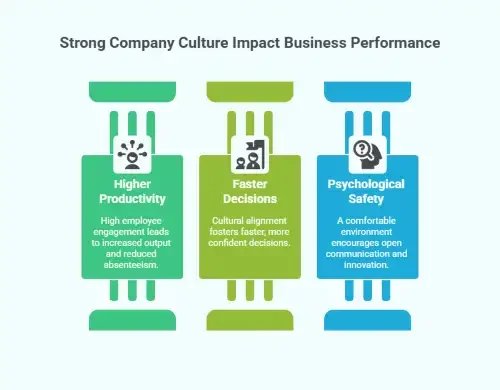
Company culture plays a major role in how well your business actually performs. From our experience, teams with strong cultural alignment execute faster, stay focused on company goals, and handle pressure without constant oversight.
When culture is clear, people spend less time second-guessing decisions and more time delivering results.
We’ve seen culture act as a real performance multiplier. It connects strategy to execution by shaping daily behavior, ownership, and accountability. When your workplace culture supports clarity and trust, performance management becomes easier, and results follow more consistently.
Company Culture and Productivity
Productivity shifts when culture supports how people actually work, rather than just what they deliver.
Gallup’s employee engagement survey, based on more than 3.3 million employees across 100,000 teams, shows that highly engaged business units see 14 percent higher productivity and 78 percent lower absenteeism. These numbers reflect culture in action, instead of better tools or tighter controls.
In our work with different teams, we’ve noticed that ownership and accountability come naturally when expectations are clear and trust is in place. People stay motivated because they see how their efforts connect to company goals, not because productivity is tracked minute by minute.
From what we’ve observed, psychological safety plays a major role, too. When employees feel comfortable speaking up, learning from mistakes, and sharing ideas, output improves, and momentum builds.
“A strong team culture was correlated with each member’s perception of the consequences of taking an interpersonal risk...In a team with high psychological safety, teammates feel safe to take risks around their team members. They feel confident that no one on the team will embarrass or punish anyone else for admitting a mistake, asking a question, or offering a new idea.” Google’s research on effective teams (Project Aristotle)
Company Culture and Decision-Making
Decision-making moves faster when culture creates alignment.
There’s real research behind this, too. Organizations with strong cultural alignment consistently outperform their peers, showing 4.4 times higher revenue growth and 4 times higher EBITDA, along with lower employee turnover and stronger retention. These outcomes point to one thing. When culture aligns people around shared priorities, decisions stop getting stuck.
From our experience, teams with clear cultural expectations spend far less time debating process and far more time acting with confidence. People understand what matters, so decisions come with speed and clarity instead of hesitation.
We’ve also seen culture break down silos.
When collaboration is part of the workplace culture, teams share context instead of guarding information. From our point of view, that alignment strengthens cross-functional collaboration, improves team communication, and helps decisions move forward without constant rework.
Why Is Company Culture Important for Employee Engagement?
Company culture shapes whether people simply follow instructions or genuinely care about their work. When culture is strong, you see engagement instead of compliance. Employees show up with energy, take initiative, and feel emotionally invested in what they do.
We’ve mostly seen in practice that engagement grows when people feel connected to purpose, supported by leadership, and trusted to do their jobs well
Culture’s Role in Motivation and Belonging
Trust us, motivation and belonging are getting harder to sustain at work. Gallup data shows that in 2024, the global percentage of engaged employees dropped from 23 percent to 21 percent.
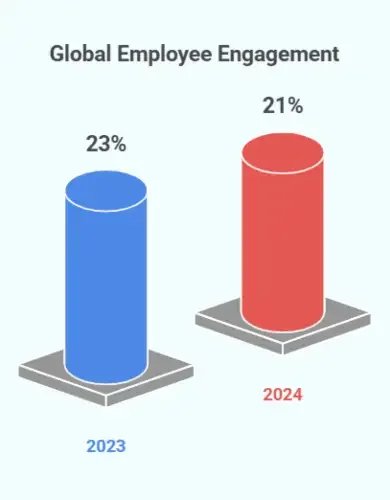
We have noticed that this decline is primarily due to culture rather than compensation or perks. Journal of Marketing and Social Research across regions also shows a strong positive link between organizational culture and employee engagement, particularly when leadership style and shared values are clear.
We believe motivation lasts longer when people feel they truly belong. Employees put in more effort when they trust leadership and feel recognized for their contributions.
Note that purpose plays a major role here as well. When people understand the company's mission and see how their work connects to it, commitment grows naturally. From our point of view, cultures built on trust, recognition, and shared purpose create stronger engagement because employees feel valued instead of replaceable cogs.
Read Next: Role of Company Culture in Employee Engagement
How Culture Shapes Daily Employee Experience
Culture shows up in the moments employees notice most. In fact, research shows that how managers talk with their teams plays a huge role here. Around 50 percent of employees say they feel company culture most strongly through performance conversations, feedback, and recognition. This tells you something important. Culture lives in everyday interactions, not in slogans.
One pattern we usually see is that people form opinions about culture through how feedback is delivered, how much autonomy they’re given, and whether growth feels fair.
When feedback is direct and respectful, confidence grows. And when autonomy is supported, accountability follows. In our work with teams, we encourage leaders to look closely at fairness in promotions, workload, and development opportunities, because those signals shape trust faster than any policy.
When fairness and transparency stay consistent, the employee experience feels supportive and motivating.
Why Is Company Culture Important for Talent Attraction and Retention?
Today’s talent market is driven by culture as much as compensation. People look closely at your work environment, leadership behavior, and company values before they ever apply. Culture shapes your employer brand long before a recruiter reaches out.
Culture as a Competitive Hiring Advantage
Hiring becomes easier when your culture is clear, and this is something we see consistently in practice.
Research shows that 75% of job seekers consider a company’s employer brand and workplace culture before applying. And around 61% say they would switch jobs for a better culture, even if higher pay is on the table. In our experience, these numbers show up clearly in real hiring conversations.
When we speak with candidates, they pay close attention to company values, leadership behavior, and how teams actually work together. That’s why we recommend values-based hiring in many cases. It helps you attract people who align with how your organization operates, rather than just what it pays.
Across many hiring decisions we’ve observed, salary becomes secondary once cultural fit enters the picture. Candidates regularly turn down slightly higher offers when they feel stronger alignment with a company’s mission and work environment.
From our perspective, when culture feels authentic and lived, it becomes a powerful advantage in attracting people who want to stay and grow with the organization.
How Strong Culture Reduces Employee Turnover
Turnover becomes much easier to control when the culture is working in your favor. Gallup data shows that in high-turnover organizations, engaged business units see 21% less turnover, while in low-turnover organizations, turnover drops by 51%
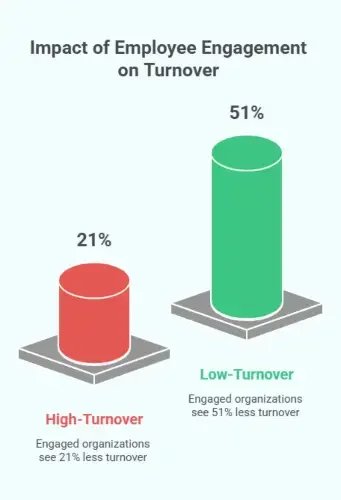
Moreover, SHRM reports something similar. Employees in positive organizational cultures are almost 4X more likely to stay with their current employer. These numbers reflect daily culture.
In our work, we see turnover rise when people feel disconnected, overlooked, or uncertain about expectations. Retention costs climb fast in those environments. What consistently lowers churn is a culture that supports trust, fairness, and growth.
Therefore, we always encourage leaders to focus on long-term loyalty instead of short-term fixes. From what we’ve observed, when employees feel supported and valued, they stay longer, grow with the organization, and remain committed even during periods of change.
Why Is Company Culture Important in Remote and Hybrid Work?
When teams are spread out, culture doesn’t disappear. It becomes more visible. Without a shared office, your culture shows up through communication habits, expectations, and how decisions get made. Remote work removes the cues people once relied on, so culture has to be clear instead of assumed.
Building Remote Culture Without Micromanagement
Remote culture breaks down fast when trust is missing. In our work with distributed teams, we’ve noticed that constant check-ins and rigid controls can signal uncertainty, instead of accountability. When people feel watched instead of trusted, engagement drops and performance follows.
What works better is trust-based systems paired with outcome-driven leadership. We usually advise leaders to focus on clear goals, shared priorities, and measurable outcomes instead of hours online or constant status updates.
From what we’ve observed, when teams know what success looks like and feel trusted to deliver, remote culture becomes stronger, not weaker.
Maintaining Alignment Across Distributed Teams
Alignment becomes harder when teams don’t share the same space. But trust us, it’s still very achievable. One thing we’ve noticed across distributed teams is that misalignment usually comes from inconsistent communication, although some may mistakenly attribute this to a lack of effort. When people aren’t sure where to focus, work starts to drift.
What helps is establishing clear communication rhythms and shared rituals. Teams that meet with purpose, document decisions, and create simple norms around collaboration stay more connected.
We suggest adopting small habits like regular check-ins, clear updates, and shared routines. This helps your remote teams feel aligned and grounded, even when everyone works from different locations.
Read Next: How to Build Company Culture Remotely: A Complete Guide
Why Is Company Culture Important for Leadership and Management?
Remember that leadership shapes culture more than any policy ever will.
In fact, research shows that 70% of the variance in team engagement is directly tied to the manager. How leaders communicate, make decisions, and show up day to day has an outsized impact on how people feel and perform at work. This is something we see play out consistently across teams.
Leaders also carry culture through what they tolerate and what they actively reinforce. Studies show that 69% of employees would work harder if their efforts were better recognized by leadership, and recognition remains one of the clearest cultural signals managers send.
In our experience with leadership teams, we consistently emphasize how clear expectations and fair performance management create accountability without pressure. We’ve observed that steady leadership behavior sets the tone for trust, motivation, and how culture actually lives inside the organization.
The Cost of a Weak or Toxic Company Culture
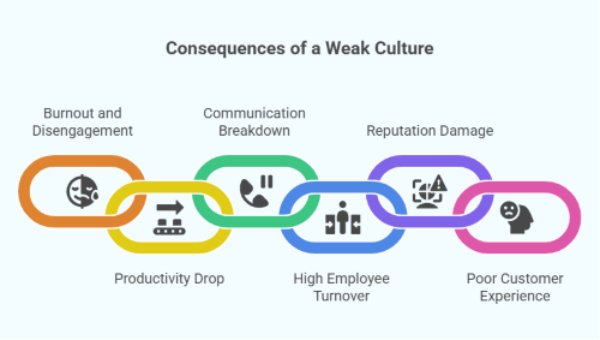
Weak culture rarely announces itself. Trust us, it usually shows up in quieter ways first. Burnout becomes normal, engagement slips, and employee morale starts to fade.
In many organizations we’ve worked with, people mentally disengage long before they hand in a resignation.
Over time, the impact becomes hard to ignore:
Burnout and disengagement become part of daily work
Productivity drops as motivation fades
Communication breaks down across teams
Employee turnover increases, and retention costs rise
Employer brand and company reputation take a hit
Customer experience suffers as internal issues spill outward
We’ve seen how this ripple effect damages both performance and trust. From what we’ve learned working inside these environments, culture either supports the organization or quietly drains it. There’s rarely a middle ground.
How to Build and Improve Company Culture
Now that you understand why company culture matters, the next step is to learn how to shape your company culture intentionally.
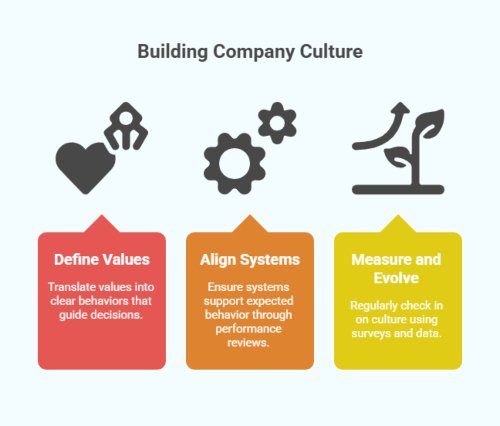
1. Define Values That Drive Behavior
Note that company values only matter when they show up in daily actions. You can list values on a slide deck, but if they don’t guide decisions, they won’t shape culture. One thing we’ve learned working with different organizations is that employees pay attention to what actually gets rewarded, instead of what gets written down.
What works better is translating values into clear behaviors. We always advise leaders to ask simple questions: How should this value show up in meetings? In feedback? In performance management?
When values move from words to actions, culture becomes consistent and easier for teams to follow.
2. Align Systems, Policies, and Rewards
Culture breaks down quickly when systems send mixed signals. Trust us, employees notice when performance reviews, promotions, and feedback don’t match the values leaders talk about. In teams we’ve worked with, this gap creates frustration and weakens trust, even when leadership means well.
What works is making sure your systems clearly support the behavior you expect. Therefore, we advise leaders to examine how performance is measured, how promotion decisions are made, and how feedback is handled day to day.
From our experience, when rewards and recognition align with company values, culture feels credible and consistent instead of confusing.
3. Measure and Evolve Culture Over Time
Culture needs regular attention if you want it to stay healthy. One thing we’ve learned over time is that culture shifts quietly as teams grow, roles change, or priorities move. When leaders don’t pause to measure culture, small issues usually go unnoticed until they become harder to fix.
A better approach is to stay close to the signals your people are sending. We usually suggest looking at employee surveys, engagement data, and real business outcomes together, rather than in sections.
Paying attention to employee voice helps you understand what’s working and what needs adjustment. We have noticed that culture improves when leaders stay open, responsive, and willing to adapt as the organization evolves.
Wondering how to improve culture without disrupting performance? This blog on How to Change Company Culture Without Breaking Your Business walks through a practical, step-by-step approach.
Build a Healthier Workplace Culture with Alpha Apex Group
Company culture shapes how people work, lead, and grow together. It influences performance, engagement, retention, and trust long before any system or process does.
When culture is intentional, it creates clarity, alignment, and momentum across the organization. When it’s ignored, problems surface quietly and compound over time.
The good news is that culture can be shaped, improved, and sustained with the right focus and leadership commitment.
Key takeaways
Company culture influences daily behavior more than policies or statements
Strong culture improves performance, productivity, and decision-making
Employee engagement grows when trust, purpose, and fairness are present
Culture plays a major role in attracting and retaining the right talent
Remote and hybrid teams need an intentional culture to stay aligned
Leadership behavior sets the tone for accountability and expectations
Weak culture leads to burnout, turnover, and brand damage
Culture improves when leaders measure it and respond to employee voice
If you’re looking to strengthen your company culture without disrupting performance, Alpha Apex Group can help. We work with leadership teams to assess culture, align systems, and build environments where people and businesses perform better.
Contact us to start a focused conversation on how culture can support your goals.
FAQs
What is the main importance of culture?
The main importance of culture is that it guides how people behave when no one is watching. It shapes decisions, teamwork, accountability, and how work actually gets done every day. Strong culture creates clarity and consistency, while weak culture leads to confusion, disengagement, and performance gaps that are hard to fix later.
What are the three C’s of company culture?
The three C’s of company culture are clarity, consistency, and connection. Clarity helps employees understand expectations. Consistency builds trust through reliable leadership behavior. Connection creates belonging and purpose. Together, these elements shape how employees experience the workplace and how effectively teams work together.
Why is a strong organizational culture important?
A strong organizational culture aligns people around shared values, goals, and behaviors. It improves engagement, decision-making, and collaboration while reducing turnover and burnout. When culture is strong, teams perform with confidence, leaders manage more effectively, and the organization becomes more resilient during change.
Why is a company’s culture just as important as how or how much business they do?
Culture determines whether business results are sustainable. Revenue can grow quickly, but without a strong culture, performance typically drops under pressure. A healthy culture supports consistent execution, employee retention, and customer trust. In the long run, how a company works matters just as much as what it delivers.
How does Alpha Apex Group approach company culture consulting?
Alpha Apex Group takes a practical, experience-led approach. We assess how culture shows up in daily work, leadership behavior, and systems. Then we help align values, processes, and accountability across the organization.
Can Alpha Apex Group help improve culture in remote or hybrid teams?
Yes. Alpha Apex Group works with remote and hybrid organizations to create clear communication rhythms, trust-based leadership practices, and shared norms that keep teams aligned without micromanagement.
.jpg)
.jpg)