Good vs Bad Company Culture: Real World Examples
Company culture shapes everything that happens inside a business. It influences how people work together, how leaders make decisions, and how employees feel on both normal days and stressful ones.
A strong culture builds clarity, trust, and momentum. A weak one creates confusion and churn. This is not just theory.
In a retention study,32.4% of employees who quit a job in the past year said a toxic or negative work environment was the main reason they left. This statistic shows how directly culture can push people out the door.
This article breaks down:
What good and bad company cultures look like in real life
How daily behaviors, decisions, and habits turn into green flags or red flags employees feel
Real-world examples that help you compare these patterns with your own workplace
How to spot what’s working, what’s harmful, and where to focus to build a healthier, more effective culture
P.S. Struggling with low morale, high turnover, or a culture that feels “off” but hard to diagnose? Check out our full guide on the Top 11 Company Culture Consulting Firms, the experts who can help you fix these issues faster and more effectively.
What Company Culture Really Means and Why It Matters
Company culture is the set of shared expectations that shape how people behave inside an organization. It influences how employees interact, how decisions get made, and how the work environment feels on a normal day and during stressful moments.
Culture connects to visible elements like a mission statement, company values, and leadership principles. It also shapes subtle parts of employee experience, such as whether employee feedback is welcomed, whether psychological safety exists, and how comfortable people feel raising concerns.
Culture affects employee engagement and employee satisfaction because it tells people what really matters. It influences the onboarding process, how quickly new hires learn the norms, and how comfortable they feel asking questions. It also shapes workplace culture around topics like diversity and inclusion, employee development, and mental health.
Every company has a culture, whether leaders define it or not. Strong cultures create clarity and a steady team atmosphere. Weak cultures create mixed signals, low morale, and a work environment that works against performance and retention.
Read Next: Types of Company Culture Explained With Pros and Cons
How Culture Drives Organizational Success
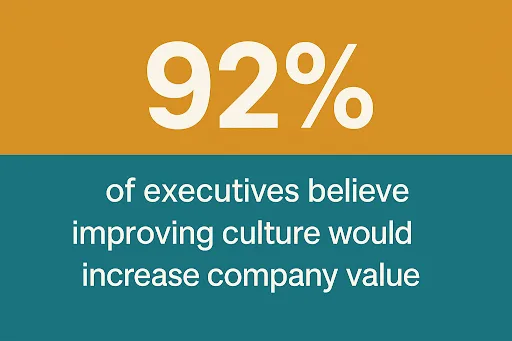
A strong organizational culture supports clear execution and better long-term results. Leaders recognize this impact since 92% of executives believe improving culture would increase company value.
When employees feel connected to company goals and a shared mission statement, they bring more effort and creativity to daily work. This supports a performance culture that improves quality, innovation, and customer experience.
Culture also shapes employee retention. As per the SHRM report, workers in positive cultures are nearly 4X more likely to stay with their employer than workers in poor cultures. When people feel respected and supported, recognition and rewards feel meaningful, and the benefits package, performance management, and work environment all carry more weight.
Over time, a strong corporate culture becomes a competitive advantage. It guides ethical behavior, supports customer-centric cultures, and aligns business processes with what matters most. This turns culture into a practical lever for revenue, profit, and brand strength instead of a vague HR topic.
How Good vs Bad Company Cultures Show Up in Daily Work
Culture shows up in the routines that fill each workday. In a good company culture, employees speak up without fear, share ideas, and support one another. People understand expectations and feel confident in their team atmosphere.
This improves employee productivity and the way customer service interactions play out. According to the SHRM report shared above, 83% of employees in strong cultures say they feel motivated to produce high-quality work, compared with far fewer in weak cultures.
In bad cultures, people stay quiet, avoid risk, and worry about blame. Collaboration slows, remote work culture feels disconnected, and even the nicest office space cannot fix the tension.
Over time, this hurts employee experience, recognition programs lose impact, and employee resource groups struggle. The result is higher turnover and weaker results for both employees and customers.
What Good Company Culture Looks Like (Green Flags)
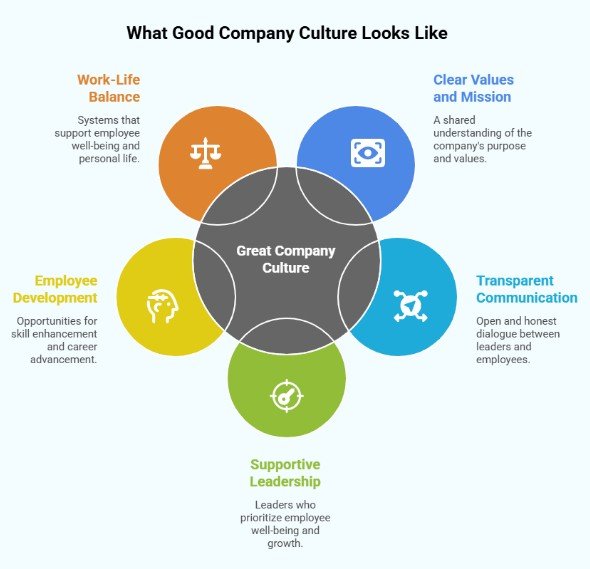
Great company cultures each have their own style, but they share core traits that strengthen employee experience and support long-term success. These green flags include clear values, open communication, supportive leadership, meaningful development, and a genuine concern for well-being.
When these elements work together, they create a workplace culture that aligns with organizational values and daily behavior.
Below are the principles that define a strong work environment, along with the companies that demonstrate how powerful these habits can be.
1. Clear Values and Mission-Driven Purpose
A healthy corporate culture starts with clear values and a mission that feels real. Employees want to understand why the company exists and how their work connects to something meaningful.
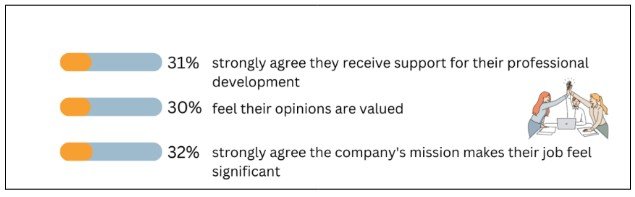
When the purpose is unclear, people drift, and engagement drops. Only 32% of employees strongly agree that their company’s mission makes their job feel important. A strong sense of purpose fixes that problem and builds motivation across teams.
Microsoft shows how a mission-driven workplace culture can reshape an entire organization. When Satya Nadella became CEO, he introduced the Growth Mindset philosophy that encouraged curiosity, inclusion, and a people-first approach.
Nadella aligned every team’s work to the purpose of empowering people and organizations to achieve more. Under this clarity of mission, Microsoft added around $2.8 trillion in value.
Employees credit this alignment for renewed innovation and a stronger team atmosphere. The takeaway is clear. When values are real, and leadership models them, people feel connected and ready to contribute.
2. Transparent Communication and Employee Voice
Clear and honest communication is one of the strongest green flags in any organizational culture. Employees want to understand goals, challenges, and the reasons behind decisions. When leaders communicate openly, trust grows, and teams work with more confidence.
Companies with strong internal communication processes and tools are3.5 times more likely to achieve better results. This supports employee engagement, employee satisfaction, and strong performance.
HubSpot sets the standard for transparent communication. The company’s Culture Code outlines values around honesty, autonomy, and access to information. These principles are highlighted inHubSpot’s own Culture Code overview, which explains how transparency guides internal decisions.
Employees have access to wide-ranging information through an internal wiki, and leaders hold open Q&A sessions that encourage honest conversations. This environment creates psychological safety and helps employees feel like partners in the company’s direction.
For more details about the Culture Code, check out the video below:
The result is a workplace that feels predictable and fair. People understand why decisions are made and feel comfortable speaking up. The green flag lesson is simple. Transparent communication and genuine employee voice build trust and strengthen collaboration.
3. Strong and Supportive Leadership
Leadership shapes corporate culture more than any other factor. Employees look to managers for fairness, consistency, and support. This influence is powerful. 76% of employees say their manager sets the tone for workplace culture. When leaders act with integrity and model company values, employees trust them. When leaders behave unpredictably, organizational culture breaks down.
Costco illustrates the impact of supportive leadership. The company has built a long-term people-first strategy that places employee well-being above short-term gains. Costco pays above industry averages, promotes from within, and maintains a culture of fairness.
These principles are supported byresearch from HBS, which highlights Costco’s consistency and employee-first policies. Furthermore, Costco’s annual turnover is 8% compared with nearly 60% in the retail industry.
This stability supports stronger customer service, reliable business processes, and long-term performance. Employees stay because they trust leadership. The green flag is clear. When leaders act with consistency and care, they build a culture that strengthens employee retention.
4. Employee Growth, Development, and Recognition
A strong work environment gives people opportunities to grow, build skills, and feel recognized. Employees want to see a future for themselves and want their contributions acknowledged.
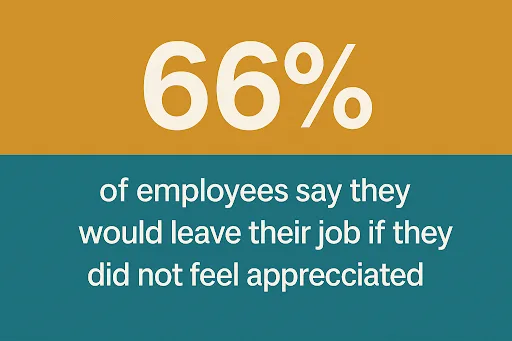
Lack of appreciation drives turnover. In fact, 66% of employees say they would leave their job if they did not feel appreciated.
For example, Adobe shows how strong development systems transform employee experience. The company replaced annual performance reviews with its Check-in system, which encourages ongoing conversations about goals and progress.
This approach is detailed inAdobe’s Check-in page, which explains the emphasis on growth and continuous feedback. Adobe also supports education, creative projects, and peer recognition through internal platforms that celebrate achievements.
Feedback and ongoing conversations between managers and employees are at the heart of what make check-ins successful - both to ensure employees have the clarity they need to be successful in their roles and to support their career growth. - Gloria Chen, Chief People Officer and EVP, Employees Experience
These efforts help employees feel valued and confident. When people see real opportunities for advancement and receive meaningful recognition, they bring more energy and creativity to their work. The green flag is simple. When companies support development and make recognition a habit, they strengthen employee retention and build a high-performance culture.
5. Healthy Work-Life Balance and Well-Being Systems
A culture that supports healthy balance and employee well-being gives people the foundation they need to perform well. Burnout is a growing concern in many industries since87% of employees expect their employer to support work-life balance. When companies ignore well-being, productivity and retention decline.
Google is widely known for its comprehensive well-being programs. These efforts include mental health resources, resiliency courses, flexible options, and workplace supports that reduce daily stress.
These systems are described in CEO Today’s overview of Google’s wellness ecosystem. Their well-being approach includes healthy food, fitness options, extended leave, and global programs that help employees stay energized.
Companies with strong well-being systems see fewer absences and more consistent productivity. The green flag is easy to recognize. When employees feel supported in their lives outside work, they return with more focus, energy, and commitment.
What Bad Company Culture Looks Like (Red Flags with Examples)
A healthy workplace culture builds trust, clarity, and motivation. A bad culture does the opposite. It creates confusion, stress, and disengagement.
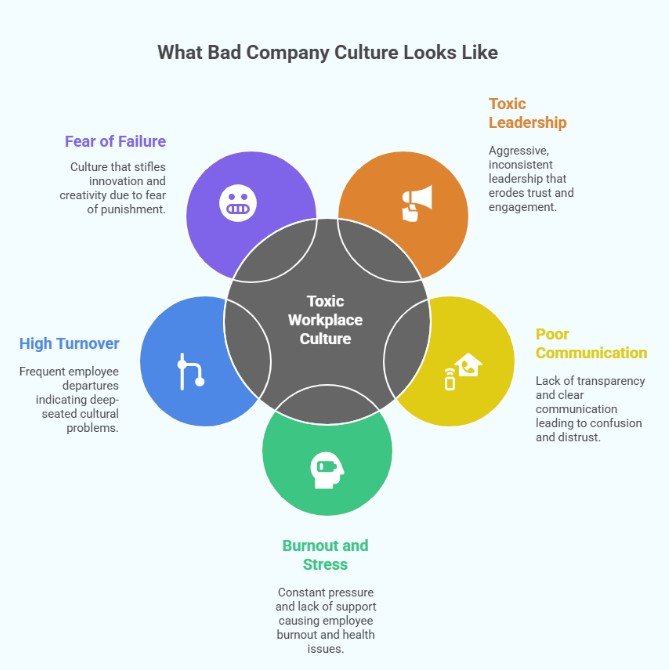
Red flags include toxic leadership behavior, poor communication, burnout, high turnover, and a climate of fear that stifles innovation. These issues damage employee experience, weaken performance culture, and hurt customer experience.
Below are five major company culture red flags and the real examples that reveal how destructive these problems can be.
1. Toxic or Inconsistent Leadership
Toxic leadership is one of the clearest signs of a failing workplace culture. When leaders behave aggressively, show favoritism, or act inconsistently, employees lose trust. Toxic environments create psychological safety issues and weaken employee engagement because people feel unsupported.
This problem is widespread today since80% of workers say their workplace culture feels toxic. This leads to fear, silence, and a work environment where people protect themselves rather than collaborate.
Uber’s 2017 scandal shows how leadership behavior shapes organizational culture. Reports of harassment, retaliation, and unethical decisions were documented across the company. These issues were exposed publicly inThe Guardian, which described widespread misconduct. An internal investigation reviewed 215 complaints and led to more than 20 terminations. CEO Travis Kalanick resigned after pressure from the board.
This crisis damaged Uber’s reputation and slowed its growth. Employees reported confusion, distrust, and inconsistent leadership principles. The red flag is clear. When leadership signals that success matters more than ethical behavior, the culture deteriorates and high turnover follows.
2. Poor Communication and Hidden Information
When communication is unclear or information is hidden, organizational culture begins to break down. Employees rely on transparency to understand goals, performance expectations, and company values.
When leaders hide details or mix messages, trust erodes. Recent research shows 68% of employees believe their leaders exaggerate or avoid the truth, and 61% say this lack of truth directly harms productivity.
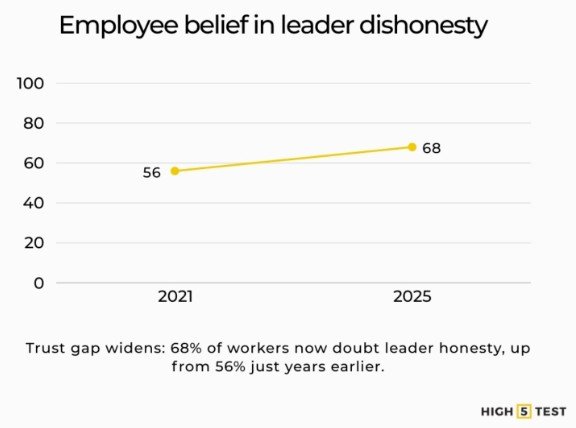
Poor communication weakens the work environment and the employee experience because people do not understand what is real.
The Wells Fargo fake accounts scandal is a major example. Pressure-heavy sales goals encouraged employees to open unauthorized accounts. Instead of addressing concerns, management created a culture of silence.
The severity of the issue became public when the company paid $3 billion to settle criminal and civil investigations. Employees described a hierarchical culture where truth was avoided, and leaders punished negative news. Transparency failed at every level.
The red flag is visible when employees avoid sharing problems. Hidden information drives unethical behavior and destroys trust. Healthy cultures require honesty, clear communication, and open feedback.
3. Burnout, Stress, and Lack of Well-Being Support
Workplace burnout is a major sign that company culture is unhealthy. When employees feel constant pressure, lack support, or cannot recover from stress, performance and engagement decline. Burnout has become increasingly common. 66% of workers say they felt burned out in 2025. This affects mental health and long-term employee retention.
Amazon’s warehouse culture has faced ongoing criticism for aggressive productivity targets and the physical strain they create. Some employees said they skipped breaks to avoid missing performance goals.
Regulators have flagged these issues repeatedly, and California even fined Amazon $5.9 million for failing to disclose warehouse worker quotas. The penalty underscored how intense and opaque those expectations had become.
This environment signals a red flag because companies with burnout-heavy cultures eventually face lower productivity, damaged customer service, and increased hiring costs. When people feel treated like replaceable parts, the organization loses trust and commitment. In contrast, strong cultures invest in employee well-being and encourage rest to support consistent performance.
4. High Turnover and Low Engagement
High turnover is one of the easiest red flags to measure. When employees leave in large numbers, something is wrong in the workplace culture. Disengagement often follows because people lose motivation when they see colleagues exit.
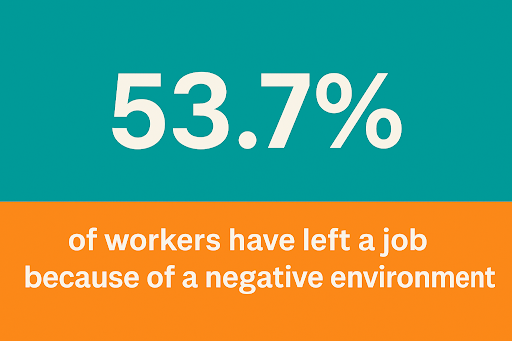
One study shows 53.7% of workers have left a job because of a negative environment. That number shows how often culture drives turnover.
Activision Blizzard is a clear example of cultural dysfunction. In 2021, the company faced widespread reports of harassment, discrimination, and a hostile environment that surfaced through legal filings and national news coverage. The concerns became highly visible when employees organized a walkout calling for stronger protections and greater accountability within the organization.
Workers described a harmful culture and a pattern of leadership failure that weakened trust across teams. The disclosures created serious internal strain. Morale dropped, employees questioned leadership decisions, and talent began moving to competitors that offered a healthier work environment.
This red flag signals a deeper problem inside the organizational culture. When people feel unsafe, unrecognized, or undervalued, turnover accelerates. High turnover amplifies stress and reduces productivity. Healthy cultures invest in employee happiness, recognition programs, and strong leadership principles to avoid this problem.
5. Fear of Failure, Micromanagement, and Stifled Innovation
Fear-based cultures limit creativity and hurt performance. When employees worry about punishment, they avoid risk and withhold feedback. Micromanagement also damages trust and signals that leaders do not believe in their teams. Innovation slows because people no longer feel comfortable sharing ideas.
Nokia provides a well-known example of how fear harms organizations. As documented inresearch from INSEAD, Nokia developed a culture where employees feared sharing problems with leadership.
Middle managers overpromised and hid setbacks to avoid criticism. This prevented executives from understanding the real issues. Additional research showed the company’s market value collapsed by roughly 90% as innovation stalled.
This red flag reflects a culture that blocks progress. When fear dominates decision-making, organizations struggle to adapt. Employees disengage, and creativity disappears. A healthy workplace culture supports experimentation, psychological safety, and autonomy.
In supportive environments, employees share ideas freely and feel trusted. Nokia’s experience reveals how damaging fear can be to both innovation and long-term success.
How Organizations Can Fix or Improve Their Company Culture
Improving company culture is not a one-time announcement. Real change shows up in daily behavior, clear expectations, and systems that back up what leaders say.
When organizations treat culture as part of how work gets done, not as a side project, they see better employee engagement, stronger performance culture, and a healthier work environment.
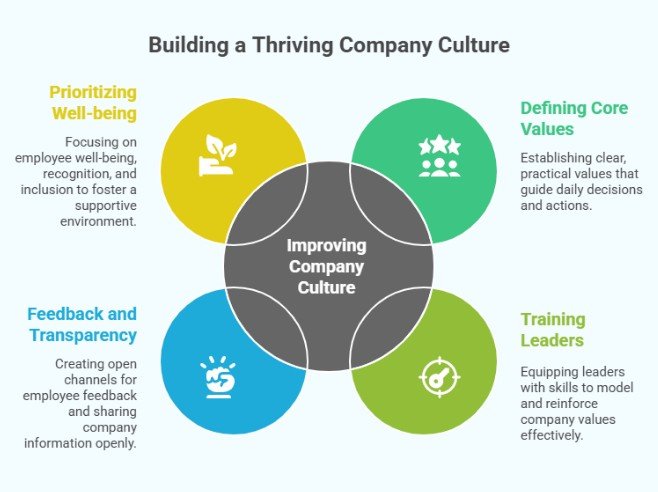
These four moves create real progress.
Define and Reinforce Core Values Daily
Culture work starts with clear, honest company values that people can actually use. Employees feel lost when values sound good on a poster but have no role in daily decisions.
Gallup reports that only one in five employees strongly agree they feel connected to their organization’s culture. That gap shows how often values fail to guide behavior.
To close it, turn values into practical tools.
Leaders can explain choices through values and tie team decisions back to the mission statement.
Managers can ask during one-on-ones how values show up in current projects.
Hiring and onboarding should include clear examples of the company's values in action, so new employees understand the company's goals and the expected employee experience.
The more often people see company values used in real decisions, the more credible they become. Over time, this repetition creates shared language and identity across the organizational culture.
Train Leaders to Model Culture
Leaders shape corporate culture through what they say and what they tolerate. When leadership principles are unclear or when managers send mixed signals, employees stop trusting the message.
Organizations can change this with targeted development.
Train managers on how to connect company values to daily work, how to hold fair performance management conversations, and how to support psychological safety.
Use coaching, peer learning, and feedback from direct reports, not only top-down reviews.
Include culture outcomes in manager scorecards so they own results for both performance and employee engagement.
When leaders consistently model the culture, employees notice. Trust grows, communication improves, and business processes run smoothly because expectations are clear.
Build Strong Feedback Loops and Transparency
Healthy cultures create real channels for employee feedback and then act on what they hear. Employees want their opinions to matter. A recent analysis found that80% of employees who received meaningful feedback in the past week were fully engaged. Feedback is not just a nice-to-have; it is a driver of employee productivity and retention.
Set up regular listening points such as pulse surveys, open Q&A sessions, and structured employee feedback in team meetings.
The crucial step is visible follow-through. Share what you heard and what will change, even if the answer is “not yet” for some ideas. This builds credibility.
Transparency supports these feedback loops. When leaders openly share company goals, performance updates, and context behind big decisions, people understand how their work fits. This kind of clarity improves employee experience and reduces rumors that damage corporate culture.
Prioritize Well-Being, Recognition, and Inclusion
Strong cultures treat people like humans, not just headcount. Well-being, employee recognition, and diversity and inclusion each play a key role. Support for mental health and work-life balance is now a core expectation, not a perk.
Recognition also matters. It should be specific, frequent, and tied to company values. Rewarding the right behaviors reinforces a high-performance culture and makes people feel seen.
For inclusion, research from Culture Amp shows employees who strongly believe their companies value diversity have 84% engagement levels. This is a powerful link between inclusive practices, employee happiness, and performance.
You can back this up with employee resource groups, fair promotion practices, and recognition programs that show contributions from across the workforce. When people feel supported, appreciated, and included, company culture improves from the inside out.
Read Next: How to Change Company Culture Without Breaking Your Business
Elevate Your Workplace Culture with Alpha Apex Group
Company culture influences every part of the employee experience and every outcome a business delivers. The examples in this article show how much leadership behavior, communication habits, and daily decisions shape whether a workplace builds trust or slowly loses it.
Strong cultures do not appear on their own. They develop through consistent actions, clear expectations, and a commitment to supporting people in meaningful ways.
If you want to strengthen your culture or rebuild one that has drifted off course, you do not have to do it alone. Alpha Apex Group helps organizations define their values, align leadership, and install systems that support a healthier, higher-performing workplace.
If you’re ready to partner with experts who can guide you through that transformation, contact us today — and let’s build a culture that drives long-term success.
Frequently Asked Questions
What causes a company's culture to become toxic?
A company’s culture becomes toxic when leadership behavior, communication, and expectations create fear, confusion, or disrespect. This usually happens when problems are ignored, accountability is inconsistent, or employees do not feel supported. Over time, these patterns create a work environment where people do not trust the organization or feel safe speaking up.
What is positive corporate culture?
A positive corporate culture is a work environment where people feel respected, supported, and aligned with the company’s goals. It includes clear communication, healthy leadership behavior, and systems that help employees succeed. When these elements work together, the workplace feels stable, fair, and motivating.
What is the ideal company culture?
The ideal company culture is one that aligns with the organization’s mission and supports employees in doing their best work. It combines strong values, consistent leadership, and practices that build trust and clarity. Every company’s culture looks different, but the best ones create an environment where people feel connected and able to contribute.
What are the 3 types of toxic work environments?
Three common types of toxic work environments include fear-based cultures, unclear or chaotic cultures, and cultures with poor or inconsistent leadership. Fear-based cultures make employees afraid to speak up or make mistakes. Chaotic cultures create confusion because expectations shift without warning. Leadership-driven toxic cultures form when managers behave unfairly or do not model the values they expect from others.
What services does Alpha Apex Group offer for company culture consulting?
Alpha Apex Group provides cultural assessments, values-alignment workshops, leadership development programs, and employee-engagement strategies. All services focus on strengthening alignment, improving communication, and helping organizations create a more cohesive and motivated workforce.
How does Alpha Apex Group approach culture transformation?
We use a strategic, client-focused methodology. This includes diagnosing cultural strengths and gaps, designing tailored cultural strategies, applying innovative engagement techniques, and setting up continuous feedback systems to support long-term improvement.
Can Alpha Apex Group customize solutions for different organizations?
Yes. All cultural strategies, workshops, and leadership programs are customized based on your organization’s goals, challenges, and workforce needs. The focus is always on creating relevant, practical solutions that resonate with your team.
.jpg)
.jpg)