What Is Company Culture Consulting (And Do You Need It)
Company culture shapes how people think, act, and make decisions. It links values, leadership style, and business goals. When that link loosens, morale slips, communication stalls, and results decline.
Hybrid work, rapid AI adoption, and high turnover have stretched old norms. Many teams now operate across locations and tools that didn’t exist a few years ago. Expectations can get fuzzy, and accountability drifts.
That shows up in outcomes: U.S. employee engagement fell to a 10-year low of 44% in 2024, a warning sign that clarity and alignment are breaking down. This means culture has to move at the speed of the business.
Culture consulting makes that shift deliberate. Consultants use diagnostics, leadership development, and clear communication practices to translate strategy into everyday behavior. Done well, the work produces measurable change.
P.S. Struggling with misalignment, low engagement, or a culture that feels disconnected from your goals?Alpha Apex Group helps you rebuild clarity, momentum, and a workplace people want to be part of. Let’s shape a culture that actually drives performance.
What Is Company Culture Consulting?
Company culture consulting is a structured process to align organizational culture with business goals. A company culture consultant examines how shared values, leadership style, and daily behaviors show up in real decisions, incentives, and routines.
This is not HR training or a one-off engagement program. It is a strategic advisory function that connects company values to the operating choices people make every day.
Deliverables often include culture assessments, culture diagnostics, culture mapping, and a concise culture deck that defines culture archetypes and organizational values.
Consultants clarify communication practices and feedback mechanisms, then link these to hiring, recognition, performance management, and customer outcomes such as Net Promoter Score.
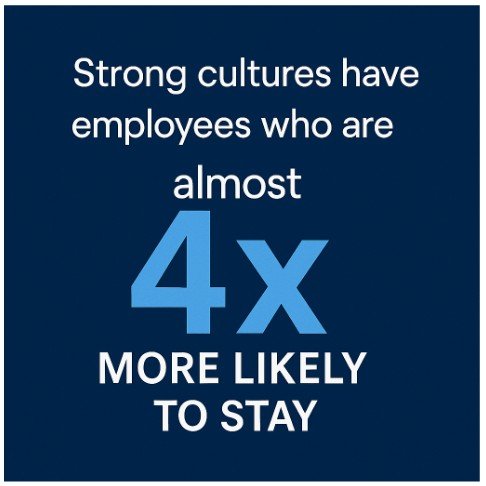
Organizations with strong cultures see employees who are almost four times more likely to stay, which turns culture into a retention and execution advantage.
Culture consulting differs from basic change programs. Training can create awareness, yet it rarely transforms how work happens. Culture consulting reshapes decision rights, review rhythms, and accountability systems inside a transformation office.
Many firms also bring a culture acceleration methodology that converts insights into routines people can use without guesswork. The scope covers leadership development, talent management, and leadership workshops that make shared values practical.
Who Culture Consultants Are
Effective culture consultants come from backgrounds in organizational psychology, leadership development, behavioral science, and transformation consulting. They work as strategic partners to executives and functional leaders, not as trainers.
The toolkit includes cultural diagnostics and employee surveys to establish a baseline, leadership coaching to build role modeling, and operating-model alignment so responsibilities and decision rights are clear.
Many advisors support Private Equity portfolio companies, scaled tech, healthcare, and manufacturing. The objective is a consistent workplace culture that links shared values and leadership styles to measurable business goals and clean communication practices.
Common Triggers for Engagement
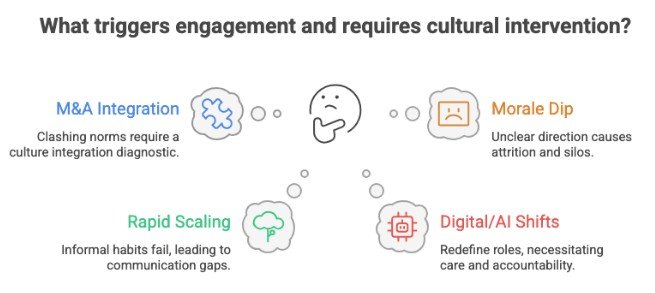
Leaders hire culture consultants when growth or disruption exposes misalignment. The most common triggers are clear.
In M&A, clashing norms call for a culture integration diagnostic before the first joint all-hands. During rapid scaling, informal habits stop working and gaps in communication and decision rights appear.
Digital and AI shifts redefine roles and risk, so teams need a steadier culture of care and accountability. When morale dips, attrition rises, or teams operate in silos, the underlying issue is usually unclear direction.
A global workforce study found that28% of employees expect to change employers in the next year, a rate above 2022 levels. This signals retention risk when culture and roles lack clarity.
When these signals appear, a company culture consultant defines the culture you want, confirms gaps through culture assessments, and embeds practices that stick.
The next section covers the business impact of strong corporate culture and the outcomes executives can expect when culture aligns with strategy.
The Business Impact: What a Strong Culture Delivers
Understanding why company culture is important starts with seeing how a strong corporate culture turns strategy into daily action. When values, leadership style, and communication practices align, teams move faster and customers feel the difference.
Let's take a closer look at the business impact of a strong culture.
Linking Culture to Measurable Results
When organizational culture lines up with business goals, measurable results show up in places executives track. Retention improves, execution speeds up, and customer experience becomes more consistent.
Only 3% of companies qualify as customer-obsessed in Forrester’s US Customer Experience Index. This shows how rare it is to translate company values into daily choices that customers can feel.
The gap appears in repeat contacts, abandoned carts, low referral rates, and volatile Net Promoter Score. It also appears inside the building. Teams move in different directions when leaders do not define what good looks like.
A strong workplace culture creates consistency across decisions, handoffs, and customer touchpoints. Clear communication practices and simple feedback mechanisms help managers address issues before customers notice them. Employee surveys serve as early indicators of quality or safety risks.
The culture of accountability also turns expectations into habits that people can follow during busy periods. The signal is visible in fewer failed launches and steadier adoption of new tools. These are not soft wins. They are the direct result of shared values that people can act on without interpretation.
Financial ROI of Cultural Alignment
Culture alignment drives financial results by improving execution. When leaders define decision rights, people know who owns which calls and why. Interfaces between functions stop conflicting. Handoffs follow a simple pattern. Regular reviews connect goals to work already in motion. Rework also drops, cycle times shorten, and accountability becomes visible.
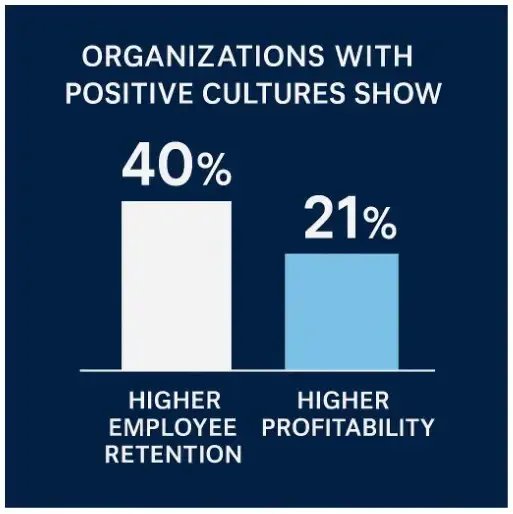
According to a summary of culture studies by Enculture, organizations with positive cultures show 40% higher employee retention, 17% better productivity, and 21% higher profitability. The outcome lasts beyond any single initiative because the operating system improves.
Private Equity teams see this every day. A reliable corporate culture lowers integration risk in add-ons, stabilizes critical roles during ownership changes, and speeds synergy capture. Clarity on who decides and how to escalate turns integration plans into daily actions.
A company culture consultant equips the transformation office with a short list of cultural indicators tracked alongside EBITDA and cash conversion.
Focus on three signals that move performance: clear decision rights, fast cross-functional responsiveness, and leadership development that ties behaviors to results. As these signals improve and leaders review them with the numbers, the organization gains momentum. Company values guide tough tradeoffs during pressure, not only during planning, and performance follows.
Intangible Benefits That Drive Long-Term Value
Some benefits do not fit neatly in a monthly dashboard, yet they drive durable advantages. Psychological safety improves learning speed and the quality of debate.
For example:
A MIT Sloan case report describes a management team that exceeded revenue targets by 25% in a strategic segment after a short skills program focused on safety and perspective-taking.
These results demonstrate how small behavioral shifts within leadership workshops can translate into significant revenue outside the room. For more details about psychological safety from Amy C. Edmondson, co-author of the report above, check out the video below.
Trust amplifies these gains. It gives leaders permission to run culture change programs without triggering cynicism. Teams accept feedback because the process feels fair. Shared values provide steadier employee morale during AI or process changes.
The organization adapts faster because principles are clear. Over time, those habits raise employee engagement, support stronger customer experience, and protect brand reputation through consistent behavior.
How the Culture Consulting Process Works
Culture consulting follows a clear journey that moves from insight to execution. You establish a baseline, align leaders, embed new habits, and track results against business goals.
Here is how it works end-to-end.
Step 1: Cultural Assessment and Diagnosis
Start with evidence, instead of anecdotes. A thorough assessment builds a baseline of how the current workplace culture actually operates. Consultants combine employee surveys, interviews, document reviews, and culture diagnostics to map the gap between stated company values and day-to-day behavior.
You can see how leadership style manifests in meetings, how communication practices either accelerate or hinder progress, and where accountability breaks down.
Strong diagnostics look across teams and time. You examine key moments, such as promotion decisions, handoffs between functions, and the operation of feedback mechanisms following incidents. You add culture assessments that quantify sentiment, clarity, and trust. You layer in a Culture Integration Diagnostic when M&A is in play.
What does that unlock? Mature listening programs translate into measurable outcomes. Organizations with advanced employee listening are 4x more likely to retain talent and are far more likely to hit financial and customer targets. This is why this step sets the tone for the rest of the work.
Step 2: Strategy Design and Alignment
The next move defines the culture you want and how it supports business goals. You pick a small set of desired traits, such as a culture of accountability or a culture of care. You turn those traits into observable behaviors that leaders can model and that managers can coach. Consultants then create a concise culture deck that ties organizational values to specific choices at critical moments.
Leadership alignment comes next. Executives align on decision rights and review rhythms that reinforce the target culture. Leaders run short leadership workshops to practice the new behaviors and to agree on what “good” looks like in meetings and performance conversations. Teams also need a change story that explains why this shift matters now.
AI transformation is a prime example. Leaders around the world say AI adoption is mission-critical, which raises the stakes for clear norms on experimentation, data use, and skills.
According to the 2024 Work Trend Index, 79% of leaders say AI adoption is critical to remain competitive. Culture design turns that urgency into simple rules of the road.
Step 3: Implementation and Enablement
This phase turns the design into daily behavior. The consultant leads the build. You sponsor decisions and clear roadblocks. Together, you choose three high-leverage fronts and tie each one to a clear outcome.
First: people systems
The consultant rewrites two or three hiring signals that match the target behaviors. You approve the signals and make sure recruiters use them. Recognition becomes specific and public. Managers name the behavior, the moment, and the result, so everyone sees what good looks like.
Performance management carries the same message. The consultant aligns one or two goals per role with the culture code. You sign off and expect those goals to show up in reviews.
Second: working routines
The consultant provides simple tools. A one-page decision guide makes ownership and escalation clear. A short handoff checklist sets out the few fields that must be completed before work moves to the next team. You make these tools mandatory for the teams that drive results.
Third: manager enablement.
The consultant runs short, hands-on sessions built on real cases from your pipeline. Topics include decision reviews, focused one-on-ones, and hybrid norms. You attend the first session and ask leaders to practice the same week.
This is a real change program with outcomes on the line. Projects with effective change management meet or exceed objectives 93% of the time, which is why enablement sits at the center of the process.
Step 4: Measurement and Continuous Improvement
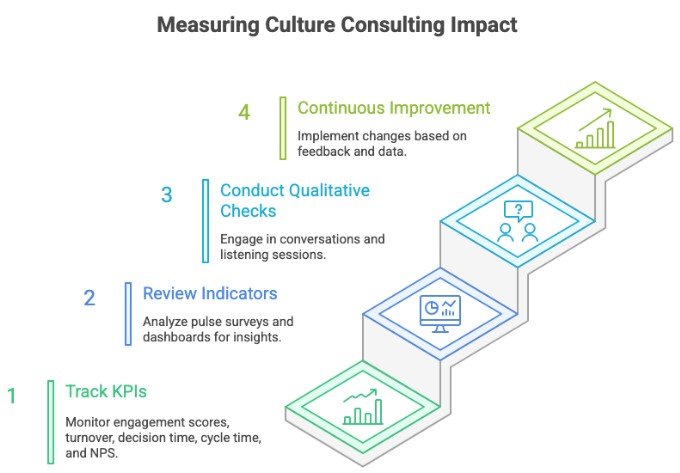
Measurement protects momentum and helps leaders measure company culture against business performance. You track a small set of KPIs that connect culture to performance. Examples include engagement scores on key drivers, regretted turnover, time to decision, cross-functional cycle time, and Net Promoter Score.
You review leading indicators through pulse employee surveys and operational dashboards. Also, you add qualitative checks, such as skip-level conversations and targeted listening sessions.
Continuous improvement keeps the work humane. Big change strains attention and energy. Leaders need pacing rules that prevent overload and keep trust intact. A Gartner survey showed that 73% of HR leaders reported employees were fatigued by change. The metric matters because teams under fatigue ignore new norms and revert to old shortcuts.
The solution is simple. Sequence initiatives, close the loop on feedback, and refresh rituals that matter. You recalibrate quarterly, publish what you've learned, and confirm that cultural signals align with the strategy you set.
Where Culture Consulting Creates the Most Impact
A culture consultant creates impact where pressure is highest and decisions move fast. The work translates strategy into a few clear habits that protect execution and employee satisfaction. The next three areas show how that focus turns complex change into business results.
During Mergers or Rapid Growth
M&A and scale-ups change how work gets done overnight. Systems merge, brand identity must stay coherent, and teams need clarity fast. Culture consulting creates impact by translating the deal thesis or growth plan into a few cultural strategies that guide behavior changes.
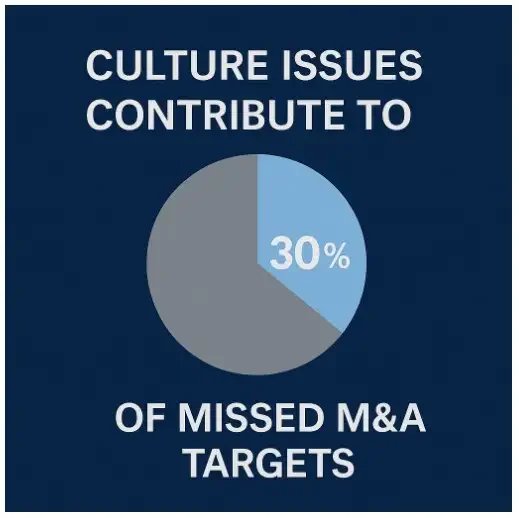
The consultant runs a focused culture integration diagnostic, then aligns decision rights, handoffs, and meeting rhythms so teams know who decides and how to escalate. This structure protects talent and keeps execution moving. The financial case is clear. Culture issues contribute to 30% of missed M&A targets.
When leaders name three operating rules, such as one-owner decisions, shared KPIs across functions, and visible recognition for cross-team problem solving, team members see what good looks like. You get fewer delays, cleaner integrations, and faster business results without losing the parts of culture that made each company successful.
During Digital or AI Transformation
Technology changes capacity, not outcomes, until people change how they work. In 2024, a global analysis reported time savings of 76% among companies using generative AI. Those hours do not automatically become throughput or quality. To capture benefits like these, culture work connects digital transformation goals to everyday choices.
A culture consultant helps translate intent into clear norms that teams can follow without any assumptions. Leaders agree on simple rules for experimentation, data use, and cross-functional reviews. Managers model those rules in weekly forums so expectations stay visible.
Short playbooks turn cultural strategies into steps people can apply during sprints, for example, when to try a tool, how to share what was learned, and how to submit feedback for quick changes. The result is less rework, steadier flow, and higher employee satisfaction because the way of working matches the technology now in use.
When Building Inclusive and Resilient Workplaces
Inclusion is not a slogan. It is a set of habits that widens input and speeds learning when pressure rises. Culture consulting delivers impact by turning principles like psychological safety into specific manager routines, for example, a two-minute risk round at the start of a review or a simple rule that dissent gets airtime before decisions close.
This matters because many employees still do not experience supportive environments. One survey showed that only 53% of employees see a supportive and open climate for neurodiversity. Closing that gap improves employee satisfaction and reduces avoidable churn.
As these routines take hold, brand identity benefits because customer interactions reflect the same respect and clarity people feel inside the company. Over time, the organization builds resilience. Teams adjust faster, leaders keep trust intact, and business results compound because the culture supports the next wave of change.
During Sector-Specific Operating Challenges
- Tech startups need guardrails that balance speed and quality, so culture change programs should hard-wire decision rights for launches and post-mortems.
- Healthcare faces burnout and role overload, which means culture diagnostics must target team communication and shift handoffs where patient safety and employee engagement intersect.
- Manufacturing relies on safety and consistency, so leadership workshops should anchor on routine discipline and simple feedback loops at the line, paired with talent management that rewards adherence without killing initiative.
In each scenario, a company culture consultant turns vague culture talk into a few clear habits that people can follow. Use culture assessments to establish the baseline, design behaviors that match organizational values, train leaders to model them, and measure the shifts that matter. This is how workplace culture supports organizational transformation instead of fighting it.
How to Know If You Need Culture Consulting
You can feel when organizational culture stops supporting business goals. Clarity fades. Decision speed drops. Exit interviews start to repeat the same themes. A few practical signals help you call it early.
- Turnover rises or feels unstable even after pay adjustments.
- Communication practices produce mixed messages. Teams do rework because priorities shift week to week.
- Leaders talk about company values, yet recognition and promotions reward different behaviors.
- Accountability feels uneven. A small group carries projects while others wait for direction.
- Employee surveys show confusion about goals or low confidence in leadership style.
If two or more of these patterns show up for a full quarter, you likely need help. A company culture consultant can pressure test your current culture of accountability, then run targeted culture assessments, culture diagnostics, and culture mapping to find the few changes that will move results.
In-House vs External Consulting
Internal HR teams can handle targeted issues, such as one department with unclear roles or a specific gap in communication. They already understand the company’s structure and can adjust incentives or clarify expectations without major disruption.
But when problems span functions or the business is entering a major shift, an external perspective becomes essential.
External consultants bring objectivity and dedicated focus that in-house teams often cannot maintain while managing daily operations. They surface patterns that insiders might overlook, connect culture gaps to measurable business results, and apply tested frameworks drawn from other organizations.
One study found that when managers act on employee input, employees are 24% more likely to speak up again, which shows how independent guidance can convert feedback into real engagement. Culture consultants accelerate that process by providing neutral facilitation, structured diagnostics, and the capacity to sustain momentum when internal resources are stretched.
What to Expect from a Good Company Culture Consultant
A strong company culture consultant brings both structure and insight to cultural transformation. The best partners combine analytical depth with the ability to connect directly with team members, translating complex organizational dynamics into practical next steps.
Their goal is to help you build lasting behavior changes that strengthen employee satisfaction, align brand identity, and improve business results.
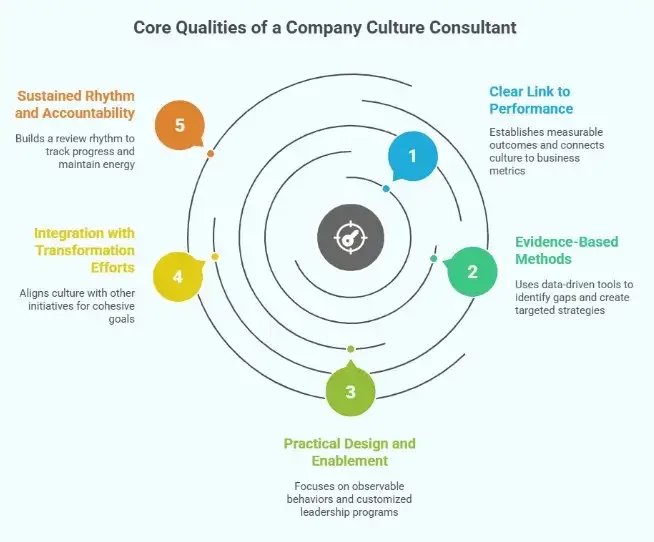
Here are the core qualities to look for:
- Clear link between culture and performance: A qualified partner starts by defining measurable outcomes such as retention, engagement, productivity, and customer impact instead of vague ideals. They help identify how culture connects to business metrics, so progress is visible at every stage.
- Evidence-based methods: Look for firms that use disciplined culture assessments, employee surveys, and data-driven tools to establish a baseline. These diagnostics reveal gaps in decision-making, collaboration, and communication that may not appear in staff meetings. Reliable consultants translate this data into targeted cultural strategies that fit your business model.
- Practical design and enablement: A good partner focuses on behaviors. They turn company values into a few observable habits that leaders can model and employees can practice. Expect customized leadership development programs, short leadership workshops, and playbooks that help managers coach their teams during busy cycles rather than generic training modules.
- Integration with transformation efforts: Cultural change must fit alongside other priorities, such as digital transformation or restructuring. An experienced consultant understands how to align culture with these larger initiatives so that people systems, technology adoption, and communication practices all reinforce the same goals.
- Sustained rhythm and accountability: Culture work fails when it fades from view. The right partner helps you build a simple review rhythm with monthly or quarterly check-ins that track leading indicators, share feedback, and adjust course when needed. They often coordinate through your transformation office to keep leadership accountable and maintain energy across teams.
Build Your Ideal Company Culture with Alpha Apex Group
A strong company culture is not built by chance. It comes from clear intent, consistent leadership, and structured follow-through. Culture consulting gives organizations the tools to define what they stand for, align behaviors with business goals, and create a workplace where people understand how their work drives results.
When culture supports strategy, execution becomes faster, more consistent, and more resilient to change.
If your organization is planning growth, facing transformation, or simply ready to strengthen how teams work together, Alpha Apex Group can help.
Our consultants specialize in turning cultural insight into measurable outcomes that improve performance and employee satisfaction.
Reach out today to learn how we can design a culture strategy that fits your goals and delivers lasting business results.
Frequently Asked Questions
What are the 5 P's of corporate culture?
The 5 P’s are Purpose, Philosophy, People, Practices, and Performance. They define why the company exists, what it believes, how it hires and manages people, and how results are measured. Culture consultants use these elements to link daily behavior to operational efficiency and market value.
What is a toxic workplace culture?
A toxic culture forms when values are ignored, accountability is uneven, and employees feel unsafe speaking up. It lowers engagement and trust while increasing turnover. Employee engagement diagnostics and training leaders to model better behavior are key steps in repairing it.
What are the types of company culture?
Common types include collaborative, innovative, hierarchical, results-driven, and customer-focused. Each shapes communication, motivation, and decision-making capabilities differently. Organizational Culture Consulting helps identify your mix and design practices that improve performance and employee satisfaction.
How does HR influence company culture?
HR shapes culture through hiring, development, and feedback systems. It leads Employee Engagement Surveys, supports inclusive hiring, and trains leaders to reinforce company values. HR also works with support functions and culture consultants to align programs with business goals.
.jpg)
.jpg)
.jpg)
.jpg)