Types of Company Culture Explained with Pros and Cons
A strong culture is one of the few advantages a competitor cannot copy.
Yet engagement remains low across many organizations.
Only 33% of U.S. employees reported feeling engaged in 2025. A clear sign that most workplaces are struggling to create environments that support clarity, performance, and long-term loyalty.
Understanding the type of culture you have and the type you need is essential for better results.
This article breaks down the major culture types in a clear, practical way so you can identify strengths, spot gaps, and choose a direction that supports your strategy rather than working against it.
P.S. Wondering why your culture isn’t improving even after new policies, perks, or training? Before investing more time and money, see our list of the Top Company Culture Consulting Firms. The partners who can pinpoint what’s really holding your organisation back and help you turn culture into a competitive edge.
Why Company Culture Types Matter
Understanding company culture at a high level is essential for any organization that wants steady business performance and strong employee engagement. Culture shapes how people interact, how decisions get made, and how daily work feels.
According to research, companies with strong and positive cultures saw an 85% net profit increase across five years.
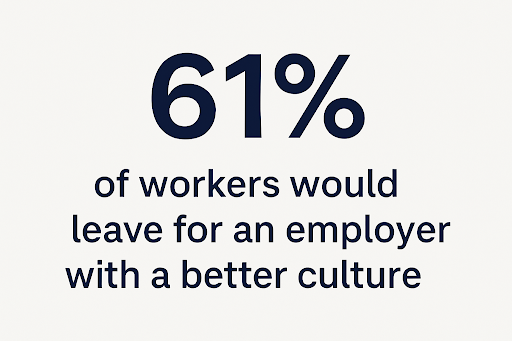
Culture also influences employee retention. One survey reported that 61% of workers would leave for an employer with a better culture.
These realities show why knowing your culture type matters for employee satisfaction and long-term results.
What “Culture Type” Really Means
A culture type describes the dominant style, values, and social norms that shape people's interactions inside the corporate environment. It has nothing to do with perks. It reflects how employees communicate, how a leadership style shapes decisions, and how teams handle the employee life cycle.
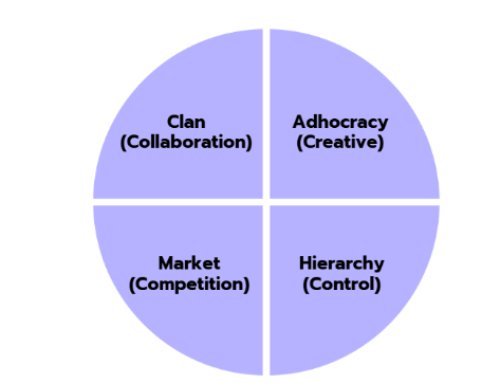
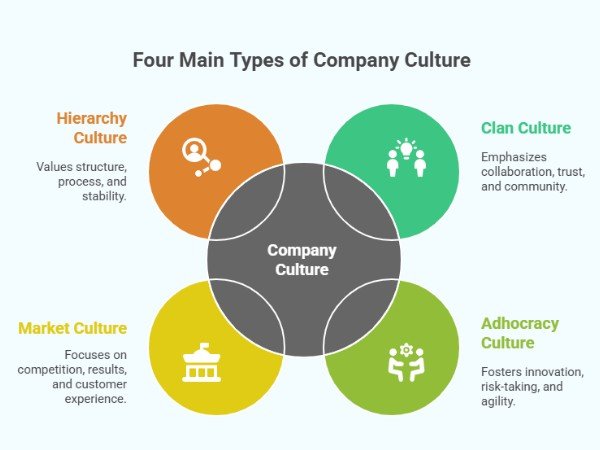
The Competing Values Framework (CVF) outlines four categories that appear often in organisational culture:
- Clan Culture
- Adhocracy Culture
- Market Culture
- Hierarchy Culture
A clan culture emphasizes teamwork and close employee interactions, while a market culture emphasizes competition and clear company goals.
Most companies blend types because different teams need different support systems. Understanding the dominant type simply creates clarity. It explains why employees respond in certain ways, how core values show up in daily work, and what kind of customer experience the business naturally delivers.
Why Culture Types Influence Performance, Retention, and Results
Your culture type influences employee loyalty, employee feedback, and performance management. When the environment supports clear values, people stay longer and contribute more to organizational development.
A mismatched environment leads to turnover and weak employee happiness. Culture affects customer service, innovation speed, and how well teams adapt to shifting company values. It also shapes how employees support recognition and rewards programs that strengthen engagement.
In short, culture influences every part of the employee pulse and the employee well-being of a team.
Why Businesses Need Clarity on Their Dominant Culture
Clarity reduces confusion and prevents mixed signals. When a company understands its dominant type, it can align its mission statement, recognition program, and performance expectations. It also exposes gaps.
Leaders might claim to support creativity while policies still point toward hierarchy or strict task-driven norms. Seeing these gaps helps guide smart decisions and protects employee morale.
Many executives believe their environment works well, yet only 47% of employees agree. A clear understanding of your cultural identity helps close that gap and supports a healthier corporate culture.
The 4 Main Types of Company Culture (Competing Values Framework)
Understanding the four primary culture types helps you see the patterns that shape how people work, communicate, and make decisions. Each type brings its own strengths and limitations and will fit certain business goals better than others.
The goal is to use this framework to clarify what your current environment encourages and what it may be holding back.
1. Clan Culture (The Collaborative, People-Oriented Culture)
A clan culture feels like a close community where trust, shared purpose, and steady people interactions shape the daily experience. These organizations emphasise collaboration, mentorship, and open communication.
Leaders act as coaches instead of distant executives. Teams reinforce core values, company values, and a mission statement that guides the work culture. This environment builds psychological safety and supports employee well-being because people feel connected to the broader organisational culture.
Pros
Clan cultures score high in employee engagement, employee satisfaction, and loyalty. Research shows that organizations with strong belonging experience a 56% increase in job performance, which strengthens business performance and customer experience.
Another recent study found that 72% of employees say recognition from their manager significantly improves engagement, which supports the value of a strong recognition program.
Supportive environments also strengthen employee retention because people feel valued and see a long-term future at the organisation.
Clear recognition and reward practices further strengthen the employee life cycle and help sustain a positive corporate culture.
Cons
- Clan cultures can struggle with performance management because leaders may avoid difficult conversations to maintain harmony.
- Decision speed can slow in fast-moving markets when teams seek consensus instead of acting quickly.
- Internal relationships may carry too much weight, which can blur hierarchical structures and weaken company goals.
- In some organizations, comfort becomes the priority, which can reduce accountability or cause teams to resist outside ideas that challenge existing habits.
Best fit industries
Clan culture fits industries where service, collaboration, and employee loyalty drive outcomes. Healthcare, education, nonprofits, and hospitality often benefit from this culture because teamwork directly shapes customer service and organisational development.
2. Adhocracy Culture (The Innovative, Risk-Taking Culture)
An adhocracy culture is dynamic and entrepreneurial because it thrives on innovation and bold ideas. These organizations move quickly and give teams wide autonomy to explore new concepts without heavy hierarchical structures.
Employees have room to test ideas and challenge old assumptions, which encourages creativity and fresh approaches to company goals. Modern research describes adhocracy as an environment built on agility and innovation where teams shift quickly to meet new challenges.
The culture rewards experimentation because teams want to uncover breakthroughs that support business performance. Structure feels flexible and project-based, and the focus stays on invention and rapid problem-solving.
Pros
The greatest strength of an adhocracy culture is its speed of innovation. Teams act on new ideas quickly, which helps these organizations stand out in competitive markets.
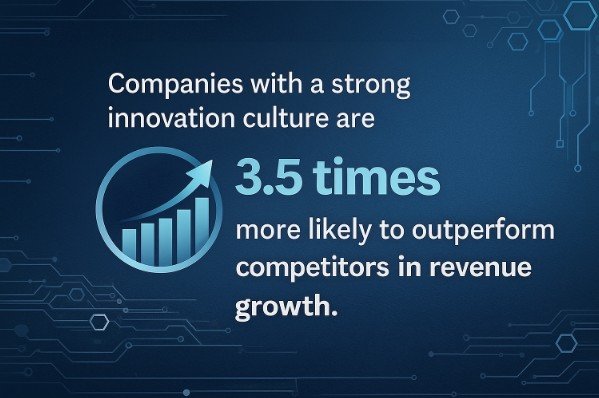
People who enjoy creative work or independent thinking feel motivated in this environment because their ideas can turn into real solutions without long delays. It’s reported that companies with a strong innovation culture are 3.5 times more likely to outperform competitors in revenue growth, underscoring the value of this culture.
Adhocracy cultures also attract entrepreneurial talent. These employees enjoy high autonomy because they can influence outcomes directly. The steady push for experimentation can lead to products, services, or solutions that redefine entire markets.
Cons
- Can feel chaotic when teams lack clear priorities or guardrails.
- The fast pace may overwhelm employees who prefer stability or structured performance systems.
- Risk of chasing too many ideas, which spreads resources thin and slows execution.
- Coordination suffers when project teams work independently without shared processes.
- Pressure to constantly innovate can harm employee well-being if support systems aren’t in place.
- Growing organizations struggle when creativity outpaces long-term planning.
Best-fit industries and examples
Adhocracy cultures thrive in fast-changing industries such as tech, biotech, creative agencies, media, and emerging research fields. Startups often operate this way because rapid progress shapes survival. Companies like SpaceX rely on bold experimentation to challenge old norms in aerospace.
Design firms, marketing groups, and advanced engineering teams also benefit from this approach because innovation gives them a competitive edge and helps deliver a strong customer experience.
3. Market Culture (The Competitive, Results-Driven Culture)
A market culture is competitive and centered on clear outcomes because the goal is to win in the external market. These organizations judge success by revenue growth, market share, and performance against rivals.
Workflows stay structured enough to support efficiency, yet the structure exists mainly to drive output rather than preserve a rigid role-based culture.
Leaders set ambitious company goals, and employees understand that results, speed, and accountability shape the work culture. Experts describe market culture as results-oriented and competitive, which attracts people who enjoy clear targets and high expectations.
Pros
Market cultures excel at hitting targets because everyone understands what matters. The focus on numbers pushes teams to refine processes, sharpen customer service, and improve the overall customer experience.
High performers often feel energized because strong results lead to recognition and rewards and clear advancement paths. A customer experience analysis found that customer-centric businesses were 60% more profitable than companies that were not customer-focused. This shows how a disciplined, results-driven approach can support business performance.
Market culture also reacts quickly when competitors move because decisions revolve around measurable outcomes. When leaders connect targets to company values and a clear mission, a market culture can support both employee loyalty and strong financial results.
Cons
- One of the downsides is pressure. Market cultures can feel intense and leave little space for recovery when targets keep rising.
- Employees may feel that their value depends only on recent numbers, which can strain employee well-being and the broader employee pulse.
- Collaboration may weaken if people protect accounts or information to hit individual goals. A 2025 toxic workplace report found that53.7% of employees had quit a job because of a toxic workplace, a reminder that unbalanced performance pressure can damage retention.
- If leaders ignore employee recognition, development, and core values, the corporate culture can slip into fear and short-term thinking. Over time, this erodes innovation and drives high turnover.
Best-fit industries and examples
Market culture fits industries with clear scoreboards, such as investment banking, commercial sales teams, and mature tech markets. Automotive companies and large retailers often rely on a task-oriented culture that emphasizes efficiency and measurable results.
Growth-focused brands have leaned on data, pricing strategy, and strong performance management to protect margins and win customers. This culture works best in a corporate environment where competition is intense and where success depends on clear metrics rather than ambiguous outcomes.
4. Hierarchy Culture (The Structured, Process-Driven Culture)
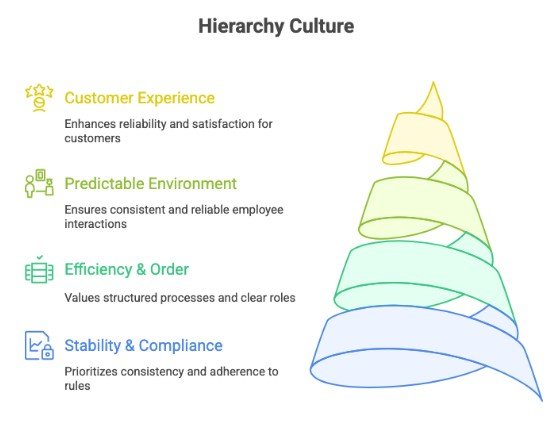
A hierarchy culture is structured and controlled with clear rules and defined roles. This hierarchical culture values process and order more than speed or experimentation because leaders prioritize stability, compliance, and efficiency.
Org charts, standard operating procedures, and formal chains of command shape daily employee interactions. The environment feels predictable for employees, which supports customer experience and reliability.
Research on quality systems shows that business process standardization can cut errors by 30% while also lowering process costs. This highlights how structure protects quality and consistency.
Pros
The main advantage of a hierarchy culture is consistency at scale. Standard processes allow large teams to deliver similar outcomes across sites and over time. New hires benefit from a clear role-based culture because expectations and performance management criteria stay explicit.
This clarity supports employee retention when people prefer security instead of constant change. Hierarchy cultures also support long-term planning because leaders base decisions on documented procedures and proven routines. In regulated settings, this approach strengthens organisational culture around safety, quality, and risk control.
Cons
- Stability can limit agility and innovation, particularly when layers of approval delay decisions.
- Employees may feel restricted by strict rules, which can lower engagement and initiative.
- Department silos form easily when each group focuses on its own procedures instead of shared goals.
- When rules become barriers, the culture can feel rigid, draining, and resistant to change.
Best fit industries and examples:
Hierarchy culture works well in government agencies, healthcare systems, utilities, and large manufacturers, where safety and reliability outrank speed. Global restaurant chains and banks rely on detailed playbooks to ensure customer experience consistency across every location.
In these environments, a task-oriented culture keeps operations stable while improvements occur within smaller project teams. This balance lets leaders protect a purpose-oriented organisational culture around safety and compliance while still leaving room for change in less critical areas.
Beyond the Basics: Emerging and Modern Culture Types
Traditional culture types (clan, adhocracy, market, hierarchy) give a solid framework for thinking about organisational culture. But company culture does not stop there.
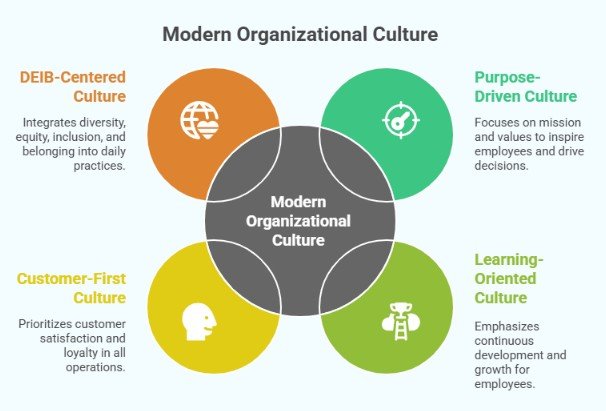
In today’s evolving corporate environment, new culture themes have emerged. Organizations often aim for modern blends like purpose-driven, learning-oriented, or customer-first cultures that go beyond the classic four types.
1. Purpose-Driven Culture (Mission and Values First)
A purpose-driven culture is one where the company’s mission and core values actively guide decisions and inspire employees. In these organizations, people feel they are part of something bigger than profit.
The ethos is often about making a positive impact in society or community while meeting business goals. Purpose-driven companies place mission at the core of strategy.
For example, a purpose-driven retailer might prioritize sustainable sourcing even if it’s costlier because it aligns with their values.
In one analysis, firms with strong purpose saw a 13.1% annual return on equity, significantly higher than peers. Another study found that for “mission-driven companies,” employee alignment resulted in 30% higher innovation and 40% higher retention.
For a deep dive on building a purpose-driven culture, check out the video below:
Pros
- Drives exceptional employee engagement, satisfaction, and brand loyalty.
- Attracts talent, especially Millennials and Gen Z, who value meaningful work.
- Strengthens reputation and reduces turnover.
- A clear mission differentiates the brand and can even support premium pricing.
- Purpose acts as a stabilising force during strategic decisions or times of crisis.
Cons
- If purpose feels inauthentic, it creates backlash and erodes trust.
- Over-focusing on the mission may delay practical decisions or short-term needs.
- Different interpretations of purpose can create internal conflict.
- Meaning does not replace sound operations; employees still burn out if workloads stay high without supportive management.
2. Learning / Growth-Oriented Culture (Continuous Development)
A learning-oriented culture emphasises personal and professional development. The philosophy is: as employees grow, the business grows. Companies with this culture invest in training, mentorship, upskilling, and a mindset of continuous improvement.
In these cultures, mistakes become opportunities to learn, feedback flows, and career pathways are clear.
According to the LinkedIn Workplace Learning Report, companies with a strong learning culture saw a 57% retention rate compared to 27% for companies with weaker learning cultures.
Pros
- Attracts talent and increases innovation because employees feel supported and invested in.
- Higher retention, people stay longer when they see real development opportunities.
- Internal mobility keeps institutional knowledge in-house and reduces hiring costs.
- A growth mindset encourages experimentation and reduces fear of failure.
Cons
- Hard to execute well; investment and follow-through are essential.
- Too much training or constant change without clear application can frustrate employees.
- Career pathways may lag behind expectations, causing cynicism.
- Decision-making can slow down if teams cycle through endless feedback or learning loops.
- Without a real budget and commitment, the culture becomes a slogan instead of a system.
3. Customer-First Culture (Obsessive Customer Focus)
In a customer-first culture, the customer is truly at the centre of every decision. Every level asks: “How does this affect the customer experience?”
Companies with this mindset empower frontline employees and use customer satisfaction metrics as primary success measures. The belief is that the organisation exists to create happy, loyal customers and that profitability follows.
For tips on how to scale this mindset, check out the video below:
Pros
- Builds strong customer loyalty and a highly trusted brand.
- Consistent, positive experiences lead to repeat business and referrals, directly increasing revenue.
- Employees feel motivated because they see the impact of their work on customers in real time.
- Helps align teams around clear priorities and shared outcomes.
Cons
- High customer demands can cause burnout if employees aren’t supported with tools, staffing, or boundaries.
- Focusing too heavily on today’s customer needs may limit long-term innovation or future planning.
- Delivering exceptional service can increase costs and create efficiency trade-offs.
- If customer expectations keep rising without operational support, morale and service quality can drop.
4. DEIB-Centered Culture (Diversity, Equity, Inclusion & Belonging)
A DEIB-centered culture embeds diversity, equity, inclusion, and belonging into everyday practices, instead of just standalone programs. Leadership is accountable for equitable systems, dialogue stays open, and structures like employee resource groups support underrepresented employees. The goal is to create an environment where people feel respected, represented, and able to contribute fully.
Pros
- Diverse teams generate stronger innovation, better decisions, and broader perspectives.
- Inclusive environments boost engagement because employees feel valued and safe to share ideas.
- Strong belonging correlates with higher retention and stronger attraction, especially among younger talent.
- A DEIB lens helps organizations build fairer processes across hiring, development, and advancement.
Cons
- Effective DEIB requires real investment, time, and skilled change management.
- If initiatives feel tokenistic or disconnected from daily operations, trust drops quickly.
- Employees may feel conflicted when DEIB is promoted publicly but not practiced internally.
- Global organizations face added complexity because inclusion norms and expectations differ across regions.
Read Next: How to Change Company Culture Without Breaking Your Business
How to Choose the Right Culture Type for Your Organization
Choosing a culture type starts with understanding your business strategy, industry pressures, talent expectations, and long-term goals.
A culture that works brilliantly in one context can hold you back in another. The goal is to identify the work culture that helps your organisation perform at its best.
Each culture type brings strengths that match different priorities. The process begins with clarity on what the business needs to accomplish and which cultural traits will support that direction.
Align Culture Type with Business Strategy and Industry
Strategy is one of the best guides. Ask “What do we need to be known for over the next few years?”.
- A biotech company that depends on breakthrough R&D needs creativity and speed — often pointing toward an adhocracy or a strong learning culture.
- A franchise network that relies on consistent customer experience and tight cost control aligns with a hierarchy culture, where structure protects reliability.
- Industry norms matter too. High-tech software companies mostly blend adhocracy + clan traits because talent expects empowerment and rapid change.
- Airlines, hospitals, and other safety-critical sectors lean toward hierarchy, where checklists, precision, and protocol drive results.
Data shows that culture alignment is not a soft concept. A 2024 analysis found that organizations that intentionally focus on culture are 4X more likely to see improved financial performance.
When culture supports strategy, teams pull in the same direction, and business performance improves. When strategy shifts, culture usually needs to shift as well.
A move toward global expansion, digital transformation, or premium customer experience may require more market culture elements or stronger clan traits, rather than the habits that worked in an earlier phase.
Match Culture to Talent Expectations and Growth Stage
The culture you build has to align with the people you want to hire and keep. Different groups value different things. Younger employees often look for purpose, development, and inclusive company values. Experienced specialists may care more about stability, clear roles, and a dependable leadership style.
If your target talent values autonomy and growth, a rigid hierarchy culture will feel unattractive. If your success depends on highly specialised experts, a structured and predictable environment can be a selling point.
Talent data supports this. A summary of culture research reported that 56% of job seekers see company culture as more important than salary for job satisfaction. This means your organizational culture directly affects recruitment, employee retention, and overall employee satisfaction across the employee life cycle.
Growth stage also matters. Early-stage startups often thrive with adhocracy and clan elements because people wear many hats and move fast. As the company scales, more hierarchy and market discipline typically emerge to manage complexity and performance. The key is to plan these shifts rather than let them happen by accident.
Ask what kind of environment will help your current and future employees do their best work, then build that environment on purpose.
Read Next: 6 Inspiring Company Culture Examples You Can Learn From
Build a High-Performance Culture With Alpha Apex Group
A clear understanding of your culture type gives you an advantage by showing what is working and where adjustments are needed. Culture shapes how people work, how decisions happen, and how well your organisation can adapt.
When leaders approach culture with intention, they create an environment that supports performance and long-term stability.
If you want expert-level guidance in shaping or strengthening your company culture, Alpha Apex Group can help you out. We assist you in building a structure that supports your goals and aligns with how your teams work.
Reach out today to create a culture that drives real results.
Frequently Asked Questions
What is the best type of company culture?
There is no universal best culture because each type supports different goals. The right culture is the one that aligns with your strategy, industry, and talent needs. A strong culture is simply one that helps your people do their best work.
How does company culture affect organizational performance?
Culture shapes how decisions are made, how teams collaborate, and how consistently work gets done. When culture and strategy align, performance improves because employees have clarity and momentum. When they conflict, results slow and engagement drops.
Can our company transition from one culture type to another?
Yes, but it requires intentional leadership and consistent reinforcement. Culture shifts happen through changes in behaviors, systems, incentives, and communication. The transition works best when leaders model the new expectations and remove habits that reinforce the old culture.
What are the 5 P's of corporate culture?
The 5 P's often refer to Purpose, People, Processes, Practices, and Performance. Together they describe what drives the culture, how work happens, and what the organisation rewards. These elements help leaders understand the foundation of their current culture and where adjustments may be needed.
What does Alpha Apex Group do as a company culture consulting firm?
Alpha Apex Group helps you assess your current culture, identify gaps, and build clear strategies that support performance, engagement, and long-term growth. Our team specializes in cultural assessment, values alignment, leadership development, and employee engagement planning.
How does Alpha Apex Group support culture transformation?
Alpha Apex Group uses structured assessments, leadership workshops, and tailored cultural roadmaps to guide organizations through change. Our approach blends data, strategic insight, and proven engagement techniques to help teams adopt new behaviors and sustain cultural improvement over time.
When should an organization consider working with Alpha Apex Group?
Leadership teams typically reach out when engagement drops, turnover rises, strategy shifts, or teams struggle with alignment. AAG also works with companies preparing for scaling, mergers, restructuring, or new leadership transitions, where culture clarity becomes essential.
.jpg)
.jpg)