How to Hire a ServiceNow SecOps Developer

ServiceNow is a widely used enterprise platform, with over 8,400 organizations worldwide using it to run IT operations, including security operations (SecOps). But with that comes the need for specialized talent, particularly SecOps developers, who set up the platform to meet your business needs and help run it smoothly.
However, finding the right person for this job can be a tall order, and we know that first hand.
Adoption of the platform is rising at a double-digit year-on-year rate, which is increasing skill gaps, according to K2. After all, ServiceNow developers are incredibly niche.
A well‑qualified SecOps developer would understand the ServiceNow Platform but also bring expertise in scripting, API integration, and security practices that align with real‑world operational risk reduction.
For IT leaders and recruiters dealing with this talent gap, the first step to getting the sourcing just right is understanding how to:
Define proficiency,
assess candidates,
and set up practical skills tests
That’s what we’ll share in this article so you can recruit and hire developers to support your current SecOps implementation.
Need help with ServiceNow product implementation? Explore Alpha Apex Group’s ServiceNow consulting services to maximize your ROI.
What Is ServiceNow SecOps?
ServiceNow SecOps (Security Operations) is a suite of integrated applications on the ServiceNow Platform. They are designed to unite security and IT teams, automate workflow‑driven responses, and turn security insights into actionable tasks.
Organizations use ServiceNow SecOps to streamline how they detect, prioritize, and remediate threats. These tools pull in alerts from existing tools, such as SIEMs, vulnerability scanners, and threat feeds. And they can automate incident lifecycle management from start to finish.
From our experience working with companies in this niche, SecOps essentially breaks down silos between security and IT operations.
Since it’s built on the Now Platform®, SecOps can give you a unified view of your security posture. Even better, it can facilitate automated decisions and responses based on business context and risk.
Basically, it enables real‑time collaboration across teams and reduces manual handoffs that slow down incident response.
What Does a ServiceNow SecOps Developer Do?
A ServiceNow SecOps Developer is a specialized developer with expertise in the ServiceNow Platform. That means they have knowledge and experience in security processes to design, build, and maintain automated security workflows.
The ServiceNow SecOps developers we place make sure your security strategy translates into reliable, scalable tools and automated processes via ServiceNow’s AI-powered capabilities.
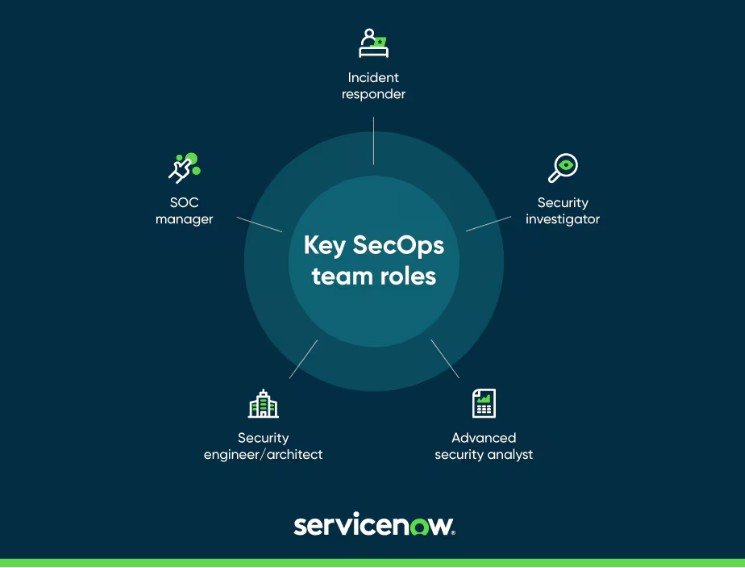
Here are the typical duties of a ServiceNow SecOps developer we always look for during the recruiting stage:
Configure and customize SecOps modules (Security Incident Response, Vulnerability Response, and Threat Intelligence). They should use the platform’s built‑in capabilities and custom workflow logic to automate incident triage and remediation.
Design and implement integrations with third‑party tools, including SIEM systems, vulnerability scanners (such as Qualys or Tenable), and threat feeds. The ServiceNow developer will use REST APIs, SOAP APIs, and secure authentication methods.
Build and optimize automated workflows, event triggers, and data flows in the ServiceNow environment to reduce manual effort and accelerate response times.
Collaborate with IT teams, security engineers, and ServiceNow Administrators to align custom solutions with your overarching business objectives. They’ll also ensure seamless operation across the broader ServiceNow ecosystem.
Depending on the scope of the job, the role could be filled by an in‑house team member or supported by a remote ServiceNow developer.
But frankly, given the sensitivity of the job, we recommend an on-site security developer/engineer.
This position sits at the intersection of security operations, platform expertise, and technical implementation.
What Skills to Look for in a ServiceNow SecOps Developer?
A skilled ServiceNow SecOps Developer must have deep technical fluency in the ServiceNow platform as well as real-world security domain expertise.
Below, we break down the critical competencies our own hiring managers prioritize across three categories: technical skills, security operations knowledge, and scripting proficiency.
Obviously, we encourage you to do the same:
Technical ServiceNow Skills
These skills are a must-have. Ideally, you want a candidate with all these skills, but some gaps can be easily filled with training and workshops.
ServiceNow platform fundamentals
Top candidates should have direct experience configuring the Now Platform’s data model. That may include working with tables, Access Control Lists (ACLs), business rules, and UI policies.
These foundational elements support security workflows and enable custom logic to dynamically enforce business rules. For example, ACLs are critical in controlling who can view or update sensitive incident or vulnerability data.
Flow Designer and automation engine
We always look for candidates proficient in workflow-building with Flow Designer and other workflow automation tools within the platform. This is particularly important for supporting security incident response and automated notifications.
In our experience, organizations automate most of the SecOps tasks using Flow Designer in many ServiceNow implementations.
Script Includes, REST APIs, and integrations
SecOps developers build complex integrations using Script Includes, REST APIs, and IntegrationHub spokes. For example, integrating with third-party tools like Qualys or Splunk is essential for ingesting external threat and vulnerability data.
Similarly, we know that mastery of OAuth and API authentication is key in secure enterprise environments.
Update sets and application lifecycle management
Candidates should understand how to manage and migrate application updates using update sets, scoped applications, and the ServiceNow Studio. Lifecycle management ensures secure deployments and version control.
In fact, we found this to be essential when working across global talent or hybrid on-site and offshore teams.
Security & SecOps Expertise
Knowledge of how the platform and its security features work is just as important.
Understanding of SOC workflows and incident response
Look for candidates familiar with SOC-level processes like triage, containment, and post-incident review. These workflows are modeled directly in the Security Operations module and require alignment with tools like SIEM (e.g., IBM QRadar or Splunk).
Vulnerability management processes
Effective developers can prioritize and automate vulnerability remediation using ServiceNow’s Vulnerability Response module. This includes ingestion from scanners such as Tenable and linking to configuration items in the CMDB to enable accurate impact analysis.
Threat intelligence ingestion and enrichment
Top developers should be able to configure enrichment workflows for threat feeds (e.g., MISP, Anomali). Using IntegrationHub and APIs, developers can support correlation between indicators and incidents to improve response prioritization.
SIEM and SOAR concepts
SecOps developers should have a know-how of Security Orchestration, Automation, and Response (SOAR) principles, and how to integrate ServiceNow with a SIEM.
Tools like Splunk SOAR or Microsoft Sentinel may also be involved alongside ServiceNow, so we always check if our candidates know how to use these.
Besides, SecOps developers should help bridge the gap between detection and action by automating playbooks via Flow Designer and custom applications. That should be checked as well.
Scripting & Development Skills
Although elements like Flow Designer are no-code, as a developer, they should have the necessary scripting and programming skills to support any code requiring customizations.
JavaScript (server-side and client-side)
JavaScript is the dominant scripting language in ServiceNow. Developers must use it effectively in Business Rules, Script Includes, and Client Scripts to drive both UX and backend automation.
From our experience, many organizations also:
Minimize client-side scripting
Prefer UI Policies, UI Builder, and server-side logic for performance and security
We always advise our clients to look for ServiceNow SecOps developers who can handle both.
Glide APIs
ServiceNow’s Glide APIs allow secure server-side logic, including querying CMDB data, triggering workflows, or modifying records based on incident severity. Understanding of these APIs is foundational for scalable development.
That said, we know modern implementations prefer Flow Designer triggers and subflows, so they use Glide APIs mainly for data access and logic.
JSON, REST, OAuth
Knowledge of structured data formats and protocols is a mandatory requirement in most instances. Developers regularly use JSON in integration payloads, REST to connect to third-party services, and OAuth for secure access tokens in modern enterprise environments. These are vital when building SecOps integrations with cloud-native solutions like AWS GuardDuty or Azure Defender.
What Certifications Should a ServiceNow SecOps Developer Have?
When hiring a ServiceNow SecOps Developer, we look at certifications, too. These aren’t a deal breaker but they give you a reliable indicator of platform expertise, security operations knowledge, and commitment to ongoing mastery in a digital transformation environment.
Now, there is a wide range of ServiceNow certifications, and it would be unrealistic to expect candidates to have all of them under their belt.
To simplify, we’ve categorized certifications as fundamental, SecOps-specific, and broader, nice-to-have.
Foundational ServiceNow Certifications
Even for SecOps specialists, a solid foundation in core ServiceNow certifications is highly valuable:
Certified System Administrator (CSA): This essential credential demonstrates that a candidate understands core ServiceNow Platform concepts, including data modeling, workflow automation, and basic security configurations. We widely recommend it as the first step for any ServiceNow professional.
Certified Application Developer (CAD): This certification shows the ability to build custom applications, design workflows, and extend the platform using scripting and APIs. This is obviously a key skill for developers delivering tailored SecOps solutions.
SecOps‑Specific and Implementation Certifications
Beyond foundational credentials, ServiceNow offers certifications directly aligned with security operations. These include:
Certified Implementation Specialist – Security Incident Response (CIS‑SIR): Focused on configuring and implementing the Security Incident Response component, this is one of the most relevant certifications for SecOps Developers. It validates the ability to manage security incidents using best practices and ServiceNow’s workflows.
Certified Implementation Specialist – Vulnerability Response (CIS‑VR): Focuses on vulnerability management configuration and workflows, which is another core component of SecOps work. These specialist certifications help you distinguish candidates who can implement modules that align with your business risk management needs.
Broader Certifications That Add Value
While not SecOps‑exclusive, we advise you to check for the following certifications because they may signal advanced capability:
IT Service Management (CIS‑ITSM): Shows understanding of IT workflows that integrate with SecOps processes, like incident and change management.
IT Operations Management (CIS‑ITOM): Relevant when SecOps workflows tie into discovery and service mapping, helping developers understand how security events relate to broader IT Operations data.
Certified Technical Architect (CTA): We found that for senior hires or lead developers, CTA demonstrates mastery of platform design and integration across complex environments, which is valuable for full‑scale implementation projects.
Non‑ServiceNow Credentials That Complement SecOps Expertise
Because SecOps sits at the intersection of platform development and security operations, industry security certifications can also help contextualize a developer’s skills, such as:
CompTIA CySA+: Focuses on cybersecurity analyst capabilities and aligns with threat detection and incident response workflows automated in SecOps.
(ISC)² SSCP or CISSP: While broader than platform‑specific skills, these can indicate deeper security domain knowledge that improves a developer’s ability to align business needs with secure ServiceNow solutions (we found this especially useful in regulated industries).
Note for ServiceNow SecOps Developers: If you’re looking to become a ServiceNow SecOps developer, check out the recommended learning/ certifications for this career pathway.
Experience Level: Junior vs Mid-Level vs Senior SecOps Developer Requirements
When building out your ServiceNow SecOps team, try to match candidate experience levels to the business needs and complexity of your current or planned ServiceNow implementations.
In some cases, you may not need deep expertise. Here, you might just need an entry-level ServiceNow developer with essential knowledge and technical skills (and fundamental certifications we just listed).
As Michael Moch, a ServiceNow expert, explains in his blog about ServiceNow talent expertise:
“70% of ServiceNow work is configuring out-of-box functionality. 20% is moderate customization. Only 10% requires deep technical expertise. Yet we hire like everything is in that 10%.” (Michael Moch, ServiceNow expert)
With that helpful reality check in mind, below is a breakdown of the skills, responsibilities, and platform depth expected at each level.
| Level | Experience | Technical Skills | Platform Expertise | Security Domain Knowledge | Typical Responsibilities |
|---|---|---|---|---|---|
| Junior ServiceNow SecOps Developer | 0–1 year | Basic scripting (client/server-side JavaScript), basic REST API use, UI Policies, Business Rules | Foundational knowledge of the ServiceNow Platform, use of Flow Designer, and simple workflow automation | Basic awareness of incident response and vulnerability management | Supporting tasks, module configuration under supervision, basic integrations, learning ServiceNow Studio, and CMDB |
| Mid-Level ServiceNow SecOps Developer | 2–3 years | Intermediate scripting with Glide APIs, custom REST/SOAP APIs, external system integration, and use of OAuth | Building and maintaining custom applications, managing update sets, and working with IntegrationHub | Working knowledge of SIEM/SOAR tools, threat enrichment, and security incident lifecycles | Implementing SecOps modules, customizing dashboards, building secure workflows, and assisting with integration projects |
| Senior ServiceNow SecOps Developer | 3+ years | Advanced scripting, security architecture design, performance tuning, secure platform integration | Expertise in full-scale implementations, cross-module architecture (e.g., ITOM, HRSD, ITSM, CSM) | Deep knowledge of security operations, regulatory compliance, and automation strategies | Leading SecOps initiatives, defining AI-driven automation strategies, mentoring, working with Solution Architects, and managing cross-functional teams |
How to Assess ServiceNow SecOps Candidates
To properly assess ServiceNow SecOps candidates, we always measure real capabilities in SecOps module experience, integration skills, and practical problem‑solving.
Here’s a handy guide so you can get it just right, too:
Resume Screening Checklist
When reviewing resumes, prioritize evidence of actual SecOps module experience, certifications, and real implementation achievements:
Checklist items to screen for:
Verified experience with Security Incident Response (SIR), Vulnerability Response, and Threat Intelligence modules on the ServiceNow Platform.
Ability to integrate ServiceNow with security tools (SIEM, vulnerability scanners, threat feeds) using REST API, SOAP APIs, and secure protocols like OAuth.
Projects showing automation of SecOps workflow, such as incident enrichment or auto‑triage playbooks.
Quantified impact like ‘reduced MTTR by 30% through automated incident workflows.’ This kind of real number signals true value.
Relevant ServiceNow certifications or training tied to SecOps (look for specific certifications listed above as a preference).
Tip: Look for concise bullet points that describe what was built, how it was done (tools/APIs used), and results
Interview Questions to Ask
We always use a mix of conceptual and practical questions to probe the depth of experience. Samples below are tailored for SecOps roles:
Scenario‑Based SecOps Questions
“Walk us through how you would design an automated incident response workflow for a phishing alert in ServiceNow.”
“How would you ingest and enrich threat intelligence feeds using IntegrationHub or APIs?”
Integration and Automation Challenges
“Describe how you’ve integrated ServiceNow SecOps with a SIEM (e.g., Splunk, QRadar) and what APIs you used.”
“What steps do you take to ensure secure REST API connections with OAuth?”
Performance and Scalability
“How do you track SecOps performance (e.g., MTTR, incident volume) in ServiceNow dashboards?”
Practical Skills Testing
Once you’ve shortlisted several candidates, verify practical knowledge and skills with real tasks. Here are some examples to go off of:
Configuration or workflow design exercise: We found it’s useful to ask candidates to build a simple workflow in Flow Designer that auto‑assigns tasks based on severity.
Debugging or optimization scenario: Provide a buggy SecOps workflow (e.g., incident automation that misclassifies alerts) and ask candidates to debug it. Look for efficient use of logs, condition testing, and fix logic.
Integration design walkthrough: Have candidates sketch how they’d connect ServiceNow SecOps to a SIEM or vulnerability scanner using REST APIs, handle authentication, and manage data transformation using JSON.
Another option is a structured skills assessment platform (e.g., a Security Operations ServiceNow test) that evaluates incident management, threat integration, vulnerability workflows, and compliance. Such tests can include sections on incident triage, threat intelligence, and vulnerability remediation.
How Much Do ServiceNow Developers Make?
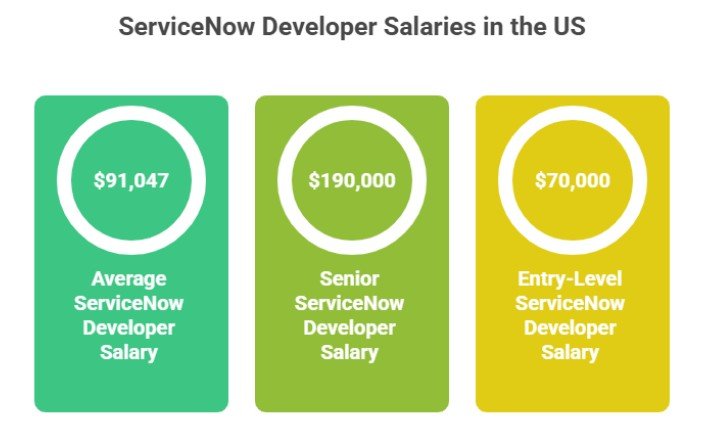
The average salary of a ServiceNow developer in the US is $91,047 per year, according to Indeed. The actual compensation can vary based on the business's location, the candidate's expertise, and the scope of the job. For instance, a senior ServiceNow developer can command an annual salary ofup to $190,000.
Entry-level positions can start at $70,000. That’s mainly because you’d have to invest in training and certifications, too.
Remember: For a niche job like ServiceNow SecOps developer, offering an attractive compensation package can be a viable solution for fast hiring.
Alternatively, you could hire someone with the basics covered but little experience and invest in their development for a few months to have them ready for the job. It just comes down to how fast you need the developer to start working on projects.
ServiceNow SecOps Developer Job Description
Ready to find the right candidate? Use this ready‑to‑use job description for internal hiring, talent acquisition platforms, or a recruitment agency brief.
Job Title: ServiceNow SecOps Developer
About the Role
We are seeking a ServiceNow SecOps Developer to join our technology team and accelerate our Security Operations (SecOps) capabilities on the ServiceNow Platform. You will play a key role in building secure workflow automation, integrating third‑party tools, and supporting end‑to‑end incident and vulnerability response processes that align with our business objectives.
Key Responsibilities
Design, develop, and customize SecOps modules — including Security Incident Response, Vulnerability Response, and Threat Intelligence — using Flow Designer, Script Includes, and advanced REST APIs.
Integrate ServiceNow with third‑party tools (SIEM, EDR, vulnerability scanners) using JSON, OAuth, and secure protocols to enable real‑time threat automation.
Build and maintain custom applications and secure workflow automation that support SOC processes, incident prioritization, and IT Operations requirements.
Collaborate with Security Operations, ITSM, and ITOM teams to ensure seamless platform integration and digital service delivery across the ServiceNow ecosystem.
Manage update sets, Application Lifecycle Management, and performance optimization for secure, scalable environments.
Provide documentation, support, and knowledge transfer to ServiceNow Administrators, Developers, and Consultants.
Required Skills & Experience
Proven experience with the ServiceNow Platform, including tables, ACLs, Business Rules, UI Policies, and ServiceNow Studio.
Strong scripting skills in JavaScript and familiarity with Glide APIs.
Hands‑on experience building integrations via REST and SOAP APIs, with secure authentication methods such as OAuth.
Experience automating SecOps tasks and designing workflows that improve response time and reduce manual intervention.
Solid understanding of Security Operations concepts (SOC workflows, incident response, vulnerability management).
Ability to work with System Administrators, Solution Architects, and cross‑functional stakeholders to deliver integrated solutions.
Preferred Certifications
Certified System Administrator (CSA)
Certified Implementation Specialist – Security Incident Response (CIS‑SIR)
Certified Implementation Specialist – Vulnerability Response (CIS‑VR)
ServiceNow ITSM or ITOM certifications
In-House vs ServiceNow Recruiter: Which Model to Pick?
If you take the in-house route, your internal recruiter or HR team would have to conduct candidate search, screening, and interviewing all by themselves. That obviously requires a basic understanding of the job and its technical requirements.
It’s a more controlled process. However, there are trade‑offs.
Maintaining an internal recruiter (or team) incurs fixed costs such as salaries, benefits, training, and recruitment tools, even when you have few vacancies, which can be substantial if you only need to fill specialized roles like SecOps.
In contrast, a specialized ServiceNow recruitment agency works on demand and can accelerate hiring for technical positions that are traditionally hard to fill. That’s because recruiters, at least those specializing in ServiceNow talent like we do, have ready access to talent pools with verifiable credentials and experience.
Naturally, the time-to-fill is much shorter than in the case of in-house recruitment. For instance, at Alpha Apex Group, the average time to fill for most roles is 43 days (60% faster than the national average).
For extremely niche roles that require specific skills like ServiceNow SecOps, external recruiters have broader access to passive candidates (those not actively job‑seeking) and established talent pipelines across global markets.
If you have well-established recruitment teams who can collaborate with ServiceNow experts to find the right candidates, you could conduct the hiring process yourself. But in other cases, working with a recruiter is the smarter choice.
Learn More: ServiceNow Developer Recruitment: In-House vs Outsourcing vs Staffing Firm
Common Hiring Mistakes (and How to Avoid Them)
Don’t match resumes with keywords and call it a day. It’s easy to make mistakes and hire a subpar match, given the shortage of certified ServiceNow talent. The SecOps developer role is incredibly central to digital security, so you want to avoid the common pitfalls.
Hiring too junior for complex SecOps use cases: Many companies mistakenly hire developers with only ITSM experience or general scripting knowledge for the SecOps role. Although those basics are important, SecOps requires more security-focused knowledge and expertise.
Ignoring security domain knowledge: Some recruiters overemphasize technical fluency (like JavaScript and REST APIs) while overlooking the candidate’s understanding of security workflows.
Underestimating integration complexity: SecOps modules are rarely used in isolation. Integrating third-party tools like Splunk, Tenable, or Microsoft Sentinel with ServiceNow requires secure API design, OAuth configuration, and data normalization.
Treating SecOps as “just another ServiceNow module:” SecOps is tightly coupled with ITOM, CMDB, and CSM. Hiring developers without experience in cross-module orchestration may lead to fragmented workflows and siloed data.
Hire a ServiceNow SecOps Developer Now
Ready to hire your next SecOps developer for the ServiceNow platform? Work with Alpha Apex Group to find the best talent in the industry.
With our proprietary sourcing and screening tools for ServiceNow hires, we can find the kind of talent that fits the bill and is fully aligned with your vision. Whether you want someone fresh out of the gates, ready to be trained, or someone fully baked with years of field experience, our diverse roster of candidates lets us deliver exactly what your organization needs (and that too in 72 hours).
Our dedicated ServiceNow recruitment and staffing service can help address the growing ServiceNow talent shortages and help you fill developer roles fast and reliably.
FAQ
What tools should a ServiceNow SecOps Developer know?
A skilled ServiceNow SecOps Developer should be fluent with tools across the ServiceNow Platform, including Flow Designer, ServiceNow Studio, IntegrationHub, and scripting environments that use JavaScript and Glide APIs. Familiarity with external systems, like SIEM platforms (like Splunk or QRadar), vulnerability scanners (like Tenable), and REST/SOAP APIs, is essential for designing integrations. As a side note, SOAP is still supported in ServiceNow, but it’s far less common than REST today.
Can I hire offshore ServiceNow Developers for SecOps projects?
Yes, but with caveats. Offshore developers can offer cost savings and global talent reach, especially for well‑defined customization or integration tasks. However, for complex Security Operations workflows that require close collaboration with IT and SOC teams, onshore hiring or blended models give better outcomes. For time-sensitive projects, onboarding and security clearance processes may also be faster with on-site ServiceNow Developers.
How long does it take to implement ServiceNow SecOps?
A full SecOps implementation typically takes between 8 and 16 weeks, depending on scope and integrations. If you’re automating multiple modules and connecting to third‑party tools via APIs & Connectors, timelines can extend further. Using experienced Implementation consultants or staff augmentation partners familiar with industry best practices helps reduce delays and accelerate ROI.
What makes a SecOps developer different from a general ServiceNow developer?
While all ServiceNow Developers work within the platform, SecOps developers specialize in building solutions for Security Operations, including automated response workflows, integrations with external threat intelligence, and aligning ServiceNow modules with broader IT workflows. They require domain expertise in cybersecurity concepts besides platform skills.
.jpg)

![Top 10 AI Executive Search Firms & Recruiters [2026 Update]](https://cdn.prod.website-files.com/6a1ef6de349095f1fcc34ccb/6a26d0533a7c25762c14664a_Top%2BAI%2BExecutive%2BSearch%2BFirms%2B_26%2BRecruiters%2B_282_29.jpeg)