Top 10 Business Operations Consulting Firms Worth Hiring
.jpg)
The right business operations consulting firm can have a major effect on how smoothly your company runs, scales, and responds to change.
Your options may include a large global consultancy, a specialist firm, or a fractional executive team. Each model offers something different, and the wrong fit can lead to higher costs, slow implementation, and transformation plans that never deliver the expected value.
That risk is significant. McKinsey & Company reports that 70% of large-scale organizational transformation efforts fail to achieve their intended goals.
Strong recommendations matter, but you also need a consulting partner that can turn those recommendations into practical action.
In this guide, we'll explain what to look for in a business operations consulting firm, why demand is accelerating, and the top consulting firms to consider.
TL;DR
- McKinsey Operations: Best for large enterprises that want end-to-end operations transformations that combine strategy, execution, capability building, and measurable performance improvement.
- Boston Consulting Group Operations: Best for organizations looking to modernize operations through a combination of digital transformation, AI, analytics, and operational execution.
- Deloitte Operations Transformation: Best for companies pursuing complex operating model transformations that integrate process redesign, technology, resilience, and enterprise-wide change.
- Alpha Apex Group: Best for mid-market organizations that need practical, execution-focused business operations consulting backed by hands-on implementation and fractional leadership support.
- The Hackett Group: Best for organizations that want benchmarking-driven business operations consulting to identify improvement opportunities using peer performance data and proven best practices.
A Closer Look at the 10 Best Business Operations Consulting Firms
Each firm below brings a different mix of expertise, industry experience, delivery model, and operational focus. The right choice depends on your company size, goals, internal capabilities, and the level of support you need.
So, let’s take a closer look at what each firm does best.
1. McKinsey Operations
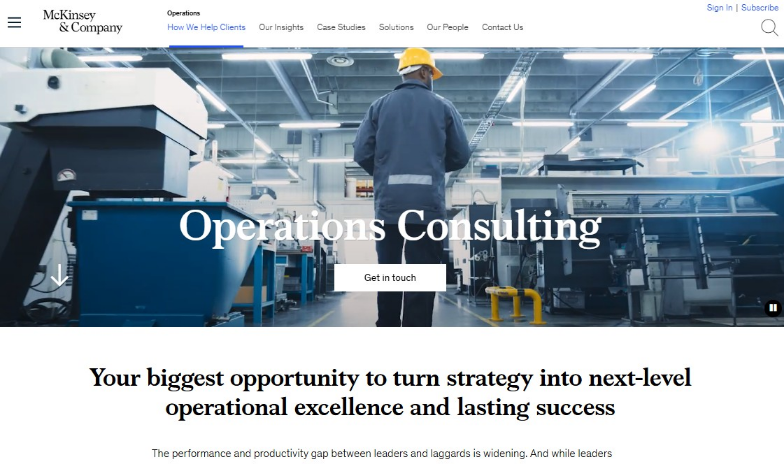
- Specific industries: McKinsey’s Operations practice works across manufacturing, supply chain, product development, procurement, service operations, capital projects, energy, materials, life sciences, retail, financial services, and other complex operating environments.
- Client result: McKinsey helped Jubilant Ingrevia embed digital and analytics across manufacturing, procurement, supply chain, and sales, with the transformation expected to generate $13.6M over 36 months, reduce power consumption by 10%, reduce natural gas use by 6%, and reskill ~100 employees.
McKinsey is a fit for companies that want to redesign operations at enterprise scale. Rather than stopping at recommendations, the firm emphasizes frontline capability building, quick-win execution, and systems for sustaining performance gains after the consulting team leaves.
What separates McKinsey from smaller operations consultancies is its combination of board-level strategy, frontline implementation, capability building, proprietary diagnostics, and digital/AI operations work. The firm’s approach includes cross-operations diagnostics, future-state design, quick-win identification, employee-led implementation, and a change-and-sustainability engine designed to keep improvements from fading after the project ends.
2. Boston Consulting Group Operations
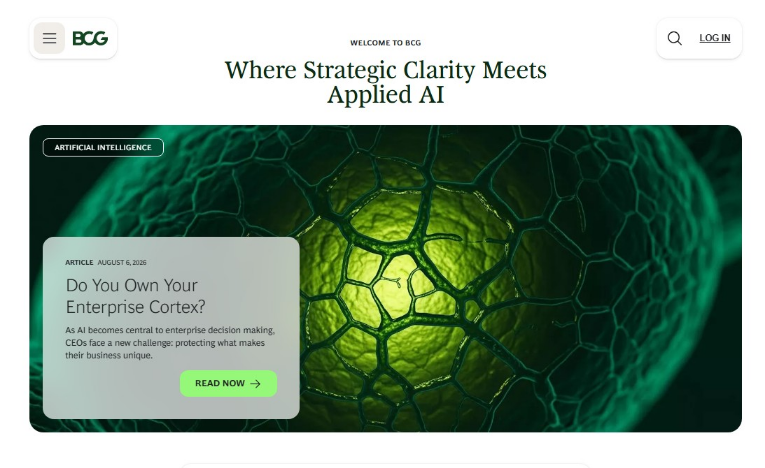
- Specific industries: BCG’s Operations practice works across sectors including consumer products, energy, financial institutions, healthcare, industrial goods, insurance, public sector, retail, technology, telecommunications, and transportation.
- Client result: BCG says it has completed 3,000+ operations projects in recent years. Its client-impact library also highlights operations-related results such as a 60% efficiency increase at Reckitt and 2x productivity from AI-enabled scheduling work with Rio Tinto.
BCG’s differentiator is its combination of traditional operations consulting with digital, AI, and transformation execution. Its positioning is strong where companies need analytics and technology embedded into the operating model.
This makes BCG relevant for companies trying to modernize operations while also building internal capability. BCG says its approach combines industry, operations, and digital operations expertise and partners with clients at every level of the organization to accelerate results while adapting the work to each client’s circumstances.
3. Deloitte Operations Transformation

- Specific industries: Deloitte’s operations case-study library groups examples across consumer, energy/resources/industrials, financial services, life sciences and health care, and technology/media/telecommunications.
- Client result: In one operating model transformation case study, Deloitte worked with a global consumer packaged goods company across three phases, including 10 weeks of executive and functional-leader interviews and a 10-month transformation rollout; Deloitte says the company’s stock rose 16% after the program was announced.
Deloitte’s differentiator is its ability to connect operating model redesign with technology, analytics, risk, and managed services. Its Operations Transformation practice focuses on four outcomes: elevating experience, driving efficiency, building resilience, and accelerating transformation.
Deloitte’s approach includes operating model design, cost transformation, operational resiliency, COO services, payments innovation, and its Center for Process Bionics, which uses process mining, desktop activity mining, simulations, automation, monitoring, and controls to redesign and sustain business processes.
4. Alpha Apex Group
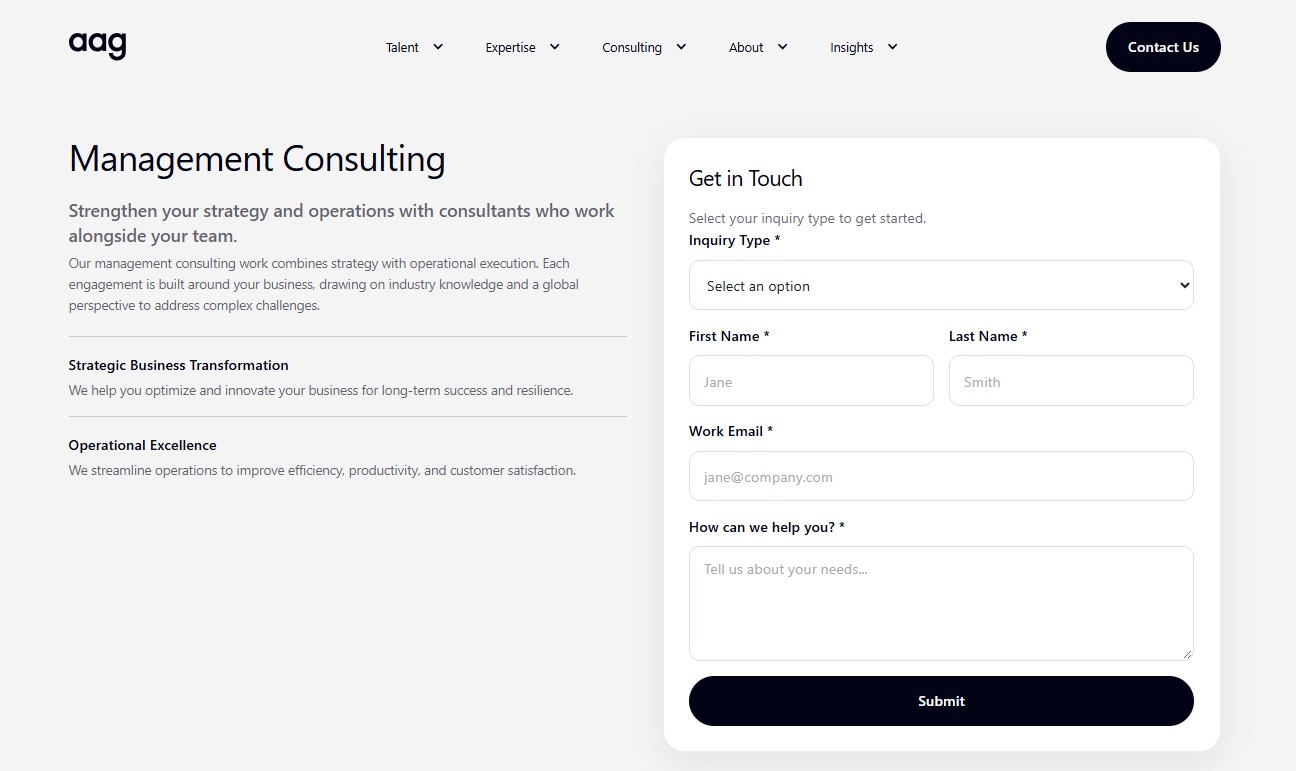
- Specific industries: Alpha Apex Group works with clients across healthcare, technology, financial services, retail, private equity, manufacturing, professional services, real estate, construction, energy, and logistics.
- Client result: Through AAG Health, Alpha Apex Group helped a regional veterinary health system redesign its hiring strategy with compensation benchmarking, talent market analysis, and role restructuring. The organization completed a key hire within 70 days and reduced appointment backlogs by 22% during the following quarter.
At Alpha Apex Group, we help organizations improve how their business actually runs day-to-day. Our business operations consulting work focuses on process improvement, performance management, organizational design, workflow optimization, and change management.
Our differentiator is practical execution. We work with companies that need to turn strategic priorities into clearer operating models, better processes, stronger accountability, and more efficient teams. This makes us relevant if you’re dealing with growth, restructuring, process bottlenecks, cross-functional misalignment, or operational complexity.
5. The Hackett Group
- Specific industries: The Hackett Group says it works across “all major industries,” with experience including 97% of the Dow Jones Industrials, 90% of the Fortune 100, 68% of the DAX 40, and 53% of the FTSE 100.
- Client perspective: Eduardo Chrispim, Head of Procurement Excellence at BAT, says the company has partnered with The Hackett Group for the past five years to support procurement transformation, including emerging areas such as Gen AI.
The Hackett Group’s main differentiator is its benchmarking-led consulting model. Its operations consulting is backed by a proprietary benchmarking and best-practices database built from 28,000+ benchmarking engagements with nearly 9,300 major corporations, which gives clients a fact base for comparing current performance against peers and top performers.
This is useful for companies that want operational improvement priorities grounded in comparative data rather than consultant opinion alone. The firm applies that benchmarking approach across finance, HR, procurement, IT, supply chain, shared services, working capital, and process transformation, with offices in the Americas, Europe, and Asia, and clients in more than 60 countries.
6. Slalom

- Specific industries: Slalom lists industry work across financial services, healthcare and life sciences, public and social impact, retail and consumer goods, technology, media and telecommunications, energy and utilities, manufacturing, and travel and hospitality.
- Case study: Slalom helped HVAC firm Daikin move to a unified planning system and reduce inventory by 10% while increasing forecast accuracy by 15%.
Slalom’s differentiator is its local-market consulting model paired with global technology partnerships. Its operations consulting work focuses on aligning people, processes, planning, delivery, systems implementation, and change management, which makes the firm especially relevant when the operational issue is not just process design but adoption across teams.
The firm is a practical fit for companies that need operations work connected to digital execution. Slalom’s operations page points to work across operating model design, planning and delivery, organizational change, talent, and systems implementation.
7. Bain & Company Operations
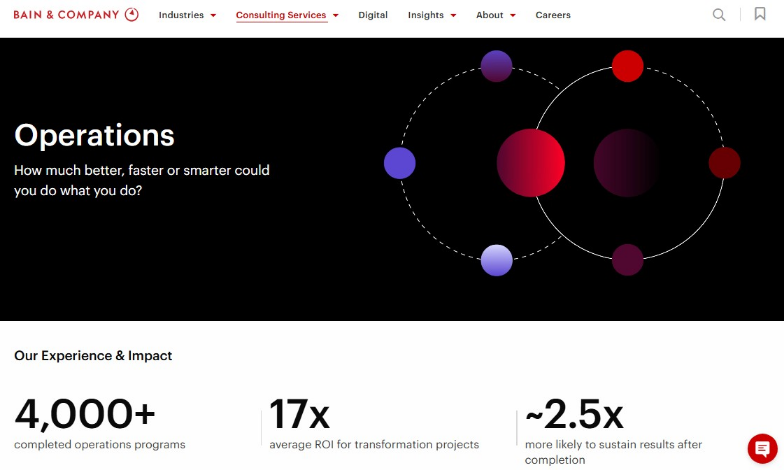
- Specific industries: Bain says it works across industries and geographies. Its operations practice covers offices, laboratories, factories, supply chains, service operations, procurement, product development, and industrial environments.
- Client result: Bain’s client-results library includes operations-related outcomes such as helping NatWest reduce its AI idea-to-value process from 60+ days to one day.
Bain’s operations work is useful when a company needs to make operational change stick. Its Operations practice focuses on redesigning end-to-end operations across supply chain resilience, AI and digital performance, outsourcing decisions, disruption response, and large-scale transformation.
The firm’s differentiator is its emphasis on measurable execution and adoption. Bain’s operations page frames the work around the questions operations leaders are trying to answer now: where AI can drive step-change performance, how to redesign supply chains for cost and growth, what to outsource versus keep in-house, and how to sustain transformation results in practice.
8. IBM Consulting
- Specific industries: IBM delivers industry-specific solutions across sectors including financial services, retail, and healthcare, with dedicated capabilities for banking operations and insurance operations.
- Client result: The Arizona Department of Child Safety achieved a 40% productivity gain, made data retrieval 40% more efficient, and reduced document upload time by 500% after working with IBM Consulting on genAI-enabled process modernization.
IBM Consulting’s clearest differentiator is its AI-first delivery model. Its Business Operations Services page centers on IBM Consulting Advantage for business operations, a unified platform of AI-powered assets designed to work across vendors, connect operational technologies, centralize automation, and apply AI, machine learning, and agentic AI across business processes.
This is most relevant for large organizations trying to modernize core functions without treating AI as a standalone pilot. IBM frames its operations work around redesigning, running, and improving critical processes across finance, HR, customer operations, procurement, supply chain, banking, and insurance, with emphasis on global delivery, responsible AI, governance, compliance, and measurable operational improvement.
9. Roland Berger Operations

- Specific industries: Roland Berger lists industry practices across aerospace and defense, automotive and commercial vehicles, capital goods, chemicals, construction, consumer goods and retail, energy and utilities, financial services, infrastructure, pharma and healthcare, private equity, public sector, technology/media/telecom, and transportation/logistics.
- Client result: In one operations example, Roland Berger says its work delivered an approximately 1.5% reduction in R&D cost ratio, a six-month reduction in time-to-market, and a new product- and innovation-centered R&D organization.
Roland Berger’s operations work is particularly strong for industrial and manufacturing-heavy companies that need practical improvements across R&D, procurement, production, supply chain, logistics, service, quality, sustainability, and post-merger integration. Its consulting services are organized around these clusters, which makes the firm more specific than a general business transformation advisor.
The firm’s differentiator is its engineering and operations depth. Roland Berger is a good fit when operational performance depends on physical networks, product development, manufacturing assets, supplier strategy, or end-to-end value chains rather than only back-office process improvement.
10. Arup Operations Consulting

- Specific industries: Arup’s operations consulting page highlights work across aviation, rail, roads and streets, industry and manufacturing, logistics, freight, supply chain, infrastructure, markets, and public-sector operating environments.
- Client result: For London’s Elizabeth Line, Arup coordinated readiness work across 25 Tier 1 contractors, delivered 14 training plans, 278 training packages, 508 training sessions, 150 trials, and five major mass volunteer exercises involving 30 to 2,000 people.
Arup’s differentiator is its technical depth in physical operations. The firm is relevant when business operations depend on infrastructure, facilities, assets, logistics flows, human factors, maintenance, or day-one readiness rather than only back-office process improvement.
Its work is useful for organizations planning or improving complex operating environments, such as airports, transit systems, markets, infrastructure networks, and industrial facilities. Arup’s operations consulting page covers strategy, operational design, and operational readiness.
How to Evaluate a Business Operations Consulting Firm Before You Sign
Not all business operations consulting engagements fail for the same reason. Mostly, the problem is an engagement that starts with vague objectives, unclear ownership, or no implementation plan.
One report found that just 58% of executives worked with their consulting firm to shape the project's strategic direction before the engagement began. Projects that skip this step are more likely to struggle with unclear priorities and inconsistent execution.
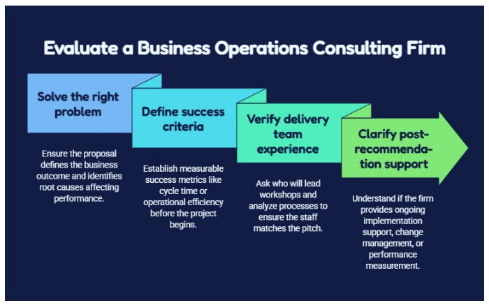
The following are the four areas worth evaluating before signing with any business operations consulting firm.
1. Make Sure the Scope Solves the Right Problem
A proposal should define the business outcome. Whether the engagement focuses on process improvement, operations management, supply chain management, or organizational design, the consulting team should identify the root causes affecting business performance.
2. Define Success Before the Project Begins
Strong consulting firms establish measurable success criteria upfront. This might include improvements in cycle time, operational efficiency, cash flow, quality control, labor cost, or customer service metrics. If success is described only as "delivering recommendations," you'll have a harder time determining whether the engagement actually created value.
As Dan Reardon, CEO of North Highland, makes the same point:
"The fact that consulting engagements have a certain level of accepted failure should be a wake-up call to our industry to re-evaluate how we partner with our clients to determine what success looks like. This will enable us to deliver more powerful solutions that are long-lasting and impactful."
3. Ask Who Will Actually Be Doing the Work
Many firms pitch with senior partners but staff the engagement with more junior consultants. Ask who will lead workshops, analyze your business processes, support operations execution, and work directly with your leadership team. The experience of the delivery team often matters more than the reputation of the logo on the proposal.
4. Understand What Happens After the Recommendations
Some firms conclude their work with a presentation deck, while others stay involved through best practices implementation, performance measurement, target operating model execution, and change management.
If your organization is going through digital transformation, redesigning operating models, or tackling business transformations, ongoing implementation support can be just as valuable as the initial strategy itself.
Why More Companies Are Investing in Business Operations Consulting
Companies face growing pressure to improve productivity, control costs, strengthen supply chains, and modernize operations. Many organizations need outside expertise to achieve those goals while managing AI adoption, organizational change, and tighter budgets.
Several recent studies reflect this shift:
- The global management consulting services market is projected to grow from $520.47 billion in 2026 to $796.38 billion by 2034, reflecting continued demand for advisory services across operations, digital transformation, AI, and organizational change.
- PwC's 2026 Digital Trends in Operations Survey found that 89% of operations leaders said their technology investments had not fully delivered the expected results, while 87% reported that poor data quality had limited the value of digital initiatives.
- Deloitte Ireland's Spring/Summer 2026 CFO Survey found that 83% of CFOs identified cost reduction as a strategic priority, 75% prioritized operational efficiency, and 73% prioritized supply chain optimization.
- McKinsey reported that although around 90% of organizations are experimenting with AI, only 7% have successfully scaled it across the enterprise, highlighting the challenge of turning technology investments into measurable operational results.
All these findings point to the same conclusion: organizations are investing heavily in operational improvement, but many still struggle to translate strategy, technology, and process changes into measurable business outcomes.
An experienced business operations consulting firm can help bridge that gap with structured implementation, operational expertise, and long-term execution support.
Build Stronger Business Operations With Alpha Apex Group
Many business operations consulting engagements end with recommendations. The greater challenge is turning those recommendations into measurable operational improvements.
At Alpha Apex Group, we combine management consulting with experienced fractional executive leadership to help organizations put strategy into practice. Our team supports process improvement, operating model design, operational efficiency, and business transformation with a strong focus on execution.
We work closely with your leadership team to identify operational bottlenecks, prioritize high-impact initiatives, and guide implementation from planning through delivery.
If you're looking for a business operations consulting partner that stays engaged through execution, contact Alpha Apex Group to discuss your goals and build an operational improvement roadmap.
FAQs
What is the difference between business operations consulting and strategy consulting?
Strategy consulting focuses on deciding what the business should do, while business operations consulting focuses on how to execute it. That includes improving business processes, operating models, supply chain performance, organizational design, and day-to-day operations.
What qualifications should an operations consultant have?
Look for consultants with experience leading operational improvement and business transformation projects similar to yours. Certifications such as Lean Six Sigma, PMP, or APICS can be valuable, but they should complement practical experience, industry knowledge, and a proven track record of delivering measurable business outcomes.
How long does a business operations consulting engagement take?
Most engagements last 2-6 months, depending on scope. Diagnostic assessments may take a few weeks, while enterprise-wide operations transformations can extend for a year or longer.
Will consultants work with my leadership team?
Yes. The best consulting firms partner closely with existing leadership, providing expertise and execution support while helping internal teams build lasting capabilities rather than replacing decision-makers.
Does Alpha Apex Group provide fractional executives?
Yes. In addition to business operations consulting, Alpha Apex Group offers fractional executive leadership to help organizations lead operational improvements, manage transformation initiatives, and bridge leadership gaps.
How is Alpha Apex Group different from Big Four consulting firms?
Alpha Apex Group combines management consulting with hands-on execution support and fractional leadership. Rather than stopping at recommendations, we help clients implement changes, improve accountability, and deliver measurable operational results.
.jpg)