Why ServiceNow Talent Is Hard to Find (and How to Attract Better Candidates)

If you’re trying to hire ServiceNow talent right now, you’ve probably felt it already.
Job postings stay open for weeks. Strong candidates disappear fast. And the few resumes you do get rarely match what your platform actually needs.
You’re not alone. As enterprises accelerate digital transformation, demand for ServiceNow Developers, Administrators, and Architects keeps climbing. Supply is not keeping up.
With over 85% of Fortune 500 companies using ServiceNow, competition for experienced talent has become intense, global, and unforgiving. At the same time, the platform keeps evolving, which widens skills gaps even further.
The result is simple. Traditional hiring methods fall short. Time-to-hire stretches, quality drops, and ServiceNow initiatives stall inside IT instead of driving real digital operations.
This guide breaks down why ServiceNow talent is so hard to find and, more importantly, how you can attract better candidates.
We’ll cover:
Why demand for ServiceNow skills keeps outpacing supply
The most common hiring mistakes that cost companies strong ServiceNow candidates
What top ServiceNow professionals actually look for in roles, teams, and career growth
Proven strategies to attract, assess, and secure better ServiceNow talent faster
How specialized ServiceNow recruitment partners can reduce risk and improve hiring outcomes
P.S. Struggling to fill critical ServiceNow roles while projects pile up and timelines slip? Alpha Apex Group helps you access proven ServiceNow talent faster, without long hiring cycles. Get in touch with us to see how we can strengthen your ServiceNow hiring strategy.
Why ServiceNow Talent Is So Hard to Find
If it feels like everyone is hiring for ServiceNow at the same time, that’s because they are.
The platform has moved far beyond IT support. Today, it sits at the center of how companies run digital operations, manage workflows, and scale enterprise services. This shift changes everything about hiring.
1. Explosive Demand for ServiceNow Skills
In the past few years, we found that ServiceNow adoption continues to accelerate as companies push deeper into digital transformation.
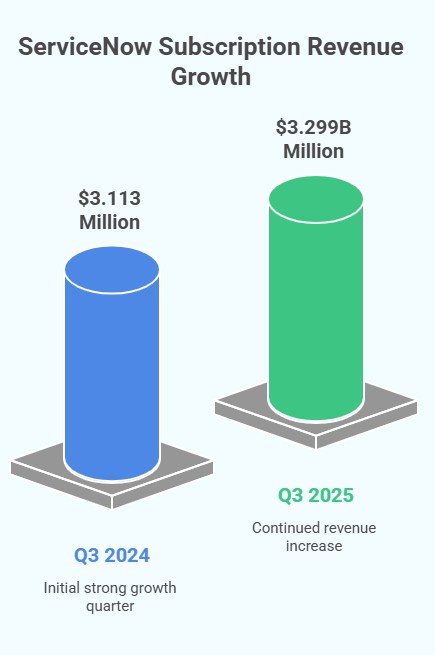
In Q2 2025, ServiceNow reported $3.113 million in subscription revenue, up 22.5% year over year. For hiring teams, this usually means one thing: more implementations, bigger backlogs, and tighter timelines.
That momentum didn’t slow down. In Q3 2025, ServiceNow posted another strong quarter with $3.299 million in subscription revenue. These figures indicate that demand across the platform continues to climb.
What began as IT service management now supports HR, customer service, security operations, and enterprise-wide digital workflow automation. If you’re hiring, we can tell you that you’re not competing for one role. You’re competing across multiple teams and use cases.
Demand continues to surge for talent in ITSM, HRSD, CSM, and SecOps. From our point of view, supply simply cannot keep up.
Most experienced ServiceNow Developers, Administrators, and Architects already support live software development projects, continuous delivery, and IT automation at scale. As a result, fewer candidates actively search, and those who do mostly juggle multiple offers.
This imbalance is why ServiceNow talent feels so hard to find.
2. Limited Supply of Certified ServiceNow Professionals
Even when you find candidates, the truly qualified ones are rare. There are around 116,000 certified ServiceNow professionals worldwide, supporting hundreds of thousands of organizations on the platform. That’s a clear mismatch as adoption keeps accelerating.
At the same time, ServiceNow certifications aren’t quick checkboxes. Each level requires structured training, hands-on experience, and ongoing learning. Because of that commitment, many IT professionals pursue certification only after they’re already working in the ServiceNow ecosystem, which limits the available talent pool from the start.
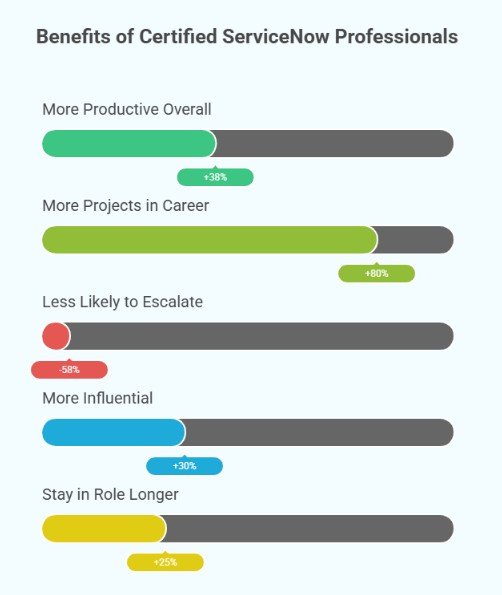
And the difference shows. Research indicates certified ServiceNow professionals are 38% more productive and 30% more influential than non-certified peers. This performance gap raises the bar even higher for hiring teams.
That’s why we can now see a tight market for experienced specialists on a complex, fast-evolving platform, with far fewer certified professionals available than demand requires.
3. High Competition Among Employers
When you hire for ServiceNow, you’re not competing locally anymore. Global enterprises, consultancies, and managed service providers chase the same limited talent. Many candidates already support critical digital operations and know their value.
In our experience, remote work widens the battlefield even more. A strong ServiceNow Developer can now choose roles across regions, industries, and time zones. From your side, that means faster offers, higher expectations, and less room to hesitate.
We also noticed that the best candidates move quickly, and they rarely wait.
4. Rapid Platform Evolution Creates Skill Gaps
ServiceNow does not stand still, and neither do its skill requirements. Recent industry reports show global demand for ServiceNow project services grew about 55% year over year, while skilled talent expanded only 43%. This gap explains why hiring feels harder each quarter.
Plus, we’ve seen how new modules, frequent releases, and evolving workflows reshape the platform constantly. If you’re hiring, legacy ServiceNow experience mostly falls short. Modern environments demand automation, integration, and continuous delivery skills, which leaves many resumes strong on paper but weak in practice.
Common Hiring Mistakes Companies Make When Recruiting ServiceNow Talent
If ServiceNow hiring feels frustrating, the issue is usually not the talent market. From our experience, the real problem is the approach. Many teams rely on familiar tactics that work for general tech roles but fall short inside the ServiceNow ecosystem.
Small missteps early in the process can cost you strong candidates before meaningful conversations even begin.
Below, we have shared some of the most common mistakes companies make when recruiting ServiceNow talent.
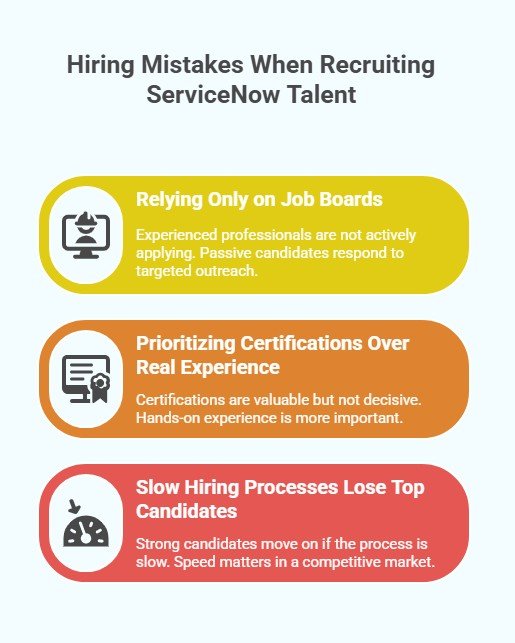
Relying Only on Job Boards
If you post a role and wait, you’re already behind. We know first-hand that many (if not most) experienced ServiceNow professionals are not actively applying. They’re busy supporting digital operations, managing workflows, and delivering live projects.
In fact, according to LinkedIn data, about 70% of the global workforce are passive candidates. They’re employed and not actively searching, but open to the right opportunity. That means traditional job board posts mostly reach a much smaller active segment.
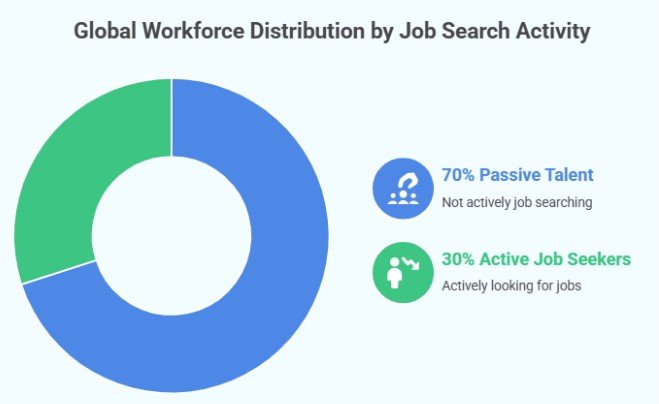
This is why passive candidates dominate the ServiceNow market. We’ve seen them respond best to targeted outreach, referrals, and credible partners rather than generic job postings buried in crowded feeds.
Prioritizing Certifications Over Real Experience
Certifications matter, but we know they don’t tell the full story. Industry research shades light on this: 69% of ServiceNow professionals say certification has positively impacted their careers, with many reporting promotions and salary growth as a result. That makes certifications valuable, but not decisive on their own.
Broader tech hiring data shows the real difference. While about 70% of hiring managers value certifications during screening, 91% prioritize hands-on experience when making final decisions.
And yes, that’s what our clients are looking for, too.
If you treat certifications as a shortcut for capability, you risk missing stronger candidates. Based on our experience,a badge may show training. But it does not always show how someone handles real workflows, integrations, or production issues. The best ServiceNow professionals combine credentials with proven delivery and platform experience.
Slow Hiring Processes Lose Top Candidates
We’ve seen this happen in most cases. When your hiring process drags, strong ServiceNow candidates move on. You might still be reviewing resumes while they’re already in final interviews elsewhere.
Top ServiceNow professionals know their value. They expect clear timelines, fast feedback, and decisive action. Long gaps between interviews, slow approvals, or unclear next steps send a simple message: you’re not ready.
Remember that if you want better candidates, speed matters. In a competitive ServiceNow ecosystem, slow decisions usually mean missed opportunities.
Read Next:How to Build a High-Performing ServiceNow Team
What Top ServiceNow Candidates Actually Look For
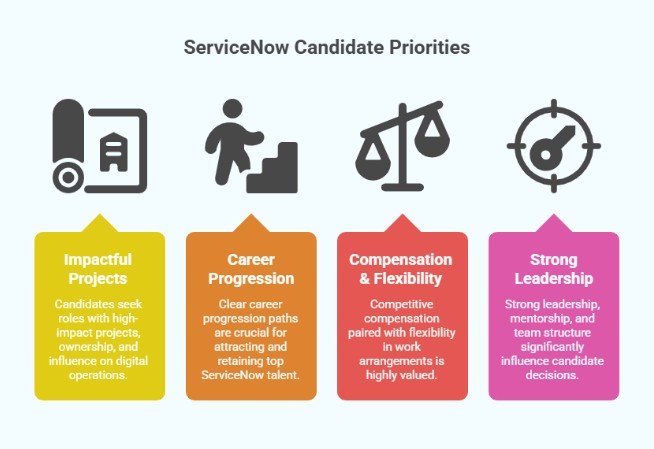
As per our experience, the strongest ServiceNow professionals are very intentional about where they work. They evaluate roles based on impact, growth, and long-term opportunity rather than just compensation.
Below, we have shared what truly matters to top ServiceNow candidates:
Challenging, High-Impact Projects
We’ve seen this consistently. Strong ServiceNow professionals want opportunities to build and create real impact. Greenfield implementations, new workflows, and platform expansion excite them far more than long-term maintenance work.
If your role focuses only on keeping the lights on, candidates lose interest fast. When you highlight high-impact projects, ownership, and real influence on digital operations, you stand out immediately.
Clear Career Progression in ServiceNow Roles
From our experience with ServiceNow teams, one thing comes up in most cases: people want clarity. Before committing, strong candidates want to understand where the role leads.
And the data shows it clearly. Across the tech industry, 85% of employees rank career advancement opportunities as a top priority for job satisfaction, even above compensation. Yet only about 37% of organizations have clearly defined progression paths in place.
This gap matters for ServiceNow talent in particular. Professionals look for defined paths, such as growing from ServiceNow Developer to Architect, then into Platform Owneror strategic leadership roles. When progression feels structured and achievable, commitment follows.
If you want to attract and retain top talent, we recommend making growth paths visible and realistic within your ServiceNow ecosystem.
Competitive Compensation and Flexibility
In practice, compensation alone rarely seals the deal anymore. What we’ve seen is that flexibility mostly carries just as much weight. ServiceNow professionals want options that fit how they work and live.
Some prefer fully remote roles. Others want hybrid setups or contract work tied to specific projects. We regularly see strong candidates walk away when flexibility feels rigid or unclear.
Our recommendation is simple. Pair competitive pay with clear choices around remote, hybrid, or contract versus full-time work. When candidates feel respected and trusted, engagement rises quickly.
Strong ServiceNow Leadership and Team Structure
Another factor that strongly influences ServiceNow candidates is leadership. It makes the difference between a role that feels exciting and one they quietly pass on.
Workplace research shows that employees involved in mentorship programs are 50% more likely to stay with an organization than those who aren’t. This helps explain why candidates pay close attention to who they’ll learn from and how decisions get made.
Remember that candidates gravitate toward teams with clear mentorship, documented best practices, and solid platform governance. When leadership feels organized and supportive, confidence builds quickly.
If you want stronger hires, we suggest showing how your ServiceNow team operates, who owns the platform, and how quality and standards stay consistent.
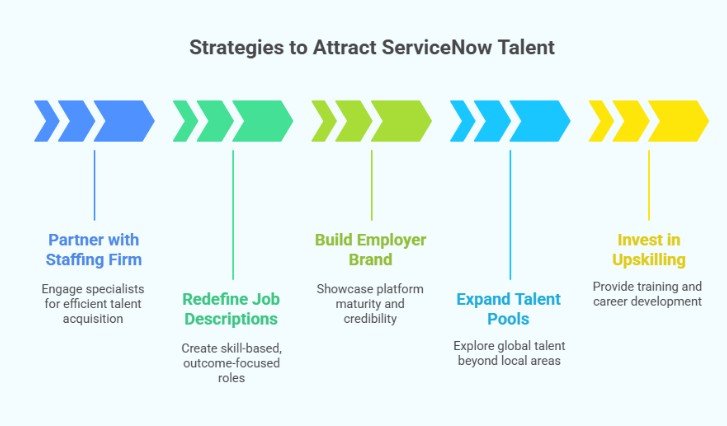
How to Attract Better ServiceNow Candidates: 5 Proven Strategies
Attracting stronger ServiceNow talent starts with intention and clear decisions. Small changes in how you define roles, engage candidates, and structure hiring mostly lead to faster and better results.
In the sections below, we share practical strategies that can help you attract higher-quality ServiceNow candidates and build a stronger hiring pipeline.
1. Partner with an Experienced ServiceNow Staffing Firm
If you want the fastest and most reliable results, this is the best place to start. By partnering with ServiceNow staffing or talent specialists, you can consistently outperform general hiring approaches.
Specialists already operate inside the ServiceNow ecosystem. They understand roles, platforms, and candidate profiles, and they know where proven talent sits, even when those candidates are not actively looking.
This is where partners like Alpha Apex Group (AAG) add real value. With deep ServiceNow ecosystem insight and targeted talent mapping, AAG helps companies access qualified ServiceNow professionals faster while reducing hiring risk and delivery delays.
We deliver qualified candidate profiles within 72 hours, fill roles 60% faster than the national average, and maintain an average 43-day time-to-fill for full-time hires. This speed matters when delivery timelines are tight.
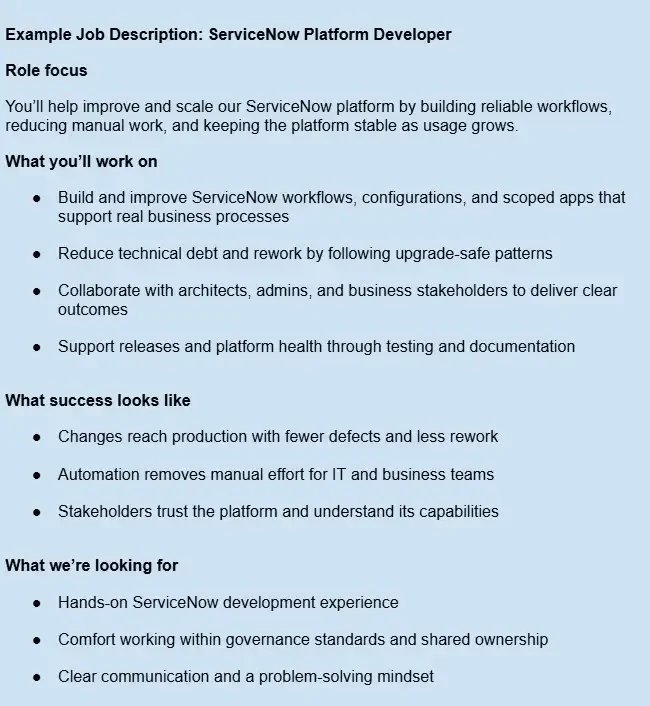
2. Redefine Your ServiceNow Job Descriptions
In our experience, poor job descriptions do more harm than good. We’ve seen strong ServiceNow candidates skip roles because the requirements feel vague, overloaded, or unrealistic.
And the data shows it has a real impact. A recruiting survey found that 26% of job seekers rejected offers due to unclear expectations, and that unclear job requirements mostly turn candidates off early in the process
That’s why we advise you to try shifting from title-heavy lists to skill-based, outcome-focused definitions. Be clear about what the person will build, improve, or own inside your ServiceNow environment. When candidates understand the impact they’ll have, interest rises fast.
Moreover, if you want better applicants, write roles that reflect real work, clear priorities, and measurable outcomes rather than everything the platform can do.
3. Build a Strong ServiceNow Employer Brand
Remember that top ServiceNow candidates research you long before they respond. They look for signals that show how seriously you treat the platform.
Research shows that 75% of job seekers consider an employer’s brand before applying for a job. And nearly half (50%) say they would turn down a role if the company’s reputation seems bad, even when compensation is higher. This means your reputation matters as much as the role itself.
“The transparency that technology has made possible means that today’s job seekers and employees have more insights than ever into the workplaces they’re interested in, which means that employer branding is more important than ever.” Joshua Siler, Former Forbes Councils Member.
Sharing thought leadership, real case studies, and evidence of platform maturity builds that trust. When candidates see how you approach digital workflows, governance, and delivery, confidence follows.
Our suggestion is simple. Show how your ServiceNow environment operates in the real world. When your employer brand reflects credibility and impact, stronger candidates engage without hesitation.
4. Expand Beyond Local Talent Pools
When you limit your search to one location, it slows everything down. Strong ServiceNow talent exists across regions, rather than within commuting distance.
Therefore, we advise you to explore nearshore, offshore, and global ServiceNow talent. With the rise of remote work, geography no longer needs to block access to experienced developers, administrators, and architects.
When you widen the net thoughtfully, you gain speed, flexibility, and fresh perspectives. In our practice, teams that tap into diverse talent pools hire faster and scale their ServiceNow programs with far less friction.
5. Invest in Upskilling and Internal Talent Pipelines
Sometimes, the strongest ServiceNow talent already exists inside your organization. The challenge is giving that talent a clear path forward.
Workplace research consistently shows that career development and training play a major role in retention. About 94% of employees choose to stay longer with a company when learning opportunities are available. We see this most commonly in ServiceNow teams.
When companies invest in training, certifications, and internal mobility, IT teams grow into stronger platform roles. Our recommendation is to treat upskilling as a long-term commitment that strengthens retention and stabilizes your ServiceNow talent pipeline.
Build a Stronger ServiceNow Team with Alpha Apex Group
We agree that finding strong ServiceNow talent has become harder, but it’s not unsolvable. The challenge comes from rapid platform growth, limited certified professionals, intense competition, and outdated hiring approaches.
But when you understand what candidates actually value and adjust how you hire, attract, and engage them, results improve. The teams that win are the ones that move with clarity, speed, and intention across their ServiceNow talent strategy.
Key Takeaways
ServiceNow talent shortages stem from platform growth outpacing available skilled professionals.
Traditional hiring methods usually fall short within the ServiceNow ecosystem.
Partnering with an experienced ServiceNow staffing agency helps you access qualified talent faster.
Top candidates prioritize impactful projects and clear opportunities for career growth.
Well-defined, skill-focused job roles attract stronger and more aligned applicants.
Speed and clear communication influence hiring outcomes more than compensation alone.
Employer branding plays a major role in how ServiceNow candidates evaluate opportunities.
Upskilling internal teams supports long-term stability and a sustainable ServiceNow talent pipeline.
If you’re looking to attract stronger ServiceNow candidates without slowing delivery or increasing risk, Alpha Apex Group can help.
Our team supports ServiceNow recruitment, staffing, and long-term talent strategy through tailored consultation aligned with your platform needs.
Contact us today to discuss how we can strengthen your ServiceNow hiring approach.
FAQs
How long does it take to hire a ServiceNow developer?
Hiring a ServiceNow developer typically takes several weeks through traditional recruitment. Timelines stretch due to limited talent and high competition. Working with a specialized ServiceNow staffing partner like Alpha Apex Group can significantly shorten the process by accessing pre-vetted candidates faster.
Are ServiceNow certifications mandatory?
ServiceNow certifications are valuable, but they are not always mandatory. Certifications show platform knowledge, while real-world experience shows delivery capability. The strongest candidates usually combine relevant certifications with hands-on experience in live ServiceNow environments.
How do you attract top ServiceNow talent?
Attracting top ServiceNow talent requires clear job definitions, visible career growth, competitive flexibility, and faster hiring decisions. Strong employer branding and partnering with experienced ServiceNow recruitment specialists also improve candidate quality and response rates.
How does Alpha Apex Group source ServiceNow talent faster than traditional recruiters?
Alpha Apex Group operates inside the ServiceNow ecosystem with targeted talent mapping and pre-vetted candidate networks. This gives us faster access to qualified ServiceNow professionals without long sourcing cycles.
What types of ServiceNow roles does Alpha Apex Group support?
Alpha Apex Group supports hiring for ServiceNow Developers, Administrators, Architects, Platform Owners, and leadership roles across ITSM, HRSD, CSM, SecOps, and enterprise workflows.
Can Alpha Apex Group support urgent or hard-to-fill ServiceNow roles?
Yes. Alpha Apex Group specializes in time-sensitive and niche ServiceNow hiring by leveraging active and passive talent pools. This allows us to shortlist faster and reduce time-to-hire.
.jpg)

![Top 10 AI Executive Search Firms & Recruiters [2026 Update]](https://cdn.prod.website-files.com/6a1ef6de349095f1fcc34ccb/6a26d0533a7c25762c14664a_Top%2BAI%2BExecutive%2BSearch%2BFirms%2B_26%2BRecruiters%2B_282_29.jpeg)