Startup Culture: What It Is, Why It Matters, and How to Build It
Company culture decides how work actually gets done when no one is watching. It shows up in conversations, decisions, and the way teams handle pressure.
Some workplaces feel energized and clear. Others feel tense and confused. This difference rarely comes from strategy alone.
This is where startup culture comes in.
It reflects a way of working shaped by creativity, flexibility, ownership, and shared belief. When startup culture stays intentional, teams collaborate with clarity, trust grows, and work feels purposeful. And when it drifts, small issues turn into friction, productivity slips, and engagement fades.
Its importance is widely recognized. Research shows that 94% of executives and 88% of employees believe a distinct workplace culture is critical to business success.
This blog explores startup culture in a practical way. We’ll cover:
- What startup culture really means and how it differs from corporate culture
- Why startup culture shapes employee engagement, performance, and brand reputation
- Common startup culture types and where each one fits best
- Practical ways to build and maintain startup culture as teams grow
P.S. Feeling cultural strain as expectations rise? If communication gaps, long hours, or unclear company values are starting to hurt trust, culture may be the root issue. Alpha Apex Group can help you define startup culture clearly, align values with real behavior, and build workplaces that support growth without rigidity.
What Is Startup Culture?
Startup culture is the shared values, thoughts, and beliefs that shape how people work inside a startup, particularly in its early stages. It influences how you make decisions, collaborate, and respond to challenges when systems are still evolving, and resources feel limited. You experience it through daily actions rather than written rules.
In early-stage startups, culture usually reflects the personalities and passions of founders and early employees. From what we’ve seen, fewer formal procedures make culture fill the gaps and guide ownership, communication, and experimentation. Keep in mind that habits formed early stick and shape how the startup operates as it grows.
Startup Culture vs. Corporate Culture
If you have worked in both environments, you notice the difference fast. Corporate culture leans on structure and formal procedures. Startup culture relies more on shared understanding and trust.
From our experience, the biggest contrast shows up in decision-making:
- Corporate culture moves decisions through layers, approvals, and fixed career paths.
- Startup culture trusts you to act, take ownership, and move without waiting. This freedom increases speed, but it also requires responsibility.
Communication works differently, too. We’ve seen this across many teams:
- Corporate environments depend on scheduled meetings and hierarchy.
- Startup culture favors direct conversations, open feedback, and frequent team interaction.
Whether you work in a physical environment or a hybrid or remote workplace, clarity matters more than titles.
Risk and experimentation create another clear divide:
- Corporate culture focuses on reducing mistakes, mostly due to legal or compliance issues.
- A startup ecosystem allows testing, adjustment, and learning without fear. From our point of view, this approach keeps teams engaged and ideas moving.
However, trust us, neither culture is better or worse. They simply support different ways of working. What we recommend is choosing the behaviors you want to encourage and shaping culture around them, instead of copying systems that do not fit your reality.
Key Characteristics of Startup Culture
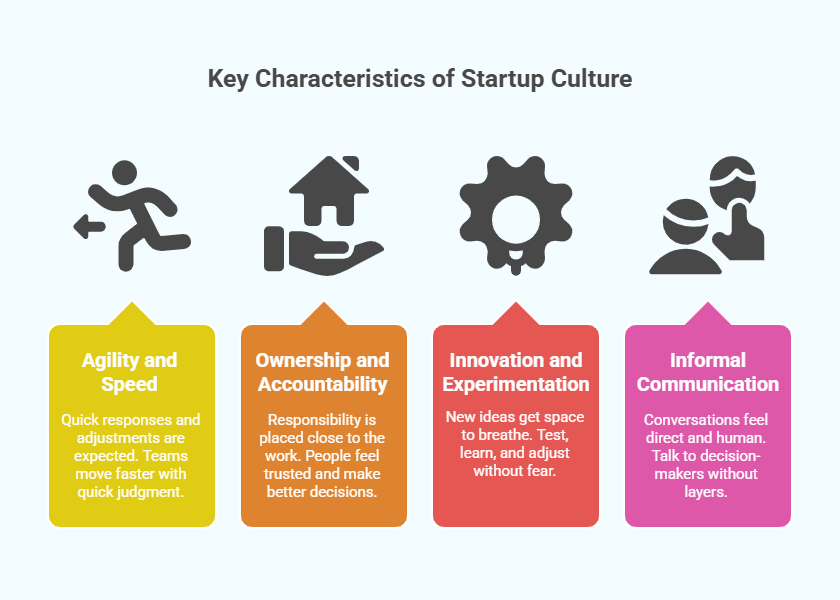
Startup culture shows itself through everyday behavior. You notice it in how fast things move, how much trust exists, and how people communicate without layers getting in the way.
Below are the key characteristics that shape this way of working.
- Agility and speed: In startup culture, speed matters. You are expected to respond quickly, adjust priorities, and act without waiting for long approval chains. From our experience, teams move faster when culture supports quick judgment instead of rigid processes.
- Ownership and accountability: Startup culture places responsibility close to the work. You own outcomes, rather than just tasks. We’ve seen that when people feel trusted, they step up, make better decisions, and care more about results instead of titles.
- Innovation and experimentation: New ideas get space to breathe. You can test, learn, and adjust without fear of blame. In our view, this openness keeps teams curious and engaged, particularly when problems do not have obvious answers.
- Informal communication and flat hierarchies: Conversations feel direct and human. You talk to decision-makers without layers blocking access. We’ve noticed that this openness strengthens team interaction and reduces confusion across the work environment.
Why Startup Culture Matters
Startup culture affects how quickly decisions get made, how ownership is taken, and how teams respond when expectations rise. From our experience, culture mostly determines whether work feels focused or chaotic, even when the business model is solid.
Below are the key reasons startup culture plays a direct role in how teams perform, compete, and stay aligned.
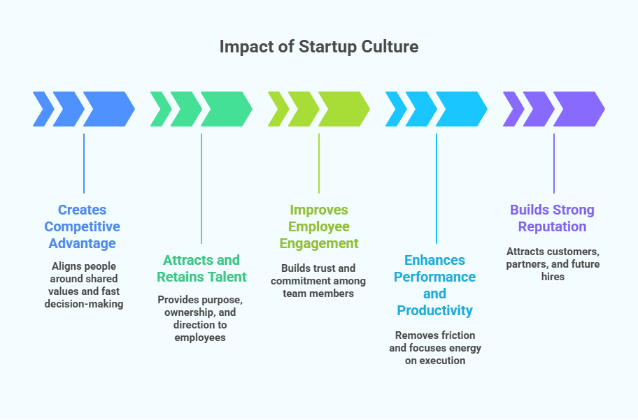
1. Creates a Competitive Advantage
Startup culture creates a real advantage because it aligns people around shared values and fast decision-making. In our experience, when everyone understands how work should happen, teams move without hesitation. You spend less time seeking approvals and more time executing.
Large organizations struggle to replicate this speed because layers slow them down. We’ve observed that a clear culture helps you respond faster to change while competitors are still debating next steps.
2. Attracts and Retains Top Talent
Culture plays a major role in where people choose to work. Research shows that nearly 88% of employees consider company culture a key factor when choosing a job, and 61% would leave their role for a better culture. This gives startups with strong culture a clear edge in attracting and keeping top talent.
From what we’ve seen across teams, strong startup culture gives people purpose, ownership, and a sense of direction. You let them contribute meaningfully instead of limiting them to assigned tasks.
And believe us, compensation matters, but culture is what keeps people committed. When work feels meaningful and trust is real, teams stay even when outside offers appear.
3. Improves Employee Engagement
Employee engagement improves when people feel connected to the culture around them. Gallup found that employees who feel aligned with their company’s culture are 4.3 times more likely to be engaged at work. This connection changes how people show up each day.
In our day-to-day work with teams, we’ve seen engagement rise when you listen, involve people in decisions, and respect their choices. You feel more motivated when your voice matters.
From our point of view, a real sense of belonging builds trust and commitment. When culture supports people genuinely, engagement follows without constant pressure.
4. Improves Performance and Productivity
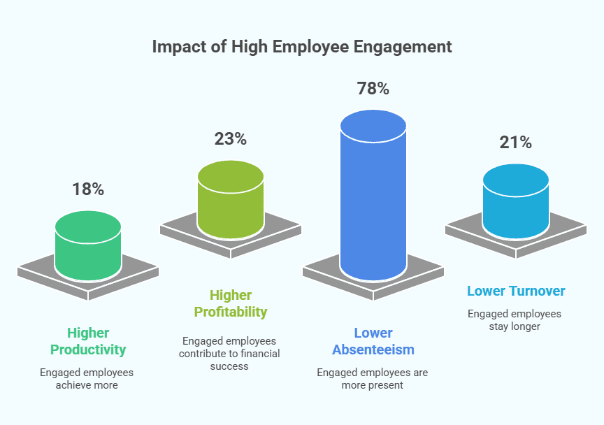
Startup culture has a direct impact on how well teams perform. Research from Gallup shows that companies with a strong, engagement-focused culture report up to 23% higher profitability and 18% higher productivity compared to those without one. This difference mostly comes from alignment.
In practice, we notice that startup culture removes friction before it slows work down. You know what matters, how decisions should happen, and where to focus your energy.
We’ve seen aligned teams collaborate faster and avoid constant back-and-forth. Startup culture improves productivity by keeping people focused on execution instead of confusion.
5. Builds a Strong Employer and Brand Reputation
Startup culture shapes how people talk about you when you are not in the room. Research shows that companies with strong employer brands receive up to twice as many job applications and experience a 50% reduction in cost-per-hire, simply because candidates already want to work there.
This excitement rarely comes from brand identity alone. It comes from culture showing up in real behavior. We’ve heard this directly from candidates and partners who pay attention to communication, customer service, and how values play out day to day.
Remember that a strong startup culture sends a clear signal. It attracts customers, partners, and future hires who already trust what you stand for.
How to Build a Strong Startup Culture
Now that you understand why startup culture matters, the real question is how you actually build it.
Note that culture does not appear on its own, and it does not stay strong without intention. From our experience, the most effective startup cultures grow through everyday decisions.
Let’s explore what that looks like in practice.
1. Define Clear Values and Vision
Clear values give people direction when no one is telling them what to do. Values matter only when they guide daily behavior, not when they exist only in documents.
You should be able to see values in:
- How decisions are made under pressure
- How feedback is shared across the team
- How success is defined and rewarded
We suggest avoiding generic words that sound good but mean little in practice. Terms like “excellence” or “integrity” only matter when you explain what they look like in real work situations.
Note that strong startup cultures translate values into simple expectations. People should know how to apply them during everyday work without needing clarification.
For example, a value like ownership should mean fixing problems instead of waiting for approval. A value like transparency should mean sharing feedback directly, not discussing issues behind closed doors.
2. Hire for Cultural Fit (and Add)
Hiring shapes culture faster than any policy. One misaligned hire can quietly undo months of good cultural work. In fact, research shows that 89% of hiring failures trace back to poor cultural fit rather than lack of skills. That alone should tell you where to focus.
Remember that skills help people get started, but mindset determines whether they truly belong. We’ve seen teams hire impressive resumes and still struggle because values, ownership, or communication styles did not match.
You can teach tools and processes, but changing how someone thinks at work is much harder. Therefore, when interviewing, we look beyond credentials. We make sure to:
- Ask how candidates handle feedback and responsibility
- Explore how they approach teamwork and decision-making
- Listen for values alignment instead of polished answers
Strong teams hire for cultural fit and cultural add. You want people who respect your values and also bring new perspectives. Trust us, this balance protects culture while helping it grow in the right direction.
3. Lead by Example
Startup culture takes its strongest cues from leadership behavior.
Gallup reports that managers and leaders directly influence 70% of team engagement. This shows how much culture depends on what leaders do day to day.
Your actions set the tone long before values get written down. We’ve noticed that teams quickly mirror leadership habits, both positive and negative.
Transparency and consistency matter more than big statements. When you communicate openly, explain decisions, and stay steady under pressure, startup culture gains credibility. Trust us, when leaders lead by example, teams follow without being told.
As Tracy Lawrence writes in Forbes,
“Leaders who communicate a compelling vision for transformation are nearly six times more likely to succeed in cultural change efforts. Conversely, disconnects between leadership behavior and stated cultural goals breed cynicism and resistance. Ensure that leaders not only endorse but embody the desired cultural shifts.”
4. Encourage Open Communication
Open communication plays a key role in building a strong startup culture. Research shows that 86% of employees and executives say a lack of collaboration or ineffective communication is a leading cause of workplace failures. This alone explains why silence and hesitation become costly over time.
When feedback flows freely, issues surface early instead of turning into frustration. We’ve seen that teams work better when questions, concerns, and ideas are welcomed rather than filtered.
Psychological safetymatters here. You should feel comfortable speaking up without worrying about blame or backlash. In our view, a strong startup culture grows when leaders listen, respond thoughtfully, and act on what they hear.
We recommend simple habits, like regular check-ins or open discussions, that make feedback part of everyday work. When people feel heard, communication improves, and culture strengthens.
5. Build Rituals and Practices
Rituals turn culture into something people can actually feel. They create rhythm, reinforce values, and give teams a sense of connection beyond daily tasks. Strong startup culture becomes real through repeated actions, rather than one-time initiatives.
Team rituals can be simple. Regular check-ins, shared wins, or weekly reflections help teams stay aligned. We’ve noticed that recognition matters just as much. When effort and progress are acknowledged, motivation stays high.
We suggest tying rewards to behaviors you want to see more of. Believe us, consistent rituals and meaningful recognition make culture visible and lasting.
P.S. If this entire process feels overwhelming or hard to translate into daily action, you can seek expert help from a company culture consultant, such as Alpha Apex Group. We work closely with you to translate values into everyday behavior and build culture with clarity and intention.
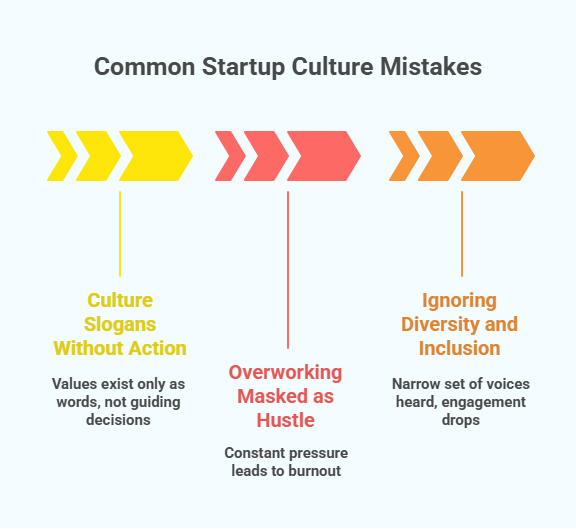
Common Startup Culture Mistakes to Avoid
Sometimes, even with good intentions, startup culture can drift in the wrong direction. From what we’ve seen, these mistakes show up quietly and damage employee trust, engagement, and performance over time.
- Culture slogans without action: Startup culture loses credibility when values exist only as words. If slogans show up on walls but never guide decisions, people stop believing in them. As per our experience, startup culture works only when values influence hiring, feedback, and everyday choices.
- Overworking masked as “hustle culture”: Long hours may happen, but constant pressure should not define culture. We’ve seen teams burn out when exhaustion gets mistaken for commitment. Trust us, a healthy startup ecosystem supports effort without glorifying burnout or grind culture.
- Ignoring diversity, equity, and inclusion: Startup culture weakens when only a narrow set of voices is heard. From our experience, teams perform better when different perspectives are welcomed and respected. When inclusion is missing, engagement drops quickly. Therefore, we prefer building habits that support fairness, participation, and belonging.
Examples of Strong Startup Cultures
Theory helps, but culture becomes clear when pressure hits. Real examples show how values guide behavior when things go wrong. Below, we’ll look at startups that lived their culture in public and earned trust as a result.
1. Buffer
Buffer’s startup culture became visible during a major security breach in 2013. Hackers used compromised accounts to publish spam content across users’ social media profiles. Instead of deflecting blame, Buffer took full responsibility immediately.
What stood out was how openly the company communicated. Buffer shared clear updates, explained exactly what happened, and provided step-by-step guidance to help users secure their accounts. From our point of view, this response reflected a culture built on transparency and accountability.
The result mattered. The honest approach generated positive attention and strengthened user trust. According to the company’s leadership, signups increased during that period. This shows how startup culture can directly shape brand reputation during a crisis.
2. Paylocity
Paylocity shows how startup culture can be shaped and adapted over time through real input from people who matter.
Instead of assuming what team members need, the company listens to employees, partners, and clients to understand where culture is working and where it can improve. This focus on feedback helps ensure people understand the company’s goals and feel connected to them, not just told what they are.
Paylocity’s approach goes beyond perks. The company emphasizes trust and transparency as core values, and it commits to inclusion and belonging across teams. That means perspectives from different backgrounds are welcomed and respected, which helps people feel seen and valued in everyday work.
In many ways, Paylocity treats culture as a continuous conversation rather than a one-time statement. This approach helps keep teams aligned and confident in their contributions.
Read Next: 6 Inspiring Company Culture Examples You Can Learn From
Shape your Startup Culture with Alpha Apex Group
Startup culture shapes how work gets done when rules fall short, and pressure rises. When built with intention, it aligns people, guides decisions, and strengthens trust. And when ignored, it creates friction that slows progress. The difference lies in everyday choices, leadership behavior, and how consistently values show up in real work.
Key takeaways
- Startup culture is defined by shared values, beliefs, and everyday behavior, not written statements or perks alone.
- Clear culture removes friction by guiding decisions, ownership, and collaboration without constant oversight.
- Hiring for mindset and values protects culture more effectively than hiring for skills alone.
- Leadership behavior shapes startup culture faster than policies, messaging, or internal documents.
- Open communication and psychological safety keep teams engaged and problems visible.
- Rituals and recognition make culture tangible and reinforce what matters most.
- Ignoring inclusion, balance, or consistency weakens startup culture over time.
If you want your startup culture to feel clear, consistent, and real in everyday work, Alpha Apex Group can help. We work with leadership teams to turn values into behavior and ideas into habits.
Contact us to build a culture your people trust and grow with.
FAQs
What defines startup culture?
Startup culture is defined by shared values, beliefs, and everyday behaviors that shape how people work, communicate, and make decisions inside a startup.
How is startup culture different from corporate culture?
Startup culture is more flexible and people-driven, while corporate culture relies more on formal procedures, hierarchy, and standardized processes.
What role do leaders play in startup culture?
Leaders set the tone through actions, communication style, and consistency. Their behavior directly influences trust, engagement, and accountability across teams.
How does Alpha Apex Group help startups build strong culture?
Alpha Apex Group helps startups define clear values, align leadership behavior, and translate culture into everyday practices through assessments, workshops, and leadership development.
Does Alpha Apex Group customize culture strategies for each company?
Yes. Alpha Apex Group designs tailored cultural strategies based on your business goals, team structure, and challenges rather than using one-size-fits-all frameworks.
Can Alpha Apex Group support culture change during growth or transition?
Absolutely. Alpha Apex Group works with teams during growth, restructuring, or change to realign culture, improve engagement, and maintain consistency across the organization.

.jpg)
.jpg)